Winds, Waves, and Wake in the Ten Thousand Islands

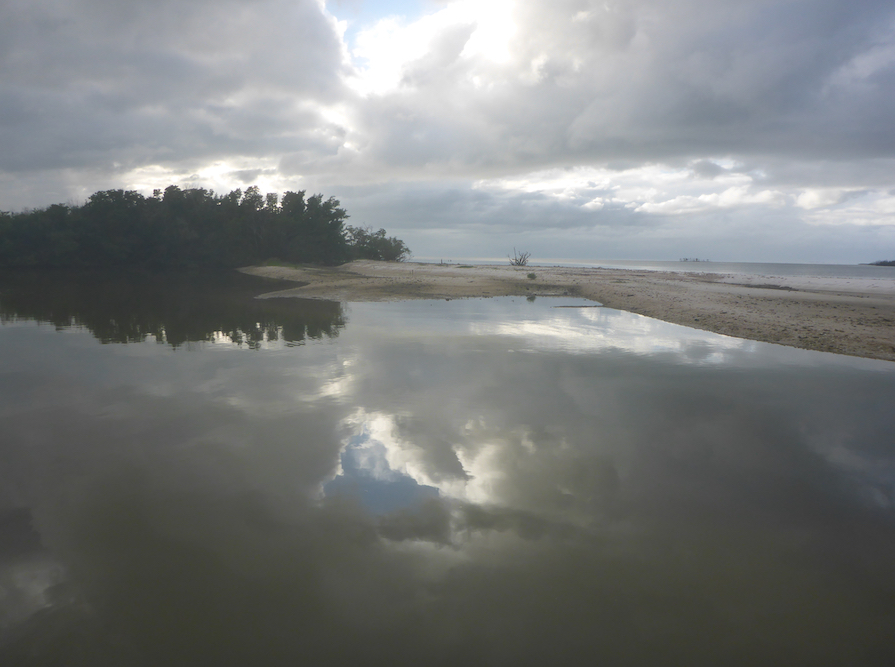
Glassy waters in our Goodland anchorage

A break in the wearther between storms — we’re off! With board, board, and gear, Kevin and I fought wind and rain to reach Goodland, Florida. Our plan: 5 days exploring land and water in Rookery Bay and the Ten Thousand Islands to test new gear. My new board — a Sic Maui RS Atlantis 14′ x 24″ — and new rigging for our floating tent, a Sanibel 18 sailboat. New gear almost always creates an adventure..

There’s a boat ramp in here somewhere
Threading the needle

First up: launching in the midst of a marina make-over. Jackhammers pounded our ears as we set up the boat. By late Thursday afternoon, we were anchored near the marina and ready to north towards the Isle of Capri the next morning.

KneeDeep 1, our floating tent
Bivy gear for when plans go awry

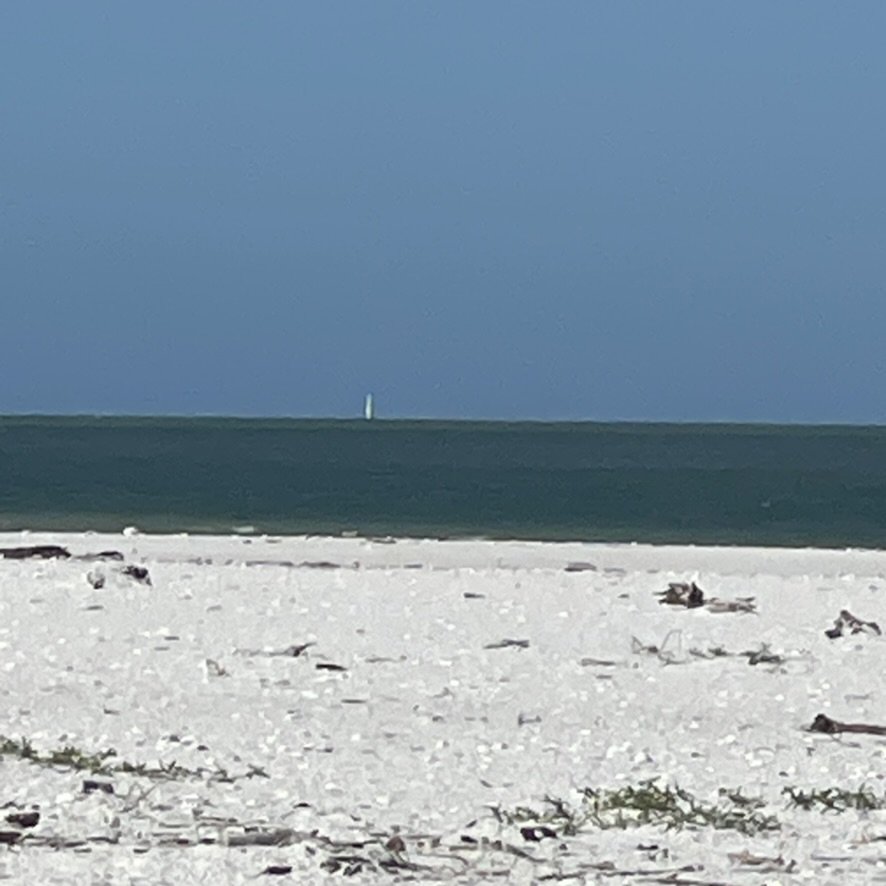
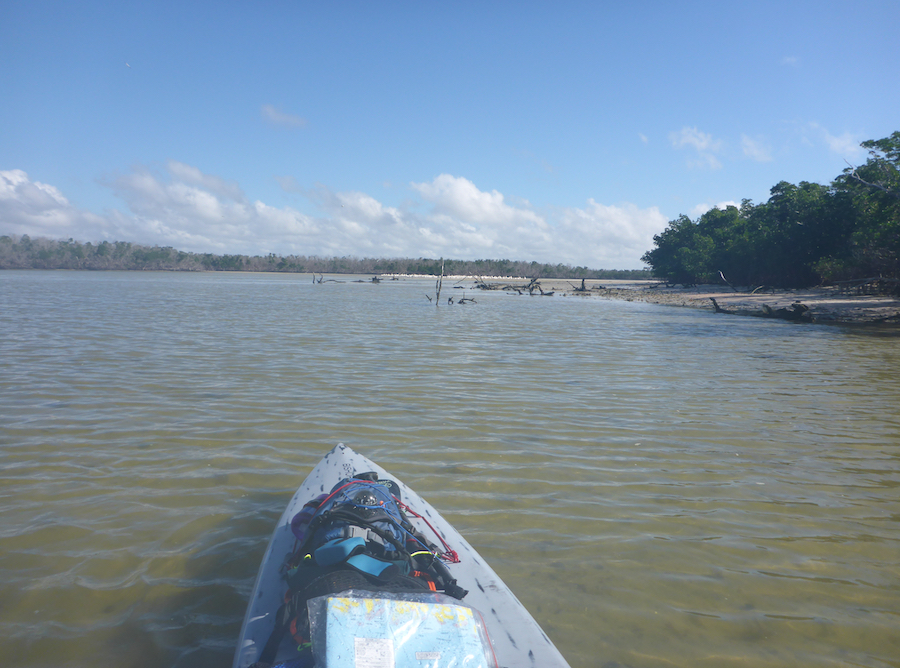
Friday’s goal: a Johnson Bay anchorage. Kevin sailed out Caxambas Pass, along the outside, and back up Big Marco Pass. I paddled up the Marco River past Goodland, though the mangroves near Paddlers Park, and into Johnson Bay. I sat on the beach at the mouth of the pass, watching for Kevin and enjoying the clear water and white sand. I knew the boat wake and shoals would make for a challenging sail up the pass. The tides didn’t favor either of us that day, but we still made it to our anchorage on time.

From Goodland to Johnson Bay, near Isle of Capri
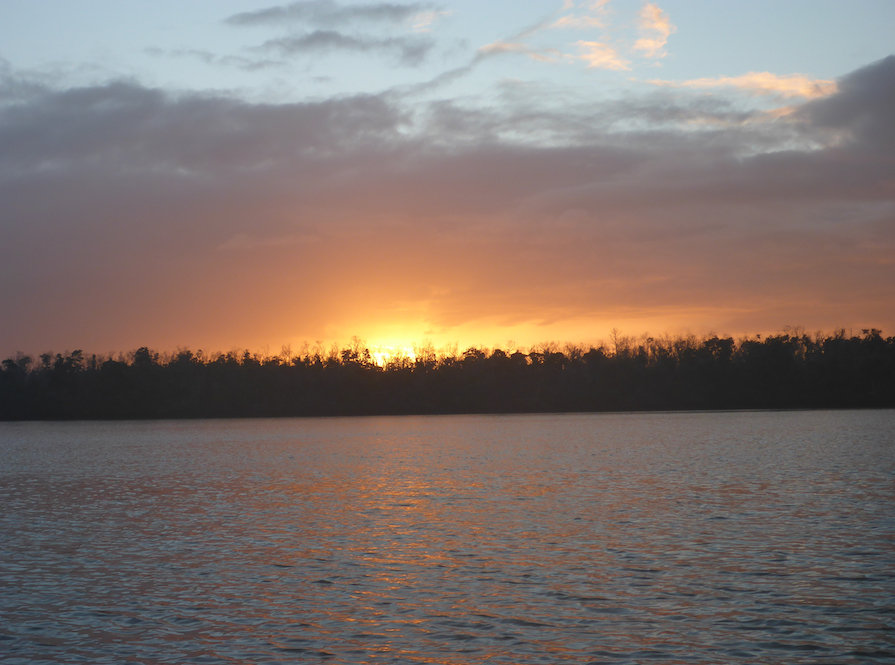
Prime viewing for sunsets and star-gazing

Saturday: exploring nearby bays and the islands near Big Marco Pass. Wind and waves helped us test our gear. Kevin tweaked new reefing and rigging systems, and I worked with wind and boat wake in the mangrove channels. Boat wake in narrow channels is challenging because you get both the original swell and refracting waves. The Atlantis board is a dug-out style, meaning that its higher walls give both secondary stability and keep me closer to the water. Even though this new board is narrower than my other board, it handles conditions well.

Johnson Bay to Caxambas Pass
Dickman Point
Kevin on the horizon

A sporty day en route to Caxambas Pass! The wind dropped, but the waves continued rolling in. We rode the tide out Big Marco Pass, and a welcome tailwind pushed us along the coast of Marco Island towards Caxambas Pass. I had to stay outside the breaking waves or risk getting barrel-rolled in the surf. Not fun with a loaded board. Kevin sailed around the outside, while I explored bays and islands around Caxambas Pass and Dickman Point.

Parade of barges in Caxambas Pass

We anchored in Caxambas Pass that night. hoping for protection from a north wind. The wind never rose as expected, but the strength of the current in Caxambas Pass surprised us. Tying off the board to the boat was difficult as I held a rope in one hand while tying off with the other. Failure was not an option.

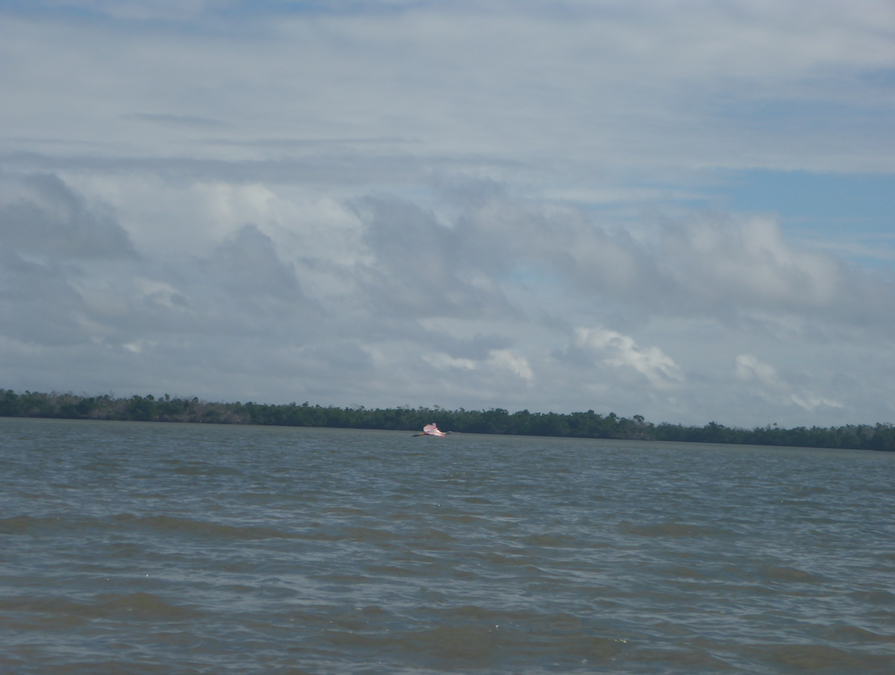
Roseate spoonbills in Caxambas Pass

Sunday — a glorious day for me with clear skies and no wind. For sailors, not so much. I saw birds along the Morgan River, relaxed on Cape Romano, and watched sea life below as I crossed the sand flats in Gullivan Bay. Meanwhile, Kevin dozed while KneeDeep heaved to and drifted slowly.

Clear water on the sandflats in Gullivan Bay
Caxambas Pass to Tripod Key
Morgan River near Cape Romano
Cape Romano
Gullivan Bay

We met later that afternoon near Tripod Key, a short distance from our take-out in Goodland. Even then, as predicted, the weather was changing, and we wanted an easy exit. As I was paddling up Coon Key Pass, I chatted briefly with a paddler headed out for the night. It turned out to be Kayak Flexafari, a paddler whom I followed but had not yet met in person. Small world and great to meet in person.
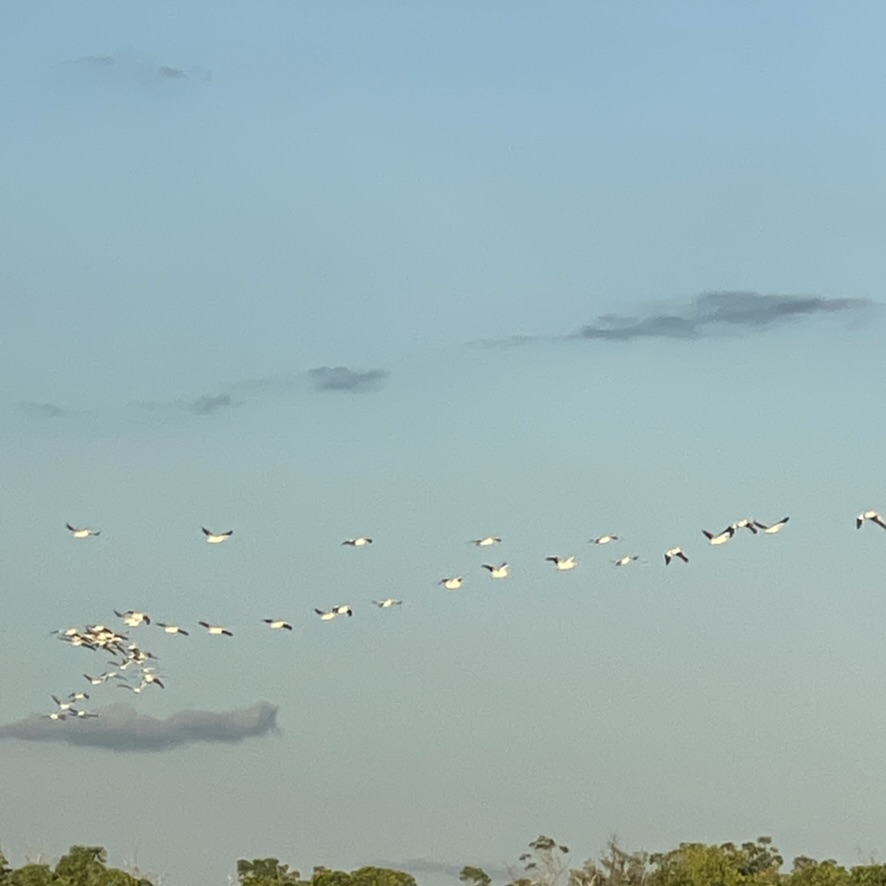
Flock of pelicans

As predicted, the wind came up the next morning. Fun enough for a sporty sail and paddle in the morning, but seriously gusty by the afternoon. Taking out the sailboat was the biggest challenge of the trip. Overall, we lucked out with our weather window. Enough conditions to make things interesting, but no white knuckles. And we almost followed our Plan A. Usually we’re down to Plan G by the time the trip is over.
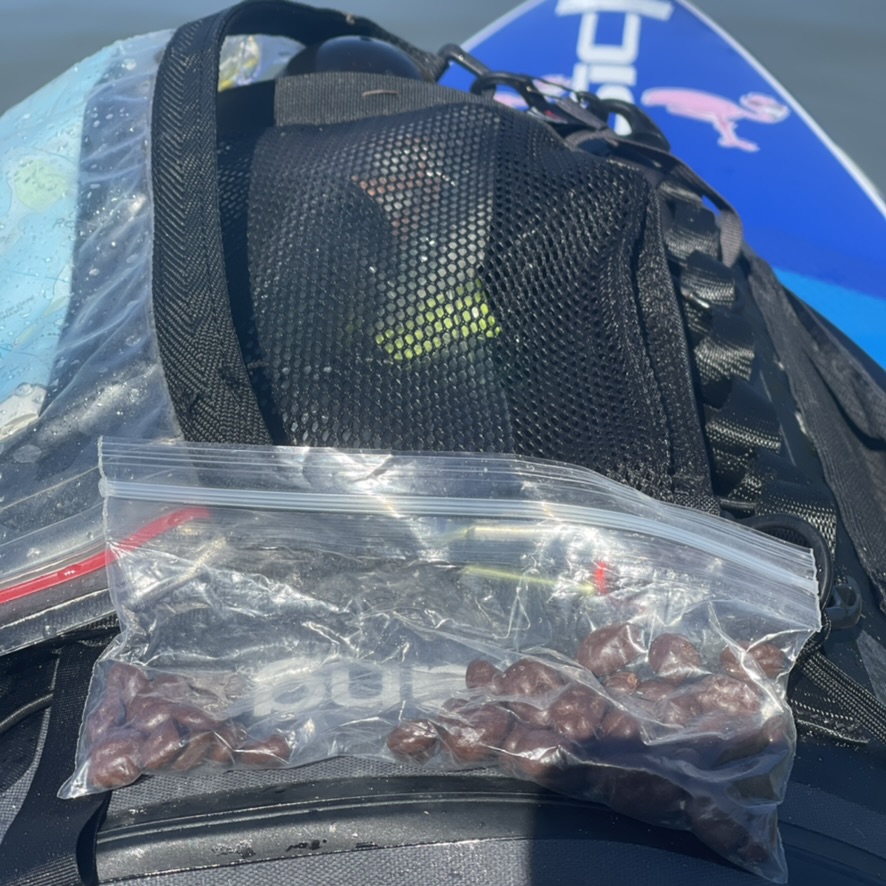
Raisinets–a poor choice in south Florida heat

The Ten Thousand Islands, Rookery Bay, and Everglades region is one of my favorite places in Florida. White sand beaches and spectacular sea and bird life. With all the islands, rivers, and channels, I always find something new to explore. On this SUP and sail trip, Kevin and I had the luxury of our floating tent. But Rookery Bay and the Ten Thousand Islands offers plenty of white sand beach camping opportunities, sites I have used on previous trips. I’m looking forward to our next trip back in January.
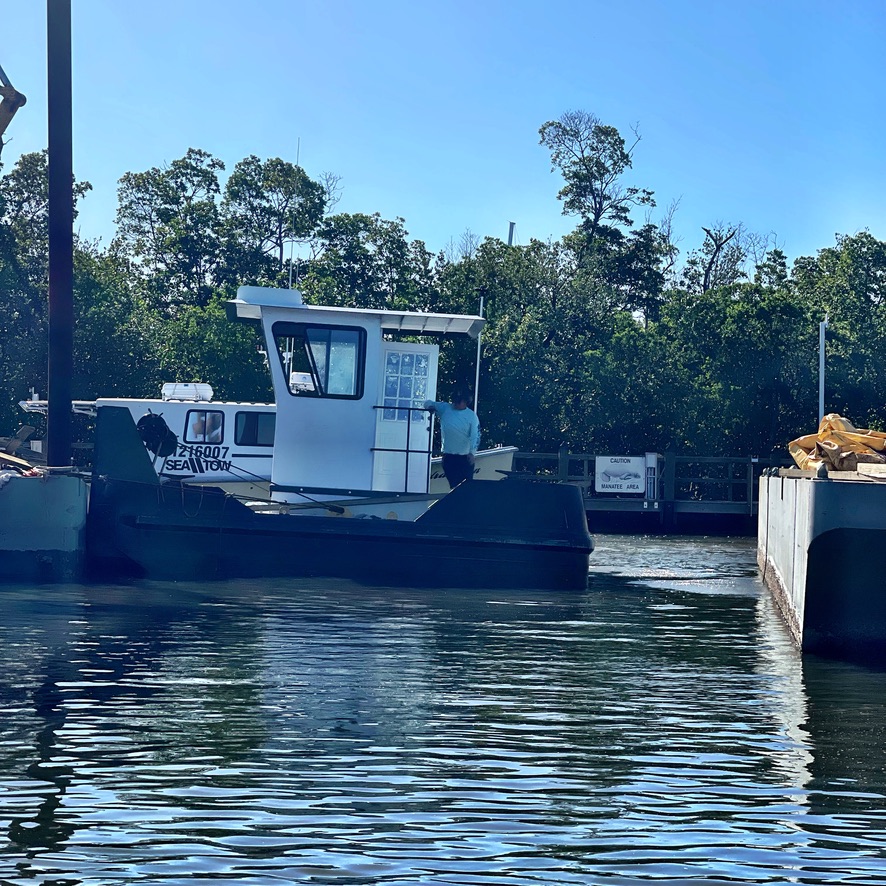
Ramp reserved for kayaks and paddleboards.

Lessons Learned by SUP and Sail in the Ten Thousand Islands

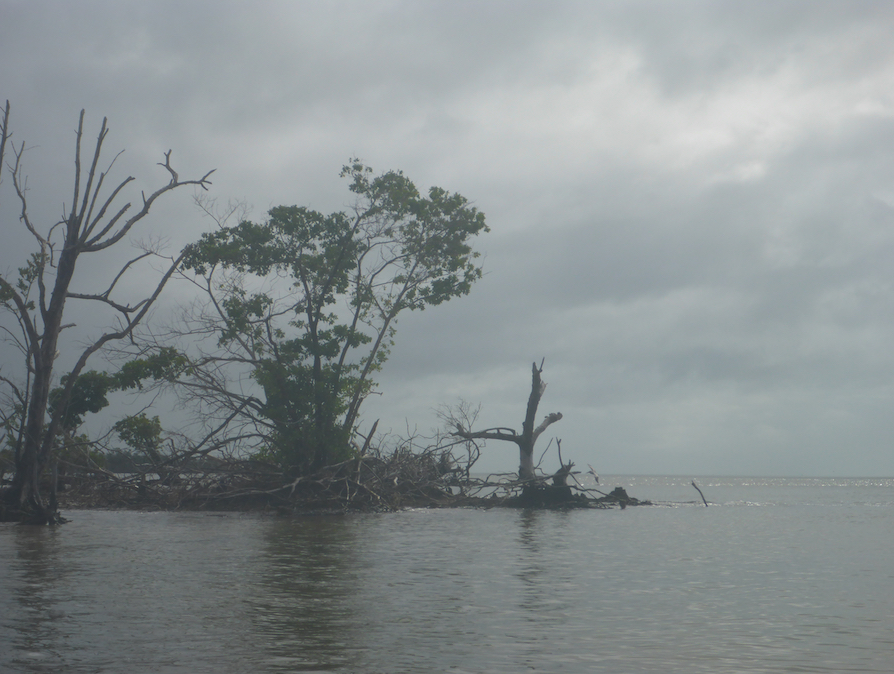
Camp Lulu cloudscape
Camp Lulu Key cloudscapes

With the wind at our backs on a blustery day, Kevin and I rode the current toward our White Horse Key. anchorage. Kevin manned KneeDeep ll, our 22′ O’Day sailboat, and I rode my 14′ A’u paddleboard down Coon Key Pass towards the Ten Thousand Islands National Wildlife Refuge and the Gulf of Mexico. We didn’t get far though. Somewhere between channel markers 4 and 6, we reversed course, paddling and motoring upstream against a 20 mph headwind, and returned to our launch site in Goodland, Florida. Why? The little things. In Tom Noffsinger’s assessment of a kayak training that devolved into a shit-show, he demonstrates how small mistakes can lead to mayhem. In our short time on the water, Kevin and I realized that our small errors had the potential to cause big problems. After re-evaluating our plans and a good night’s sleep, we sailed and paddled through the Ten Thousand Islands/Everglades for four wonderful days. And we learned some important lessons along the way.

Ten Thousand Islands
Ten Thousand Islands (Courtesy of nauticalcharts.noaa.gov/)

What went wrong? Kevin and I had pored over charts, plotting a course from Goodland to Pavillion Key in Everglades National Park, complete with multiple bail-out points. Our trip would combine SUP and sail and fulfill some specific goals: Kevin wants to hone his solo-sailing skills, and I am training for the 2020 Everglades Challenge. We loaded the car, attached the trailer, and headed south.

En route, the heavens poured down, and the trailer brakes froze up. We arrived late into Goodland and discovered that the marina was closing early the next day, Christmas Eve. The next morning, we rushed to step the mast before the wind kicked up. In short, we were frazzled.

Staging at Calusa Marina

I loaded my gear on the paddle and paddleboard, and we were off. Big winds and following seas towards Coon Key Pass, and it felt great to finally be on the water. But soon the rush and chaos of the past 24-hours caught up with us. We had neglected critical details. Kevin hadn’t set up the anchoring system, and I had buried my compass. We needed a do-over. That night and over the next several days, we discussed our mistakes and what we had learned.

Kevin emerges from the hold

Board and boat nestled up snug

The next morning, we woke to blue skies and fair winds and headed out to the Gulf. The night before, we re-evaluated our route, tested our VHF radios, and set up board and boat for paddling and solo sailing. For Kevin, this meant rigging the anchor for solo-anchoring, and I took the time to set up my navigation gear. One lesson learned: stop and re-assess when conditions change. Both the weather and our emotional states had changed, rendering our planning obsolete. In our rush to launch, both of us had misgivings, but neither of us spoke up.

Kevin setting anchor

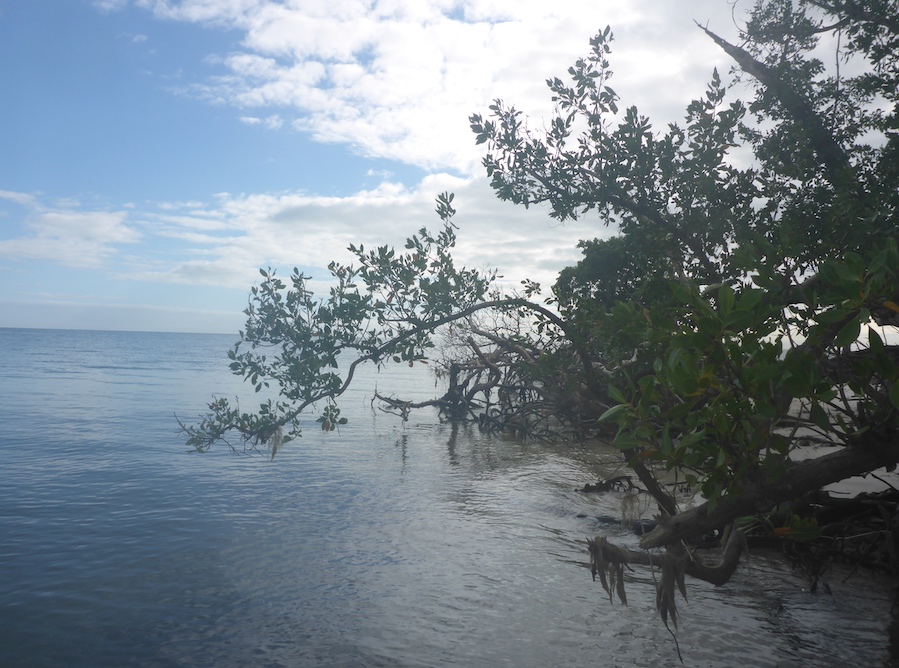
Mangrove beach
Mangrove beach

Our destination that night: an anchorage near White Horse Key. I paddled, and Kevin sailed out Coon Key Pass into the Gulf, around mangroves and keys, and into the bay near White Horse Key. We tested our VHF radio communications as Kevin headed out into the Gulf and I circumnavigated islands, trying to increase my mileage. We were able to give each other frequent updates regarding location and heading. One challenge: balancing the needs of very different watercraft. On days with little wind, my board can easily outrun our sailboat. On windy days, a very different story. More factors to consider when deciding upon our course each day.

Sunset near White Horse Key

Combining paddleboarding and sailing has been a goal and a challenge for us. In our White Horse Key anchorage, over a glass of wine, or perhaps more, we realized yet another lesson learned from the first day: Too much, too soon, and all at once. We should have practiced each skill first, e.g., solo anchoring, rather than learning several things at once.

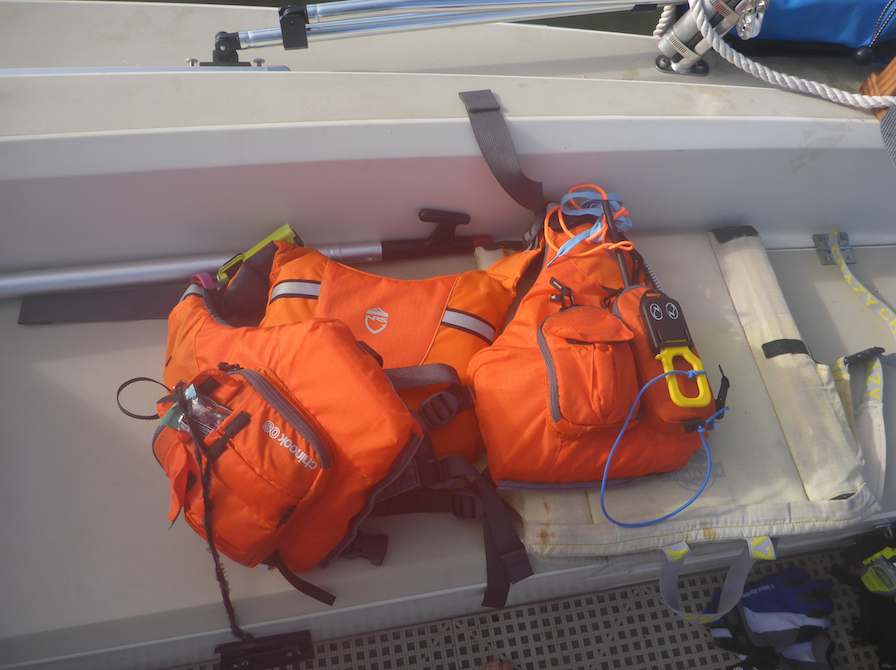
Tricked out NRS Chinook PFD

View from a board
Taking in the scenery

My challenge: working with safety gear and electronics while standing, without benefit of a kayak deck. The Ten Thousand Islands and Everglades are fantastic places for paddleboarding, but paddling in these wilderness areas requires safety considerations. In addition to extra food, water, and clothing, I also carried an emergency bivy and a Garmin Inreach. I tested my new NRS Chinook Fishing PFD which has plenty of nooks and crannies for PLB, VHF radio, GPS, and knife, among other things.

KneeDeep ll through the mangroves

Mangrove point
Mangrove point

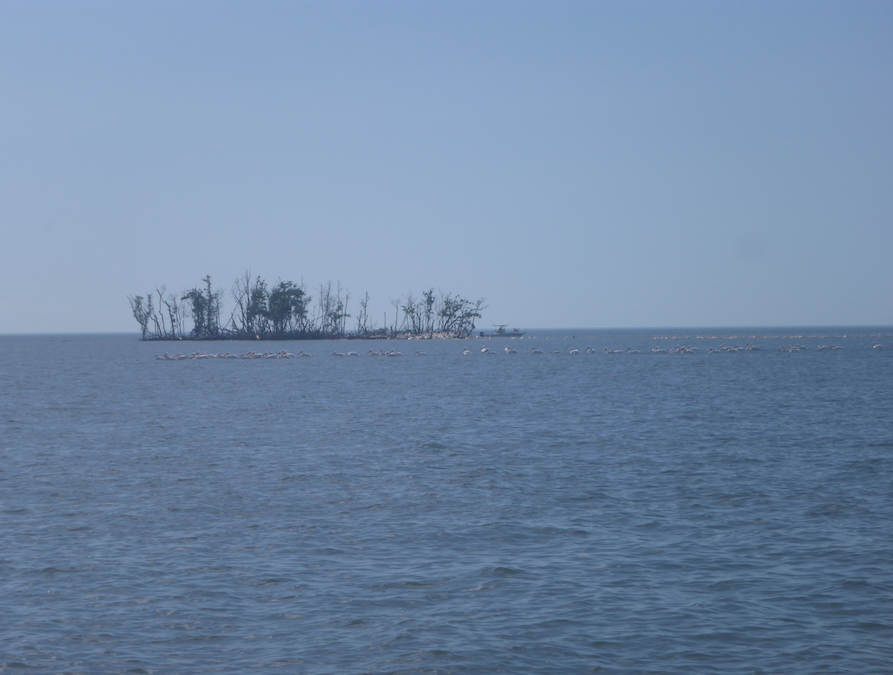
We woke to clear skies the next morning and agreed to meet for lunch at Round Key, a little speck on the charts near Camp Lulu Key. We paddled and sailed all morning, Kevin out into the Gulf, and me up and around Panther Key. As our meeting time neared, the skies darkened, and the wind picked up considerably. A squall was approaching. I radioed Kevin and told him I was taking shelter on a beach a mile north of Round Key. Round Key, as we discovered, was little more than several scraggly trees, surrounded by shoals and floating white pelicans. Little shelter for boat or board in a storm. Yet another lesson in choosing a meeting spot.

More white pelicans

Camp Lulu Key
Camp Lulu Key

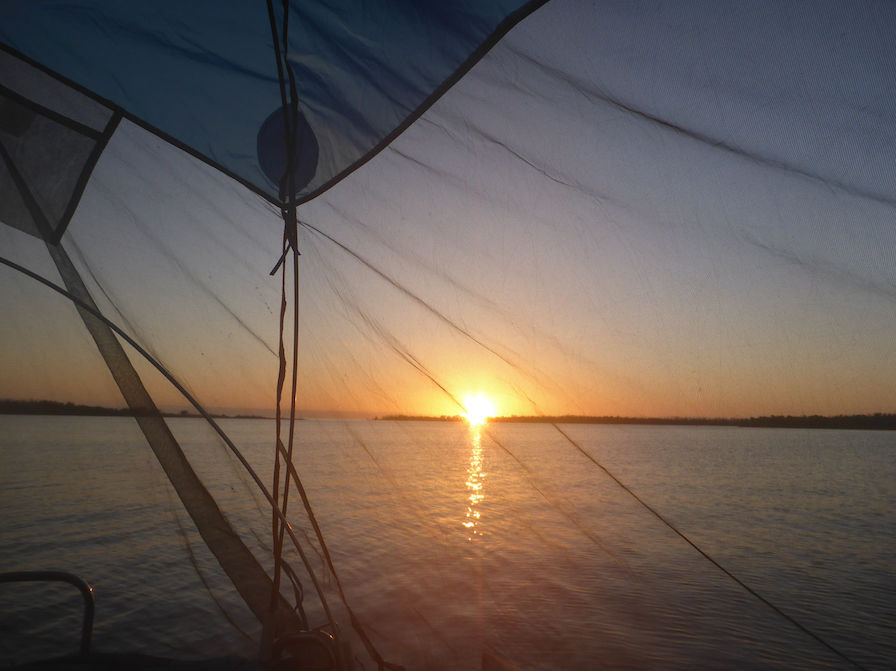
Three cheers for Kevin's bug screen
Three cheers for Kevin’s bug screen

The storm passed, and we anchored near Camp Lulu Key that night. Kevin’s well-designed screen house protected us from the no see’ums, aka flying teeth. Camp Lulu Key lies on the border between the Ten Thousand Islands and Everglades National Park. As I passed, I saw campers setting up their tents. The west-facing beaches of the Ten Thousand Islands make perfect campsites. Though I stayed on the sailboat for this trip, I have enjoyed camping here in the past. On my next trip through this area, I will be self-sufficient, carrying all my gear on the board.

White pelicans near Indian Key
White Pelicans near India Key

View from a board
Taking in the scenery

Roseate Spoonbill Takes Flight
Low low tide

Flying Roseate Spoonbill
Roseate spoonbill flying

Back home and so many lessons learned. Kevin and I both advanced in both our individual and team abilities. Neither of us journeyed the miles we had hoped for, but we learned a great deal about coordinating a sail and SUP trip. Our plans met, and largely survived, reality. Our biggest take-away: slow down and take time to go over everything. In retrospect, we should have gone out to breakfast, drank more coffee, and re-assessed our plans on day 1 in Goodland. In the end, our trip was fantastic, but things don’t always turn out that way.

Roseate Spoonbill on the wing