Winds, Waves, and Wake in the Ten Thousand Islands

Glassy waters in our Goodland anchorage

A break in the wearther between storms — we’re off! With board, board, and gear, Kevin and I fought wind and rain to reach Goodland, Florida. Our plan: 5 days exploring land and water in Rookery Bay and the Ten Thousand Islands to test new gear. My new board — a Sic Maui RS Atlantis 14′ x 24″ — and new rigging for our floating tent, a Sanibel 18 sailboat. New gear almost always creates an adventure..

There’s a boat ramp in here somewhere
Threading the needle

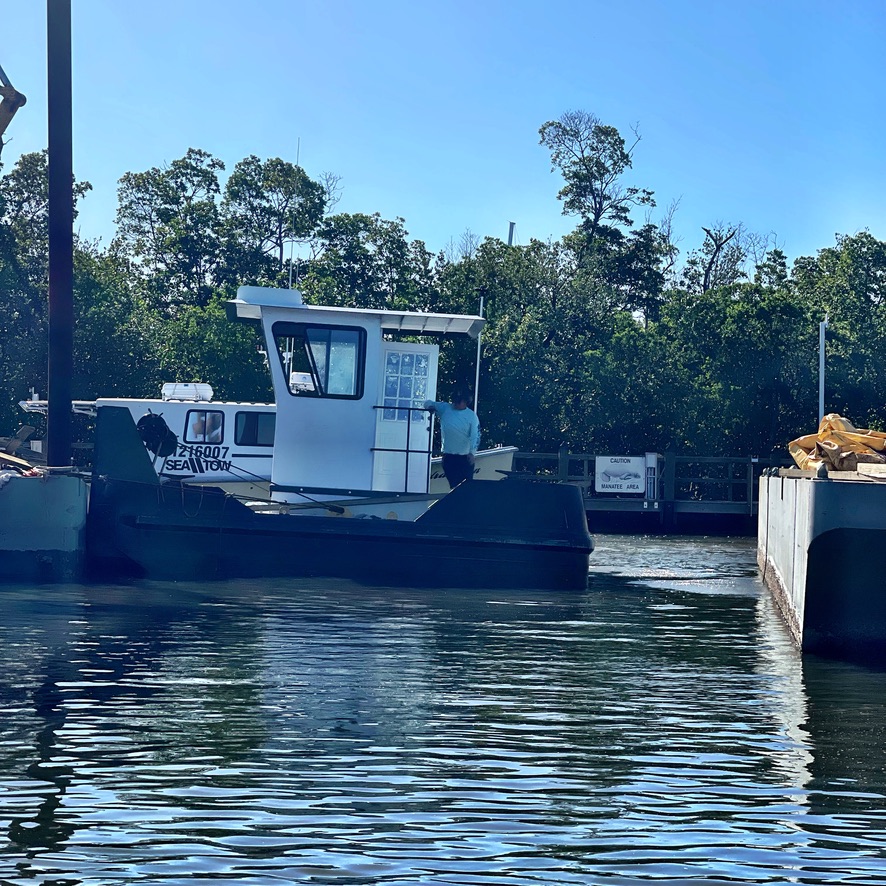
First up: launching in the midst of a marina make-over. Jackhammers pounded our ears as we set up the boat. By late Thursday afternoon, we were anchored near the marina and ready to north towards the Isle of Capri the next morning.

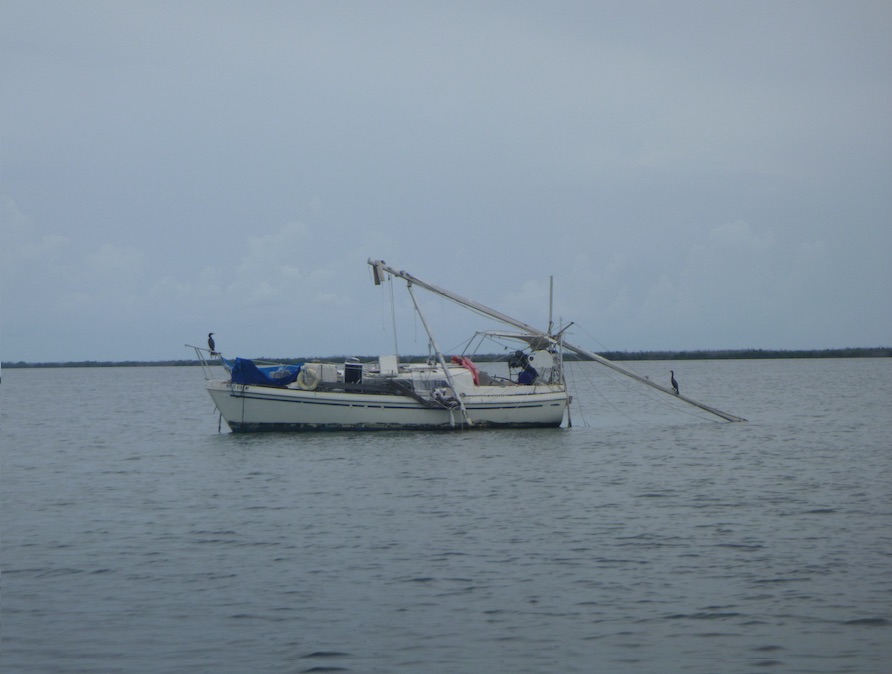
KneeDeep 1, our floating tent
Bivy gear for when plans go awry

Friday’s goal: a Johnson Bay anchorage. Kevin sailed out Caxambas Pass, along the outside, and back up Big Marco Pass. I paddled up the Marco River past Goodland, though the mangroves near Paddlers Park, and into Johnson Bay. I sat on the beach at the mouth of the pass, watching for Kevin and enjoying the clear water and white sand. I knew the boat wake and shoals would make for a challenging sail up the pass. The tides didn’t favor either of us that day, but we still made it to our anchorage on time.

From Goodland to Johnson Bay, near Isle of Capri
Prime viewing for sunsets and star-gazing

Saturday: exploring nearby bays and the islands near Big Marco Pass. Wind and waves helped us test our gear. Kevin tweaked new reefing and rigging systems, and I worked with wind and boat wake in the mangrove channels. Boat wake in narrow channels is challenging because you get both the original swell and refracting waves. The Atlantis board is a dug-out style, meaning that its higher walls give both secondary stability and keep me closer to the water. Even though this new board is narrower than my other board, it handles conditions well.

Johnson Bay to Caxambas Pass
Dickman Point
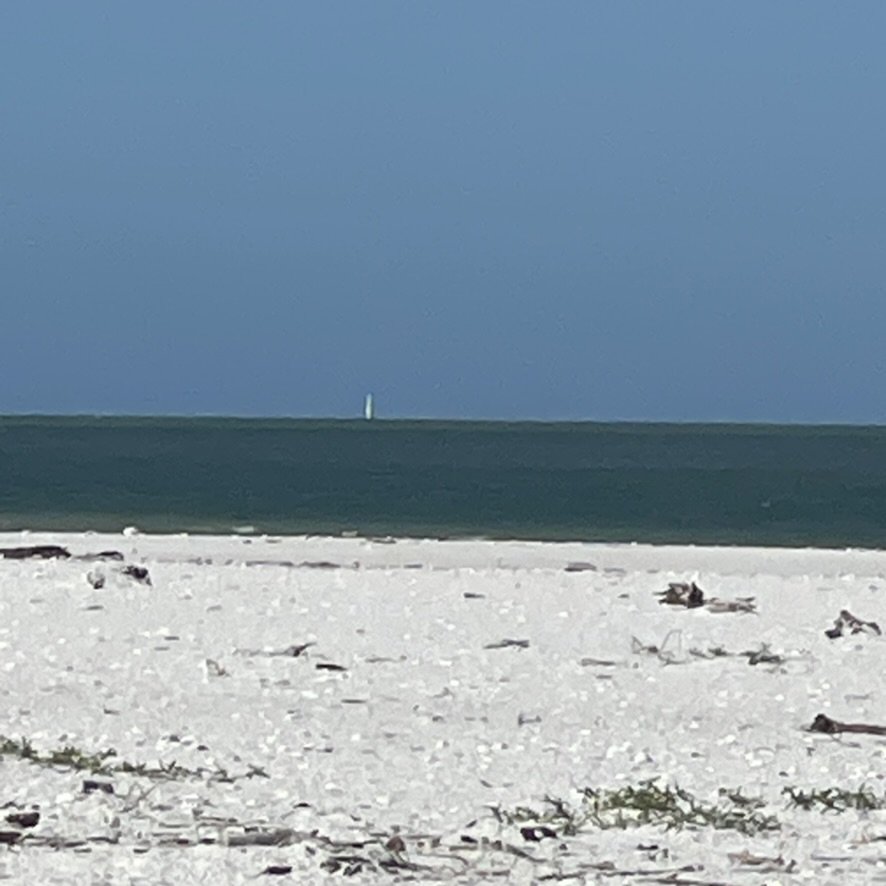
Kevin on the horizon

A sporty day en route to Caxambas Pass! The wind dropped, but the waves continued rolling in. We rode the tide out Big Marco Pass, and a welcome tailwind pushed us along the coast of Marco Island towards Caxambas Pass. I had to stay outside the breaking waves or risk getting barrel-rolled in the surf. Not fun with a loaded board. Kevin sailed around the outside, while I explored bays and islands around Caxambas Pass and Dickman Point.

Parade of barges in Caxambas Pass

We anchored in Caxambas Pass that night. hoping for protection from a north wind. The wind never rose as expected, but the strength of the current in Caxambas Pass surprised us. Tying off the board to the boat was difficult as I held a rope in one hand while tying off with the other. Failure was not an option.

Roseate spoonbills in Caxambas Pass

Sunday — a glorious day for me with clear skies and no wind. For sailors, not so much. I saw birds along the Morgan River, relaxed on Cape Romano, and watched sea life below as I crossed the sand flats in Gullivan Bay. Meanwhile, Kevin dozed while KneeDeep heaved to and drifted slowly.

Clear water on the sandflats in Gullivan Bay
Caxambas Pass to Tripod Key
Morgan River near Cape Romano
Cape Romano
Gullivan Bay

We met later that afternoon near Tripod Key, a short distance from our take-out in Goodland. Even then, as predicted, the weather was changing, and we wanted an easy exit. As I was paddling up Coon Key Pass, I chatted briefly with a paddler headed out for the night. It turned out to be Kayak Flexafari, a paddler whom I followed but had not yet met in person. Small world and great to meet in person.
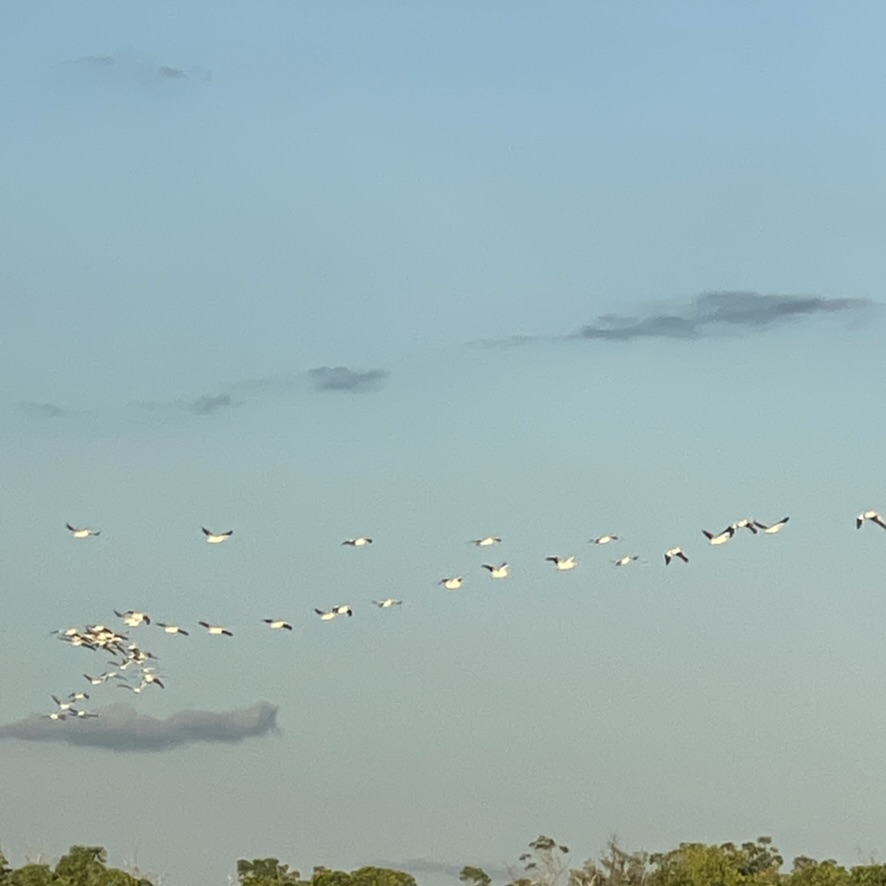
Flock of pelicans

As predicted, the wind came up the next morning. Fun enough for a sporty sail and paddle in the morning, but seriously gusty by the afternoon. Taking out the sailboat was the biggest challenge of the trip. Overall, we lucked out with our weather window. Enough conditions to make things interesting, but no white knuckles. And we almost followed our Plan A. Usually we’re down to Plan G by the time the trip is over.
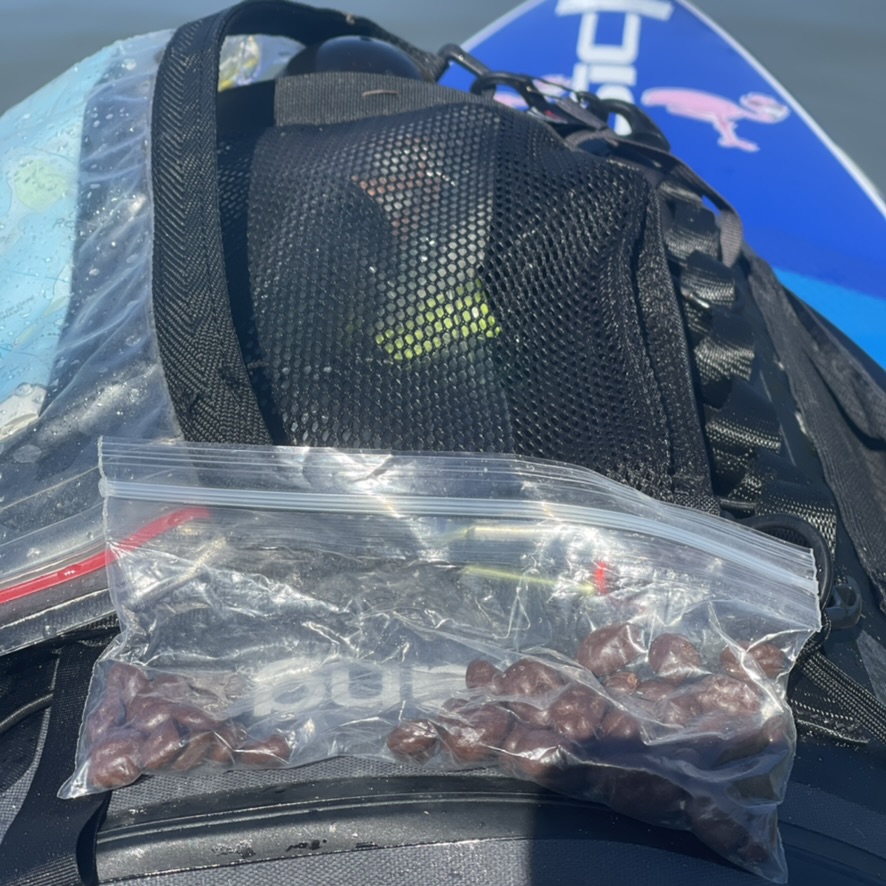
Raisinets–a poor choice in south Florida heat

The Ten Thousand Islands, Rookery Bay, and Everglades region is one of my favorite places in Florida. White sand beaches and spectacular sea and bird life. With all the islands, rivers, and channels, I always find something new to explore. On this SUP and sail trip, Kevin and I had the luxury of our floating tent. But Rookery Bay and the Ten Thousand Islands offers plenty of white sand beach camping opportunities, sites I have used on previous trips. I’m looking forward to our next trip back in January.
Ramp reserved for kayaks and paddleboards.

Paddleboarding the Lower Keys

Paddling the Florida Keys felt like entering a dreamscape—the horizon stretched out endlessly over calm clear waters. Kevin and I had come to the Lower Keys for a real vacation, defined as no training, no ambition, and no goals. The Lower Keys, broadly defined as the islands west of the 7-mile bridge to Stock Island (MM40-5), offer paddlers miles of bays and tiny islands to explore—perfect for Kevin’s 16′ Dagger Meridian kayak and my 14′ SIC Maui RS SUP.

Sunrise from our room aptly named ‘Flamingo,’ my watertribe name

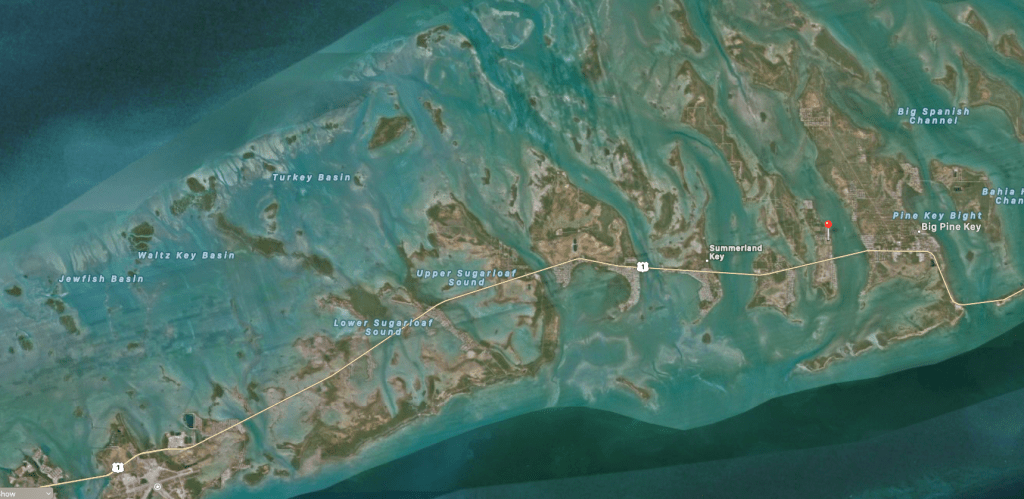
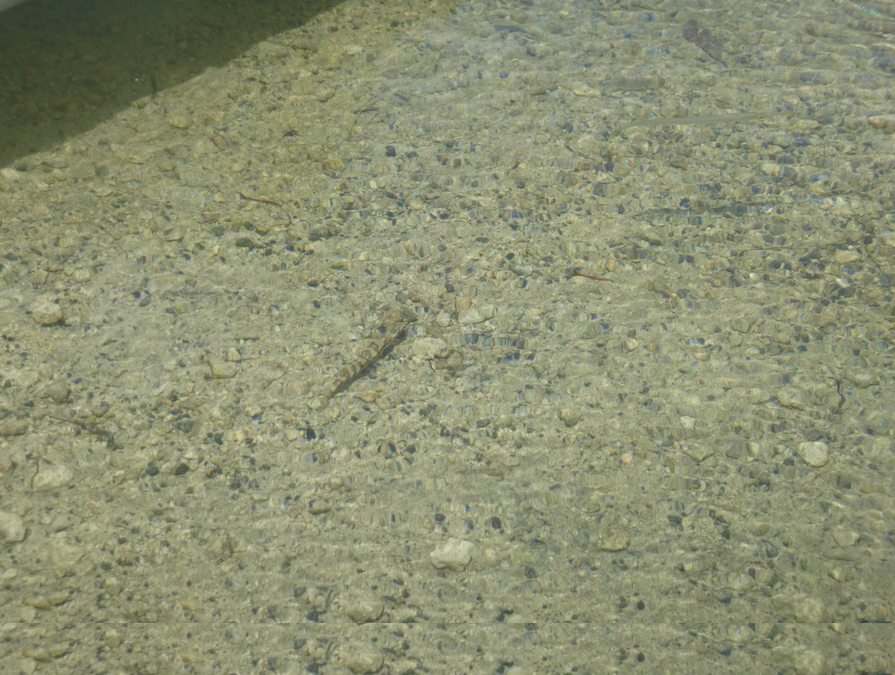
Kevin and I checked into Parmer’s Resort, located north of Route 1 on Little Torch Key, MM 28.5. This location gave us easy access to numerous paddling routes both bay/gulf side or oceanside, or north or south of Route 1. Almost every morning, I paddled my SUP right from Parmer’s, and from my paddleboard spotted schools of parrotfish just north of the resort. That perspective is one reason I love paddleboarding so much. I saw parrotfish, nurse sharks, barracuda, baby black tip sharks, and a fairly sizable bonnethead.

Where Should We Paddle?

Over the week, Kevin and I explored areas around Little Torch Key, Knock ’em Down Keys, Little Swash Keys, and Big Pine Key. We carried paper charts as well as a GPS for onwater navigation, but prior to paddling we consulted both the GO Paddling app and the FPTA website for information. GO Paddling provides information about and directions to launches across the US. The Florida Paddling Trails Association (FPTA) website offers more detailed information about specific routes across the state of Florida. FPTA provides a brief description of the route and its difficulty, the launch site, and kmz files. The kmz files can be translated to gpx for Garmin or imported into a variety of navigational apps.

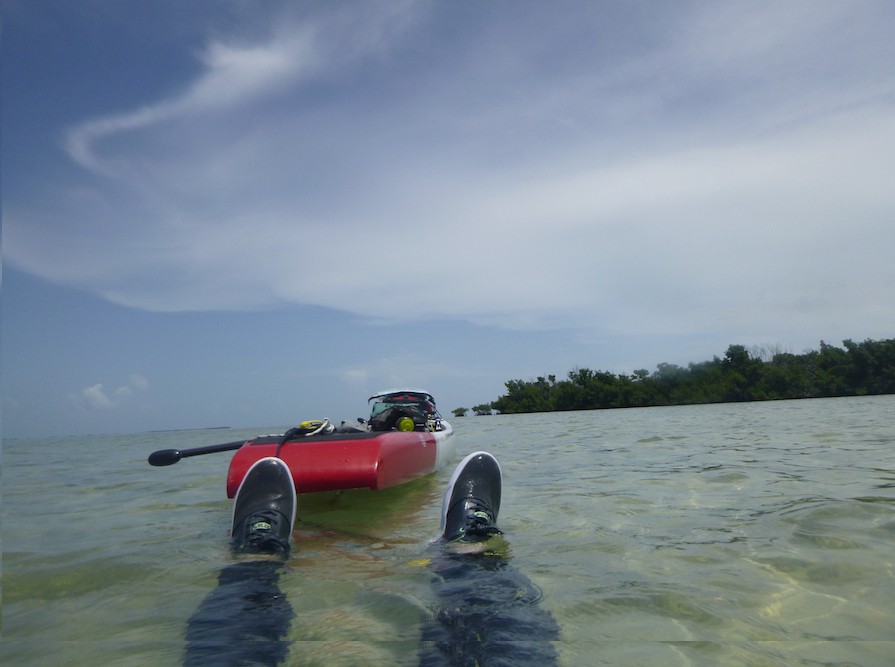
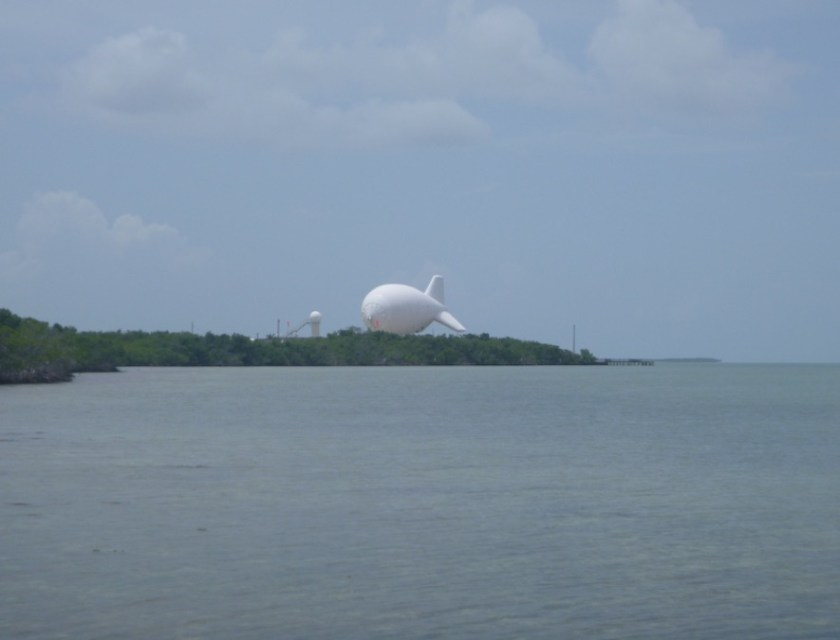
Perhaps my favorite trip was our launch from Cudjoe Key, home to Fat Albert the blimp, where we explored the Little Swash Keys. We paddled, floated, and watched fish until darkening skies hinted that it was time to return to our launch site.

As we paddled under Fat Albert, Kevin noticed that Fat Albert was descending. I looked up and, indeed, Fat Albert was getting lower, a unique and slightly disconcerting experience. Later, we discovered that Fat Albert is lowered when storms approach, so it turns out to be another source of weather information. Fat Albert was initially set up to counter drug-smuggling. I wonder if the presence of the restaurant Square Grouper at the end of the road is a commentary on its effectiveness.

Wind and Tide

Each day when deciding where to paddle, we checked wind and tide predictions. This is especially important for paddleboards because, in general, SUPS are more affected by these conditions than kayaks. Inflatable SUPS even more so. There are no shortage of apps for wind and tides, but few apps give information for tidal currents in the US. Boating HD (or Navionics) offers speed of tidal currents in some locations in Florida, mostly larger passes such as Boca Grande Pass in SWFL.

While tidal variations in the Florida Keys are generally not large, currents can be swift in small channels. And some areas are impassable at low tide, especially on a paddleboard with a fin, such as the south end of Little Torch Key.

The winds blew in a southerly direction for most of the week, so we launched from the north ends of the islands when we could. Fat Albert was flying high in clear skies when we droves to the end of Niles Road on Summerland Key. This kayak launch brought us to the Knock ’em Down Keys, just across the Kemp Channel from Cudjoe Key.

Splendid Isolation

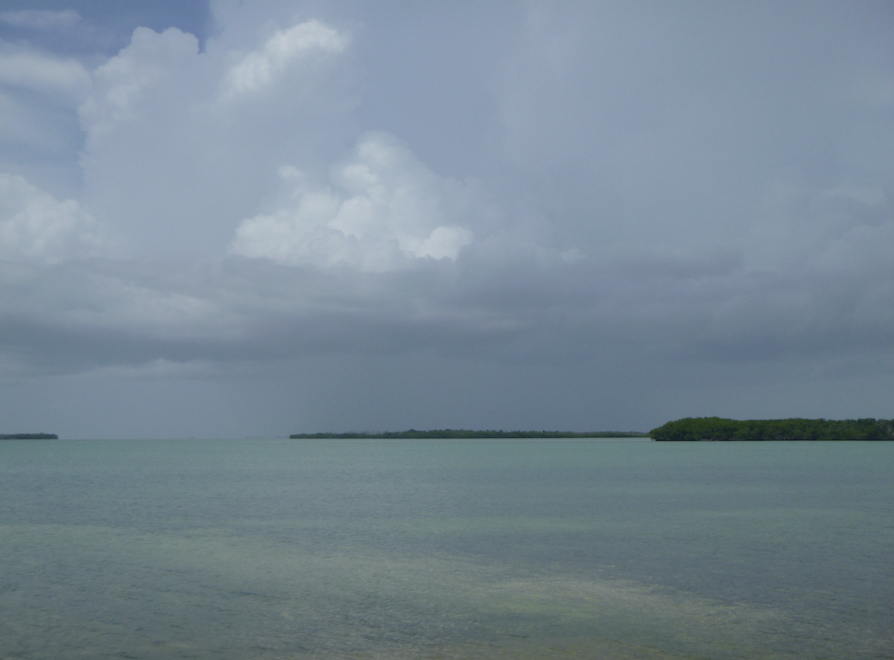
Kevin and I love this part of the Lower Keys because it feels so remote. Few houses dot the northern ends of these keys, and it was quiet. We saw very few boats and very few people.

There’s More Than Paddling

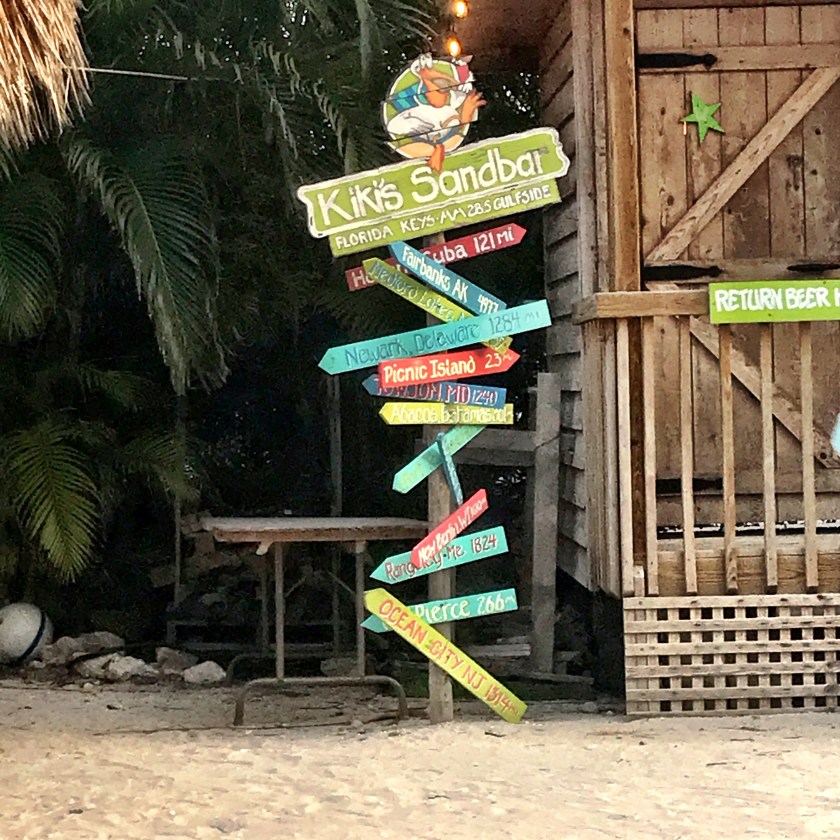
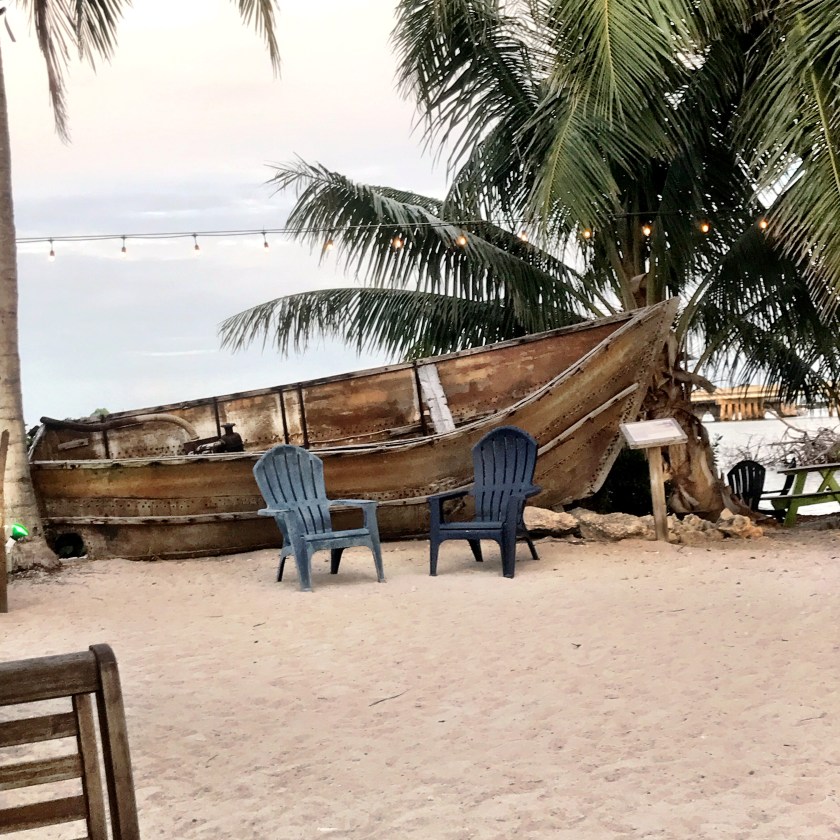
We visited the Turtle Hospital in Marathon where the rehabilitate and release a variety of turtles. Looe Key Reef Resort and Dive Center brought us the Florida’s cleanest reef to snorkel. Other than looking beautiful, coral reefs help buffer coastlines from storm surge. Kiki’s Sandbar provided great food and drink as well as a reality check. The boat and placard demonstrated the tenacity of immigrants and refugees to reach the freedom of North American soil.

Next Steps

Kevin and I have been to the Florida Keys numerous times before, first with Paddle Florida and then later with our 18′ sailboat KneeDeep 1. In those early visits, we explored with our sailboat and my 10 1/2′ inflatable paddleboard, and each time we quickly realized the limits of our skills and equipment. Now, with years of SUP and sailing expedition experience under our belts and better equipment, we’re eager to explore the more remote islands of the Lower Keys. We always say that all our trips are scouting trips. I suppose we had more ambition that we thought.

A fate to avoid