A Rare Summer Day on Wassaw Island

North end of Wassaw Island

Low wind, ideal tides, and clear skies bode well for a day on Wassaw Island. Lured by the siren call of a deserted beach, we launched boat and board from the Landings Marina on Skidaway Island and rode the tide towards the north end of Wassaw Island.

Wassaw Island is one of the Sea Islands, a string of barrier islands that stretch from the Carolinas to north Florida. These islands saw waves of settlements, from indigenous peoples to enslaved African-Americans to 19th and 20th century conservationists hoping to preserve the ecological character of these islands. In particular, isolation on these islands fostered the preservation of African languages, foods, and traditions among the Gullah-Geechee people who had once comprised the bulk of the Sea Island residents.

George and Sarah Eddy Parsons in 1866 (Courtesy of FWS)

Wassaw Island is one of several largely undeveloped islands along the Georgia coast, and we can thank wealthy industrialists and financiers for their semi-wild condition. Shortly after the Civil War, the Parson family from Maine bought the Wassaw and later transferred ownership to the US government to prevent development, forming the Wassaw National Wildlife Refuge. Today, Wassaw and nearby Little Tybee, Ossabaw and St. Catherine’s provide critical habitat for this marine ecosystem, and the isolated beaches foster an almost unimaginable sense of solitude and wilderness.

Blooming yucca
Leopard crab shell
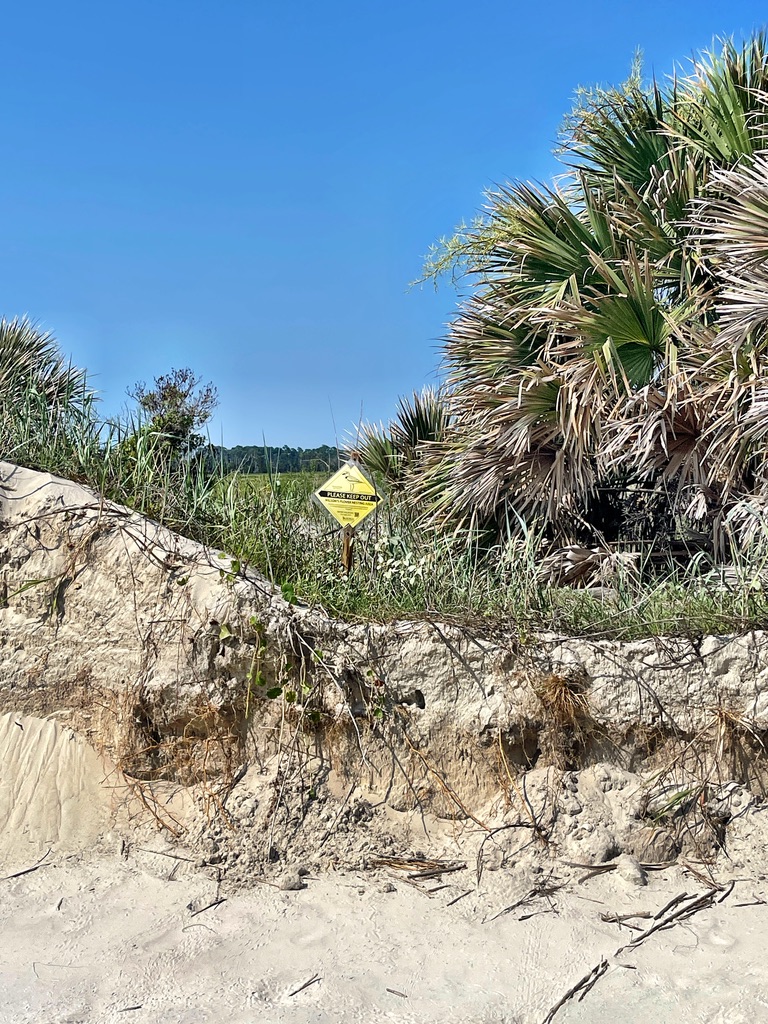
Wilson’s Plover nesting area

These islands are accessible only by boat, a perfect day trip for paddlers. However, this is coastal paddling, so it is important to wait for the right wind and tide conditions. Coastal Georgia boasts tides of up to 8-10′ feet, so that is alot of water moving in and out of these rivers and sounds.

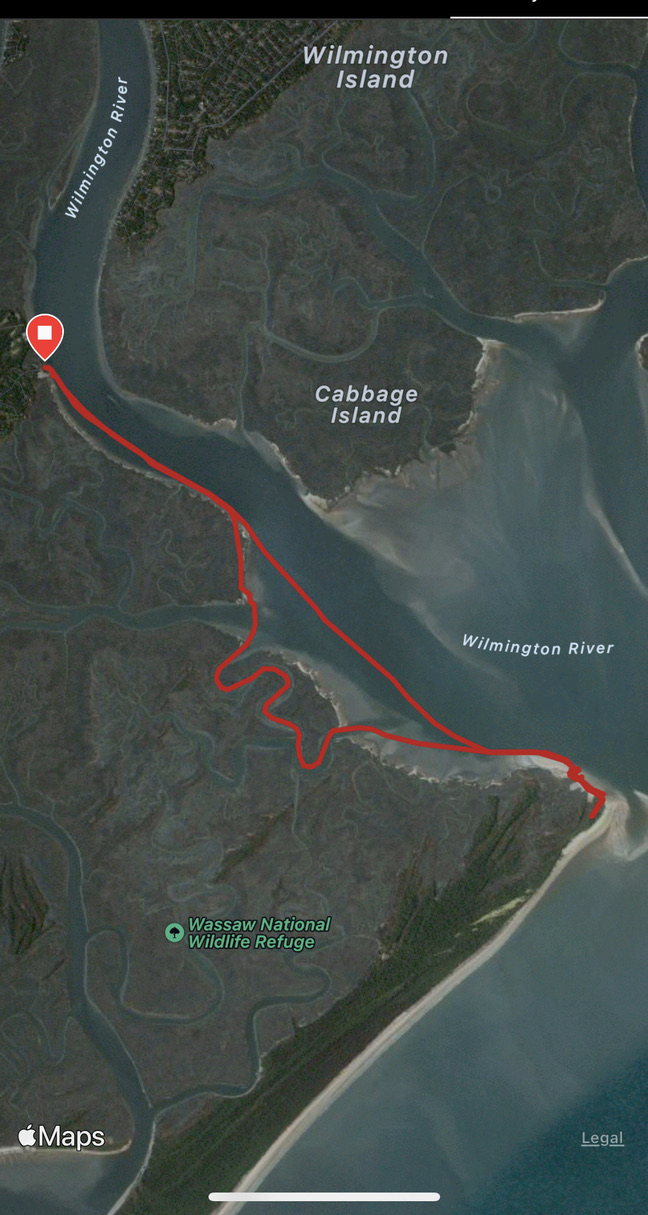
Courtesy of Google Maps.
Again, thank you Google Maps

From the Landings Marina, we paddled approximately 6 miles down the Wilmington River, across Romerly Marsh Creek, and landed on the north end. We carried our gear above the high tide line, hoping the trees might offer even the tiniest bit of shade. Then, a long refreshing float and our first wildlife encounter. A large stingray reminded us do the stingray shuffle.

Seeking shade
Failed attempt at shade
No attempt at shade

Cooled off by our float and Kathryn’s watermelon, we walked toward a laerge stone block just offshore. This, Kathryn said, is what remains of Battery Morgan, a gun battery constructed during the Spanish-American War. That this block was once well onshore reveals just how much the sand and islands change over the years.
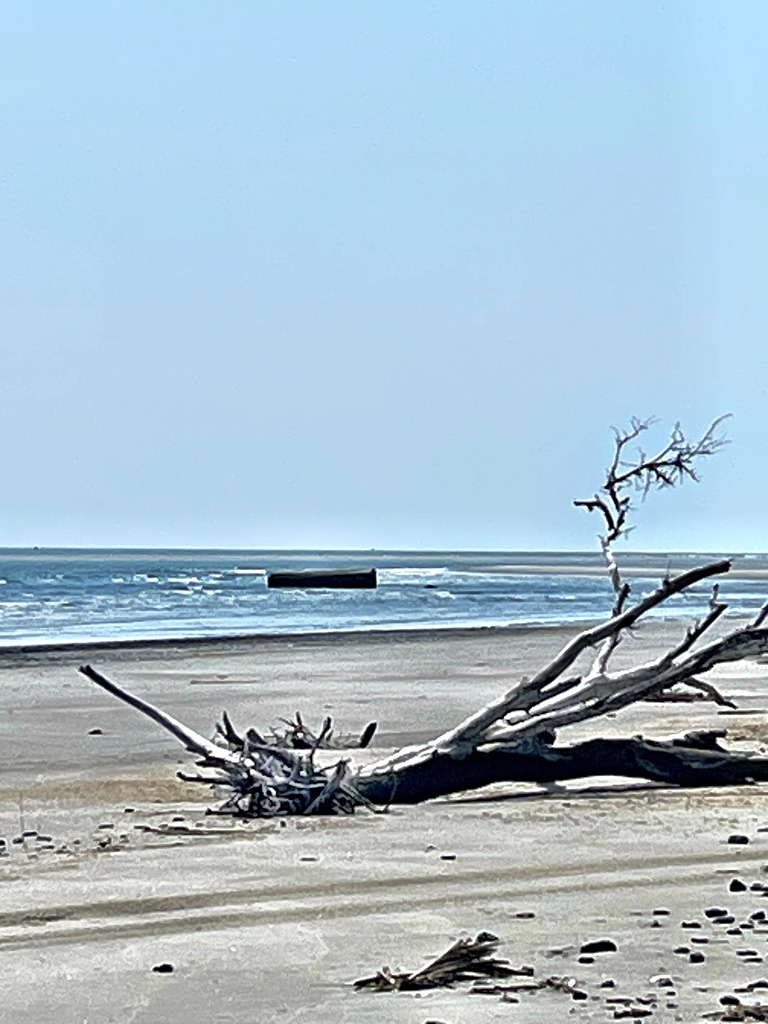
What’s left of Battery Morgan

The block marked the entrance to the island’s dirt roads and a self-guided cell phone tour. We ambled slowly up the road, then quickly marched back out when the mosquito brigade emerged in force. The pond and the birds could wait until the colder months.

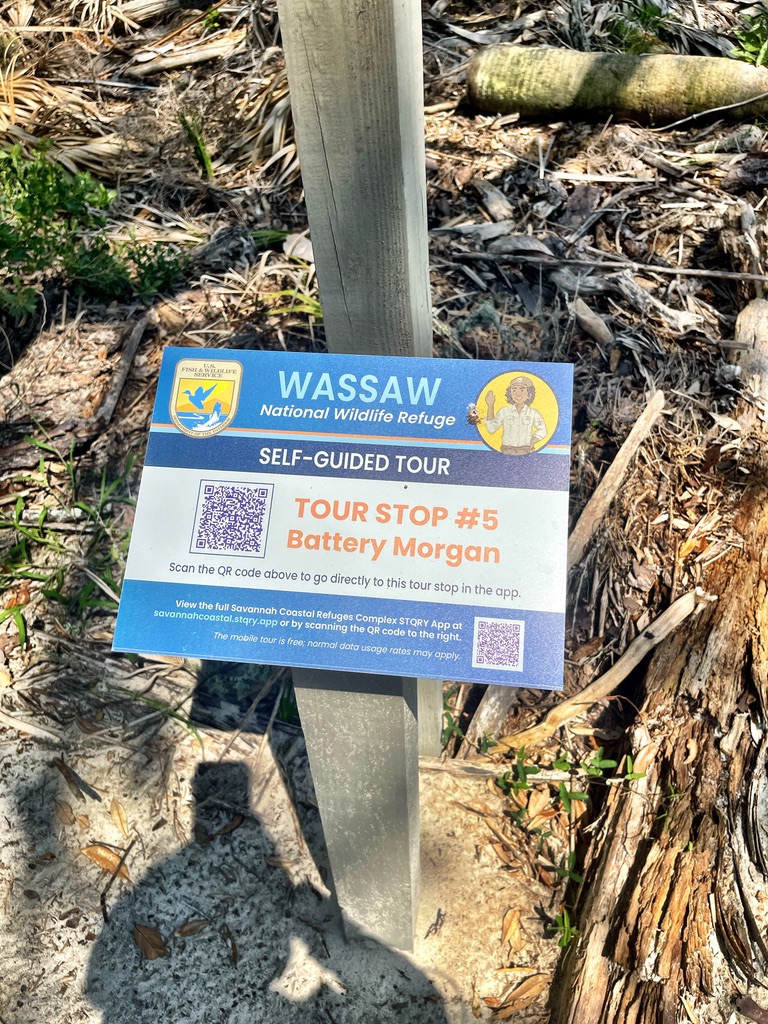
Road entrance
This will wait until January.
A creepy crawly?

After fleeing the mosquitos and any other critters inhabiting the interior, we wandered through the dead trees on the point. Storms and shifting tides create haunting boneyards of dead trees that appear on all of these barrier islands. These trees also function as a reef of sorts, providing shelter for fish and incubating oysters.
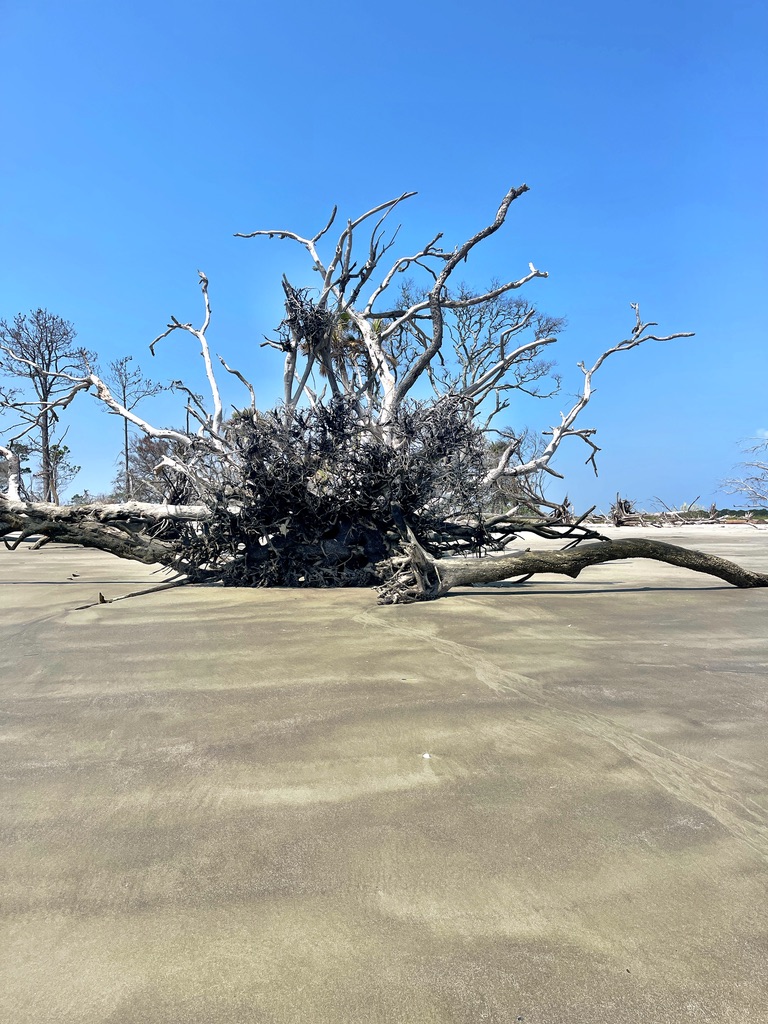
Oysters Rockefeller anyone?
Why I wear shoes

These barrier islands and the marshes surrounding them host great biodiversity, both on land and sea. The dark waters of estuaries—where the waters of rivers and the sea mingle—reveal life, or organic matter, and it is a mistake to dismiss this water as simply “dirty”, as some do. The biologically rich waters of marshes and estuaries support juvenile fish, that often need a mix of fresh and salt water, and the microorganisms that feed them.

As we paddled, I saw several turtle heads popping up and back down as soon as they saw us. The turtle population along the Georgia coast has risen, thanks to the efforts of volunteers on the different islands. Over the season, volunteers mark nests, protect the nests, and protect hatchlings as they make their way to the sea. The Caretta Project allows volunteers to stay on Wassaw Island for a week to identify nests and/or protect hatchlings, depending on the time. We saw several of signs which, we assume, mark regions for the turtle volunteers. An amazing week, for sure.

How did I get here? Hold my beer.
Free Willy!

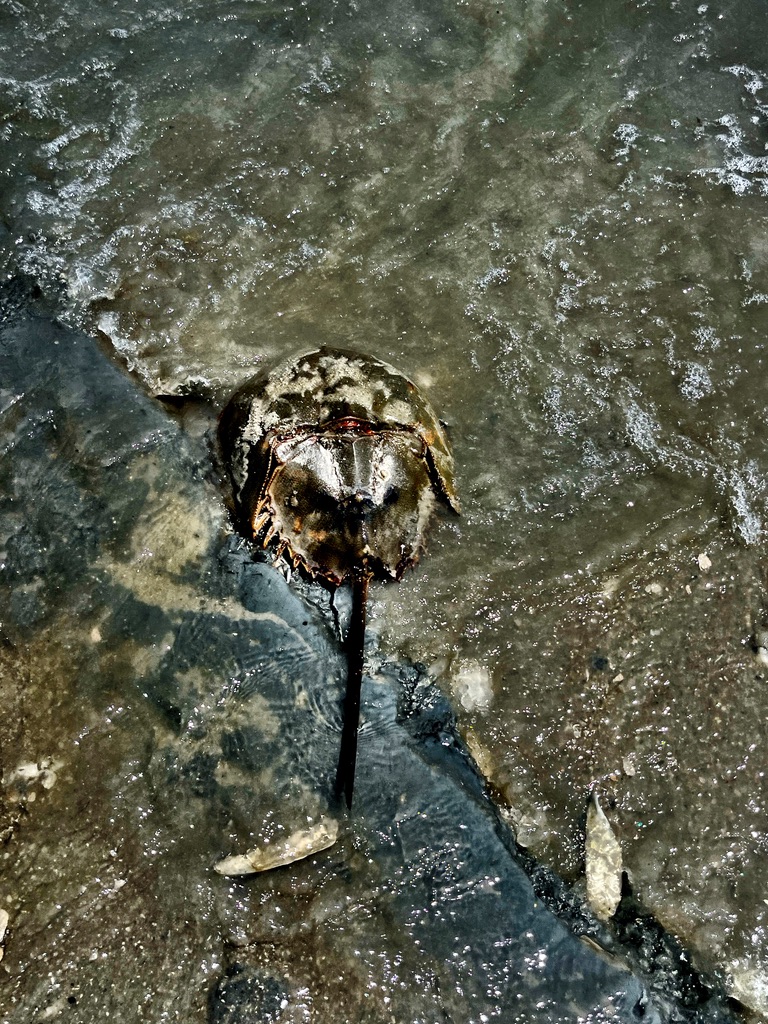
Walking back to our gear, we noticed a horseshoe crab trapped in the sand. As we removed sand to free it, its tail twitched, and finally it swam away. Although horseshoe crabs might seem ubiquitous on the Gulf and Atlantic coast, their numbered have dwindled, due to both environmental factors and their blood being used for biomedical reasons.

Deadman’s Hammock Photo credit: Kathryn Lapolla
Photo credit: Kathryn Lapolla

And time for us to leave as well—an incoming tide, and the wind at our backs. Instead of retracing our steps, we detoured past the oyster mound at Dead Man’s Hammock, wound our way through Old Romerly Marsh Channel, and then back across Romerly Marsh Creek to the Wilmington River. Kathryn warned, me not to take that tempting left up Romerly Marsh Creek. It’s a mistake you do not repeat.


We could have detoured more, but thoughts of of Leopold’s ice cream, a Savannah delicacy that my grandmother remembered from her childhood, fueled a speedy return. We slowed briefly to watch several baby sharks playing and feeding, then went to feed ourselves. Sitting on the marina deck, we reflected on such an unusual summer day—no signs of the afternoon storms. Typically signs of building storms chase us off the water by early afternoon. So while we lucked out on the day’s conditions, in reality we are even luckier to have such a biologically and culturally significant area to explore.

Paddling Georgia’s Barrier Islands

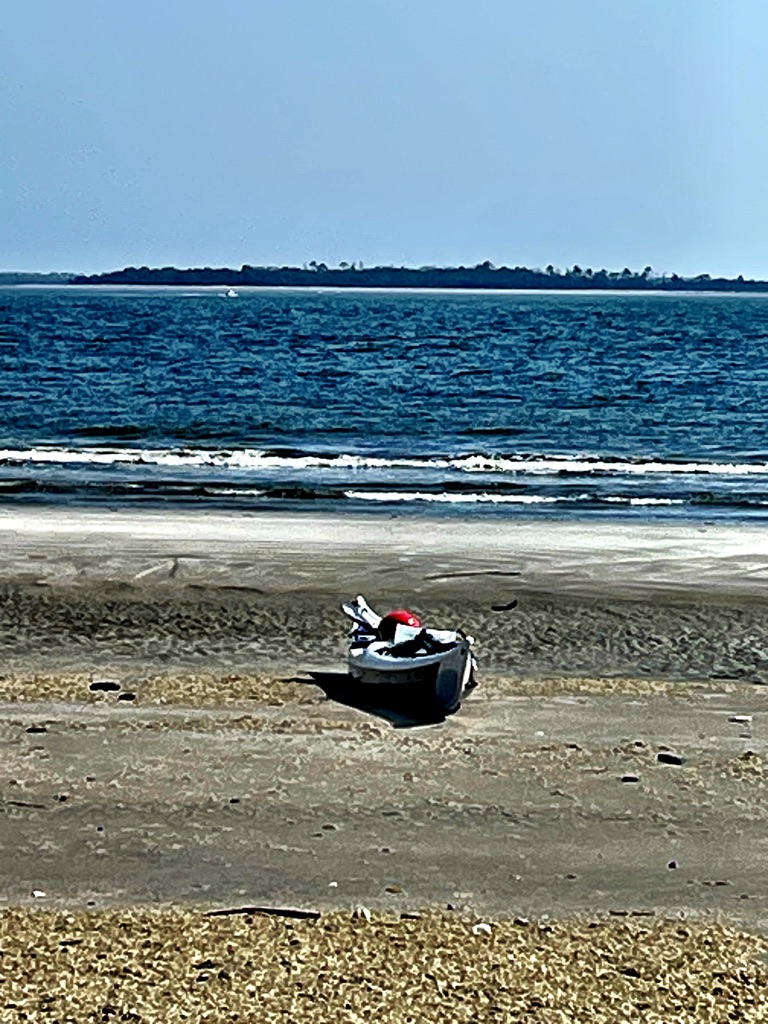
Landing spot
Camping on Ossabaw Island

Paddling down the Bear River into St. Catherines Sound, the ocean and sky extend as far as my eye can see. St. Catherines Island to my right, or south, and Ossabaw Island—my destination—to my left. Georgia’s barrier islands hug the coast like a strand of pearls in the rough, and Ossabaw and St. Catherines are two of the finest of the string stretching from Tybee to Cumberland. Georgia’s barrier islands themselves are part of a larger chain—the Sea Islands—that extend from South Carolina to north Florida. The expanse of sea, sky, and beach give the illusion of wilderness, that my footprints on the beach are the first to land, but I know better. The sea has washed away the footprints of multitudes, including native Americans, enslaved Africans, colonial English, and, finally, the wealthy families who preserved these gems.

Ossabaw Island
Courtesy of Sherpa Guides Georgia

Paddling the Georgia coast is a bucket-list item for many kayakers, but wilderness that beckons makes the trip logistically difficult. Most islands south of Little Tybee either strictly regulate or prohibit camping, so it’s either paddling with a guide or stealth camping (not advised). So, when Marsha Henson and Ronnie Kemp of Sea Kayak Georgia invite me to join their trip to Ossabaw and St. Catherines, I said yes. Marsha is a certified Ossabaw guide, so our group was permitted to camped on Ossabaw while we learned about this biologically- and historically-rich island.


Coastal Georgia
Coastal Georgia (Courtesy of Google Maps)

Kilkenny
Kilkenny Marina

Loading boats
Loading boats on the dock


Ossabaw point
Ossabaw’s southern end

Way too early one morning, our group of seven gathered at the Kilkenny Marina in Richmond Hill. After loading our boats with four days of food, gear, and wine, we launched onto Kilkenny Creek for the seven mile paddle to our campsite. Riding the out-going tide, we paddled  down Kilkenny Creek to the Bear River which carried us to St. Catherine’s Sound and the southern tip of Ossabaw Island.

We took a break before the day’s greatest challenge—finding the creek that led to our campsite. We paddled out and around the ocean side of Ossabaw, looking for the creek. Kevin and I had hoped for some surf on the sandbar that protected the island, but the wind was calm, with little swell that day. Finally Ronnie spotted the creek near a large deadfall. Fortunately we had enough tide to reach our campsite, about ten minutes upstream.

Gator slide
Canoe launch by day, gator slide by night

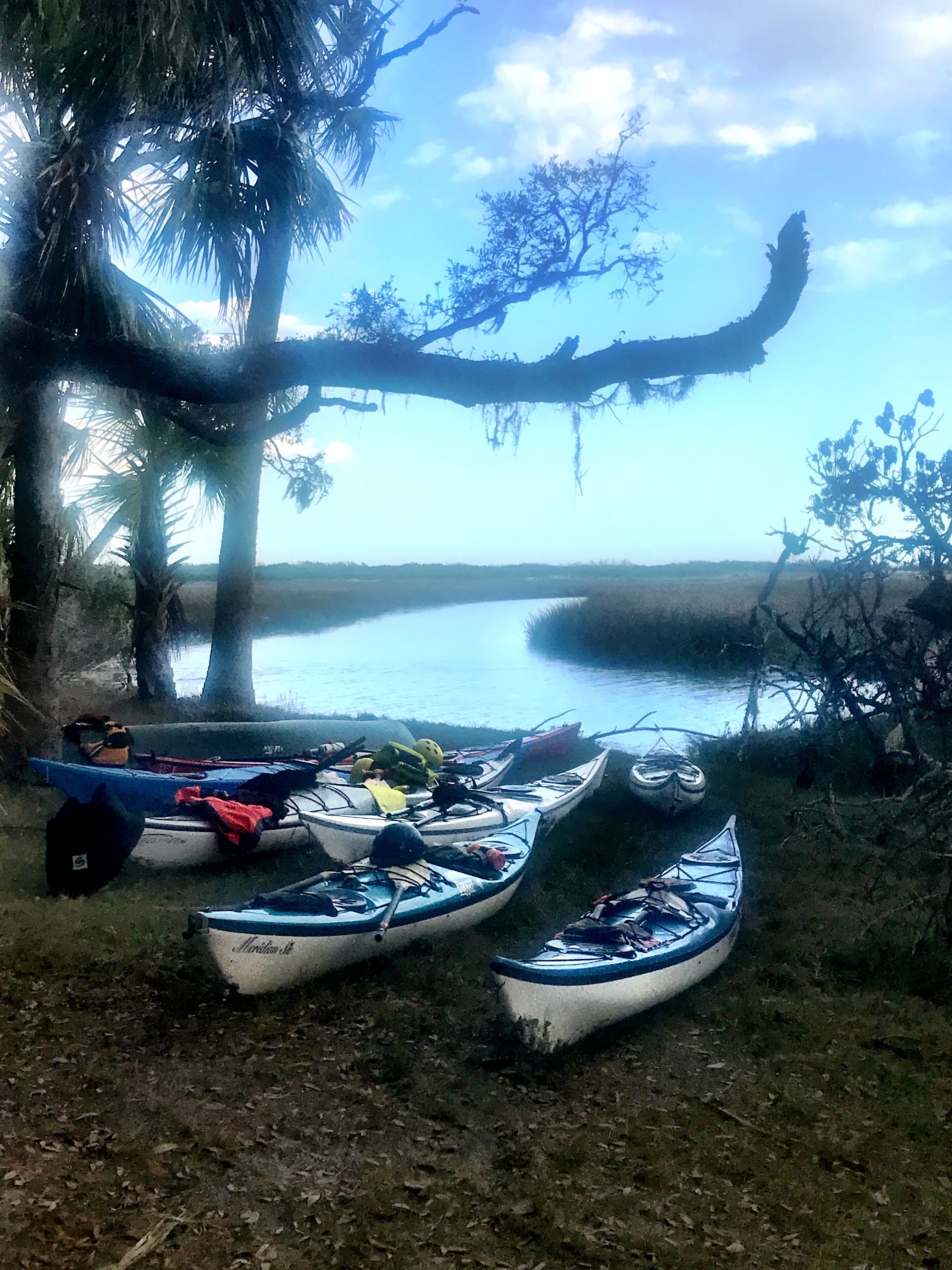
Landing with kayaks
Kayaks at rest

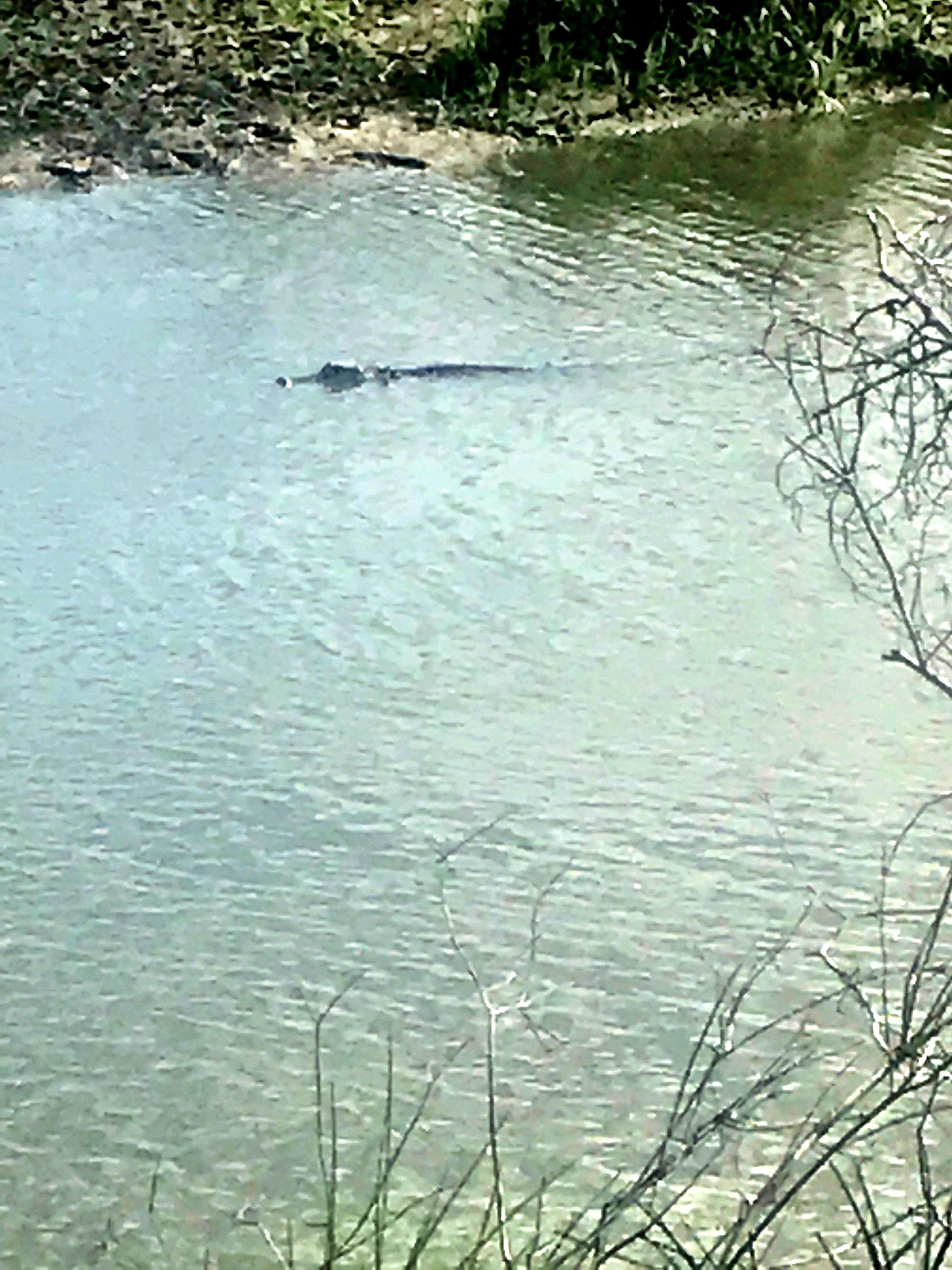
Resident gator
Campsite gator

The ebbing tide revealed our next challenge—climbing up the slick mud bank. I found a clear patch, aka gator slide, and dragged my kayak up onto the grass. Victory—only half my drysuit was covered in mud! While the rest of the group came onshore, a small gator swam back and forth across the creek, staking claim to our launch.

Water tower
Our water supply

Drysuits
Drying the drysuits

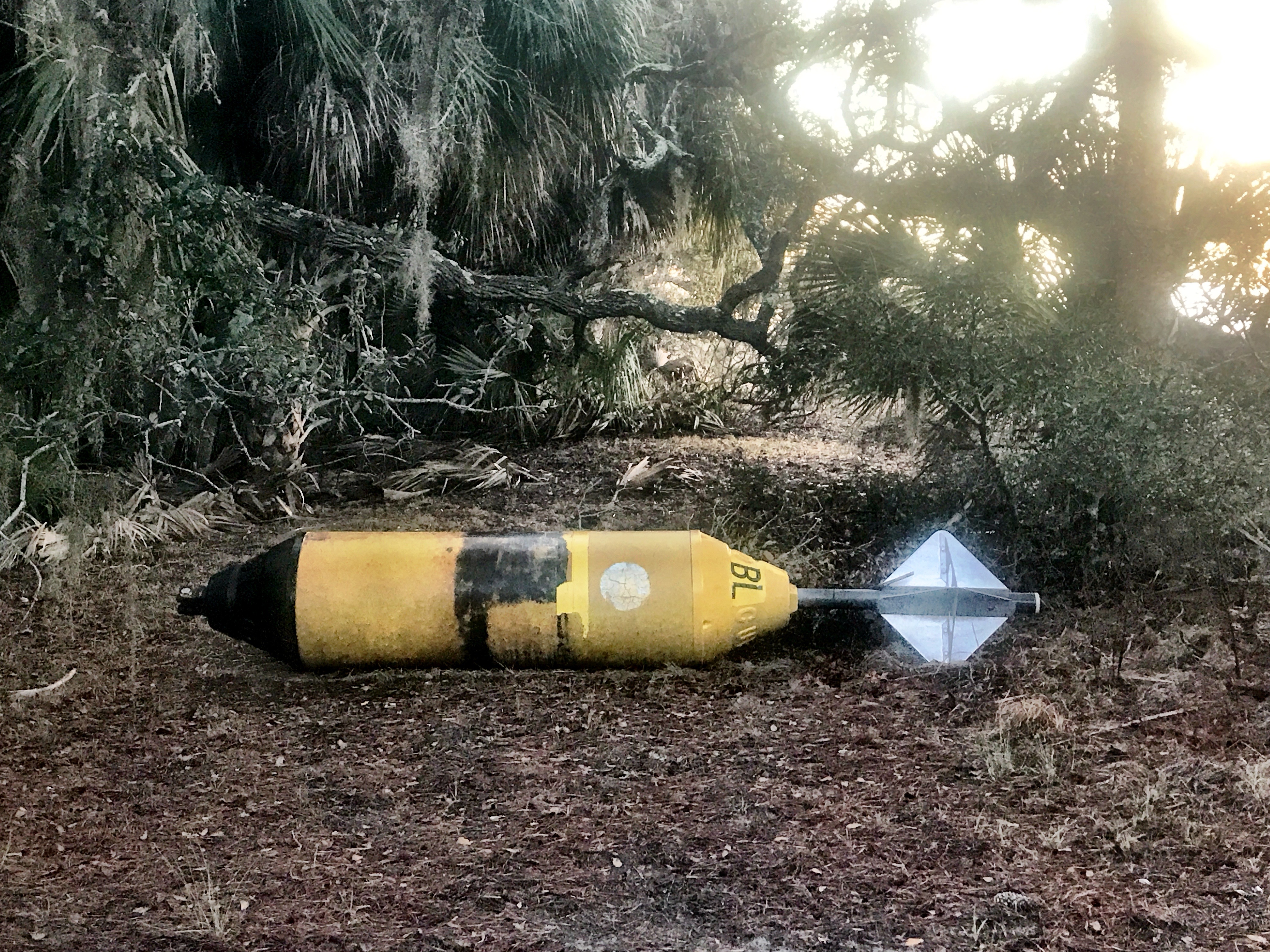
Campsite buoy
Campsite buoy

Ossabaw Island Foundation manages two primitive group campsites for visitors, and our campsite was far from the island’s few buildings. We can thank the Torrey family from Michigan for preserving Ossabaw island. The family bought the island in 1924, and their daughter Eleanor Torrey West created the foundation in 1961. In 1978, the families deeded the island to the state of Georgia, creating Georgia’s first Historical Preserve. Several other Georgia barrier islands also followed similar gifting patterns, including Cumberland and St. Catherines. Because these islands passed directly from the families to the state of Georgia, they remain largely undeveloped, and visitors experience the ecosystem of coastal hammocks.

Campsite
Nothing says relaxation like a hammock

Marsh
Marsh panorama from my campsite

The coastal ecosystem is not shy. From the moment I stepped out of my kayak, it swarmed around my head, dive-bombing my drysuit in search of exposed skin. The gators, no-see-ums, and mosquitos made clear that I was merely a link in their food chain. In fact, shortly after my trip, actor Will Smith, filming Gemini Man on the Georgia coast, lamented that “y’all gotta do something about these bugs.”

The marshes and estuaries are biologically rich, fed by the seven-foot tidal flows of the Georgia Bight. The concave curve of the southeast coast funnels the tidal flow into the center, near Savannah and Tybee Island. Fish, clams, oysters, and shrimp thrive in the nutrient-rich mud of estuaries, nourishing birds, mammals, and humans. These islands once supported large populations of native Americans, followed by waves of immigrants from Spain, France, and England. The English, in turn, enslaved Africans for their rice plantations, favoring west Africans who had created novel techniques of tidal irrigation in Gambia and Senegal.

012-Georgia-Bight
(Courtesy of Brown’s Guides)

Today, these flows draw kayakers and stand-up paddle boarders for river mouth surf. The ever-changing sandbars St. Catherines Sound and the Back River near Tybee Island, for example, create rough water and waves that are fun for surf and rescue training. Storms and hurricanes frequently rearrange the sandy ocean floor so that surf patterns can change from one week to the next. Even islands disappear and reappear. Just last year, Hurricane Irma created an island now named Little Blackbeard. I had heard that the sandbar near St. Catherines had some of the best surf in the area, so I hoped for some waves when we crossed St. Catherines Sound from Ossabaw to St. Catherines Island. No such luck.

St. CAtherines
Lunch on St. Catherine’s

St Catherines buoy
Ripped free and tossed ashore on St. Catherines

We landed on St. Catherines, like Ossabaw, minimally developed. But sitting on the beach, none of us could have guessed that lemurs roam this coastal forest. As a child, I visited St. Catherine’s as a child and learned about the New York Zoological Society’s (or the Bronx Zoo, as we called it) rehabilitation programs. St. Catherines Island hosts several  animal rehabilitation programs as well as field schools in archaeology and ecology.

Please let there be surf on the way home, I thought. The incoming tide rewarded our patience as waves broke over the sandbar for a short surf session. We didn’t linger long — dark clouds loomed in the western sky.

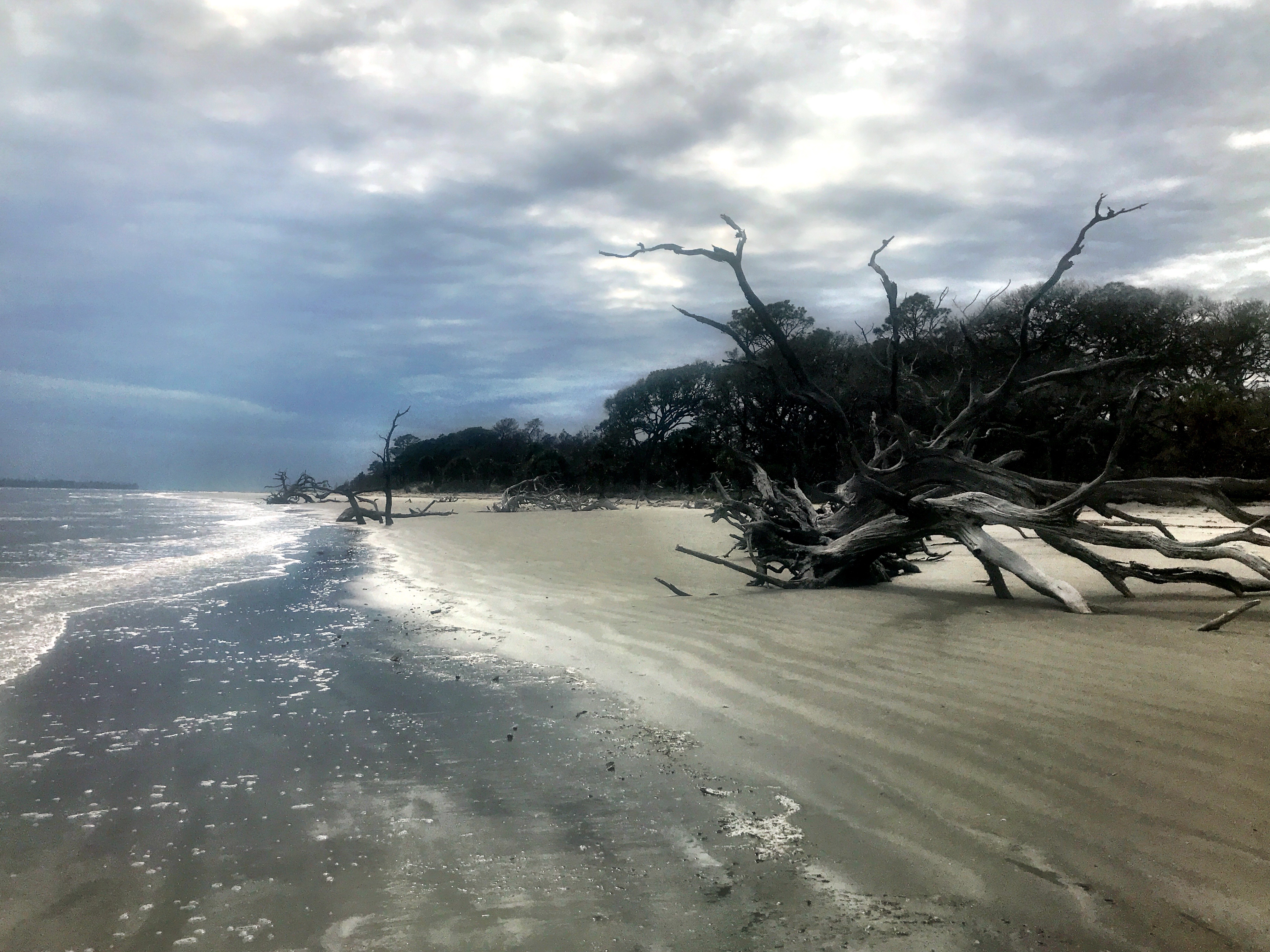
Deadwood with storm
Dark clouds over an Ossabaw Boneyard

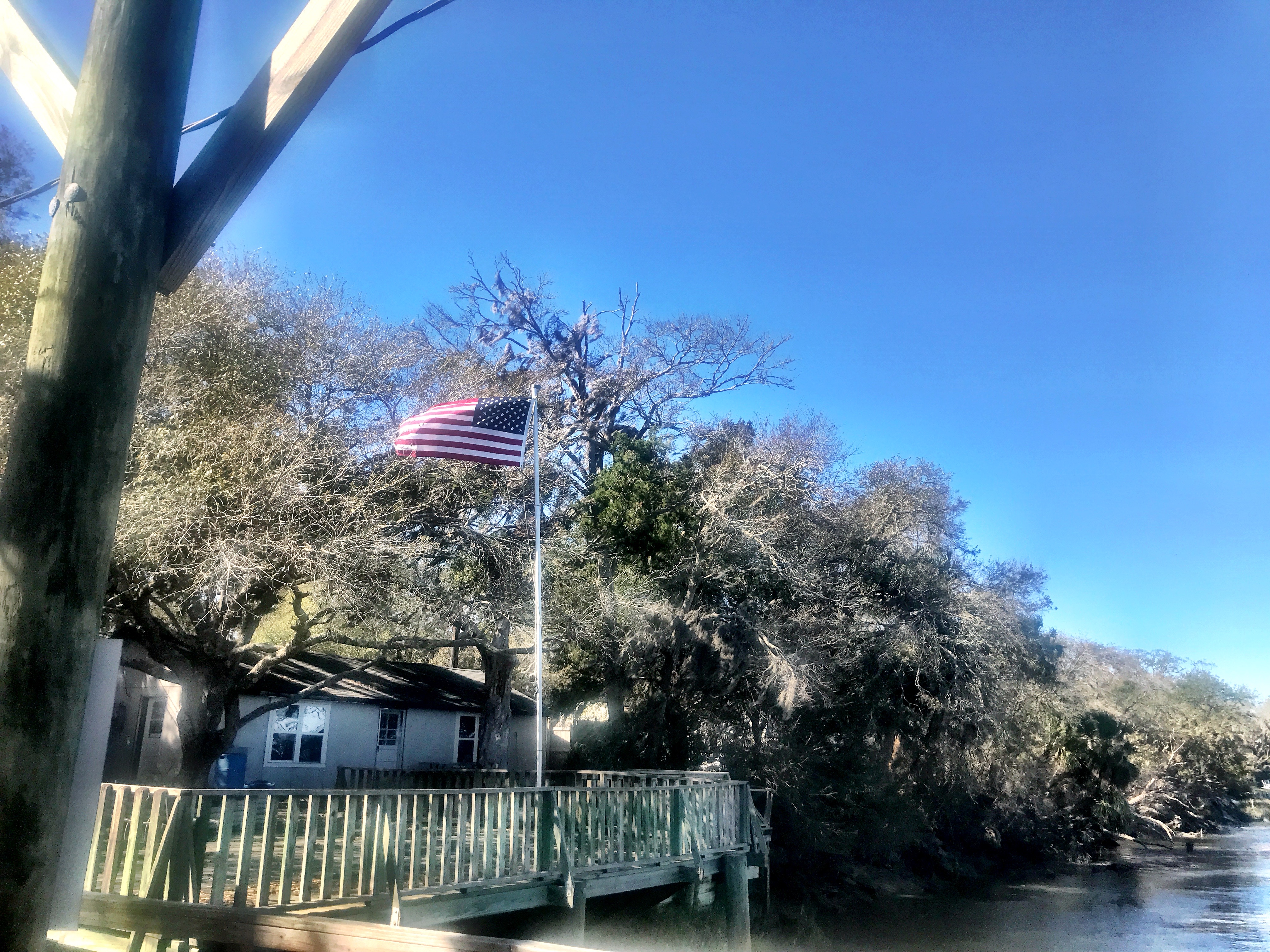
Flag
A little breeze perhaps?

The next morning, we fought a stiff wind back to the marina, reversing our journey. For several years, I’ve looked longingly across Waussau Sound, wanting to continue south towards Sapelo and  Cumberland, to learn about their unique histories and cultures. Seeing Ossabaw has whetted my appetite to see the rest of Georgia’s barrier islands.  To quote Marsha, it’s “Ossabawesome!”

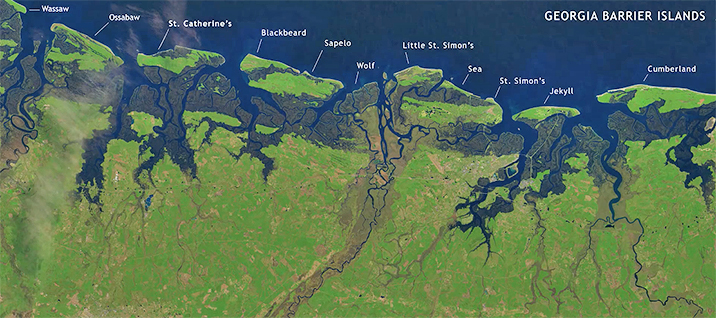
716-georgia-coast
Courtesy of Georgia Coast Atlas