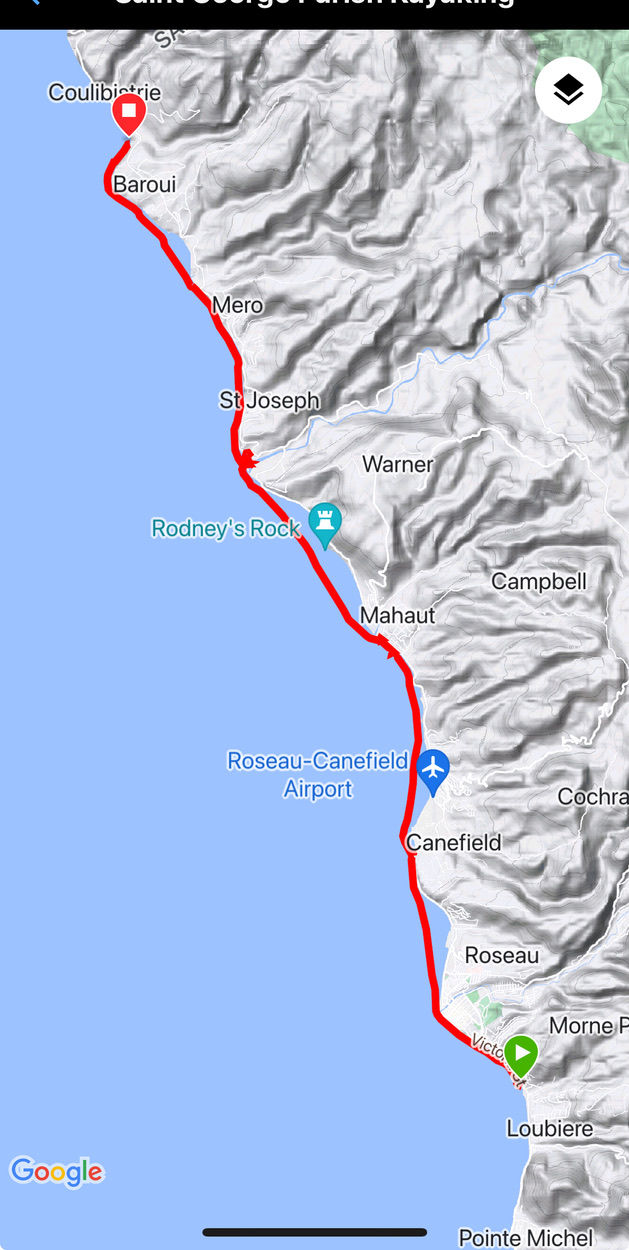
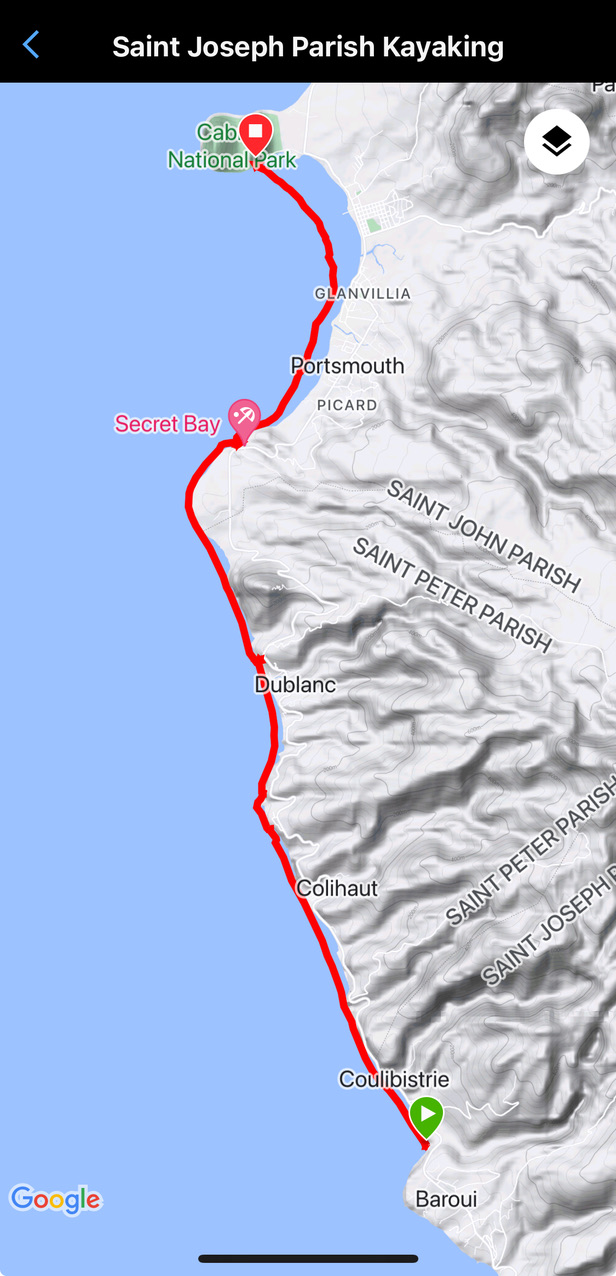
Explore Dominica by kayak? Try the Waitukubuli Sea Kayak Trail, a 40-ish mile paddle trail down Dominica’s stunning western coastline. For years, Dominica’s rugged landscape and range of outdoor activities had intrigued me, and when Michael Gray of Uncommon Adventures organized this trip, I jumped in. Finally March 2024 arrived, and we were on our way.
Not for the faint of heart
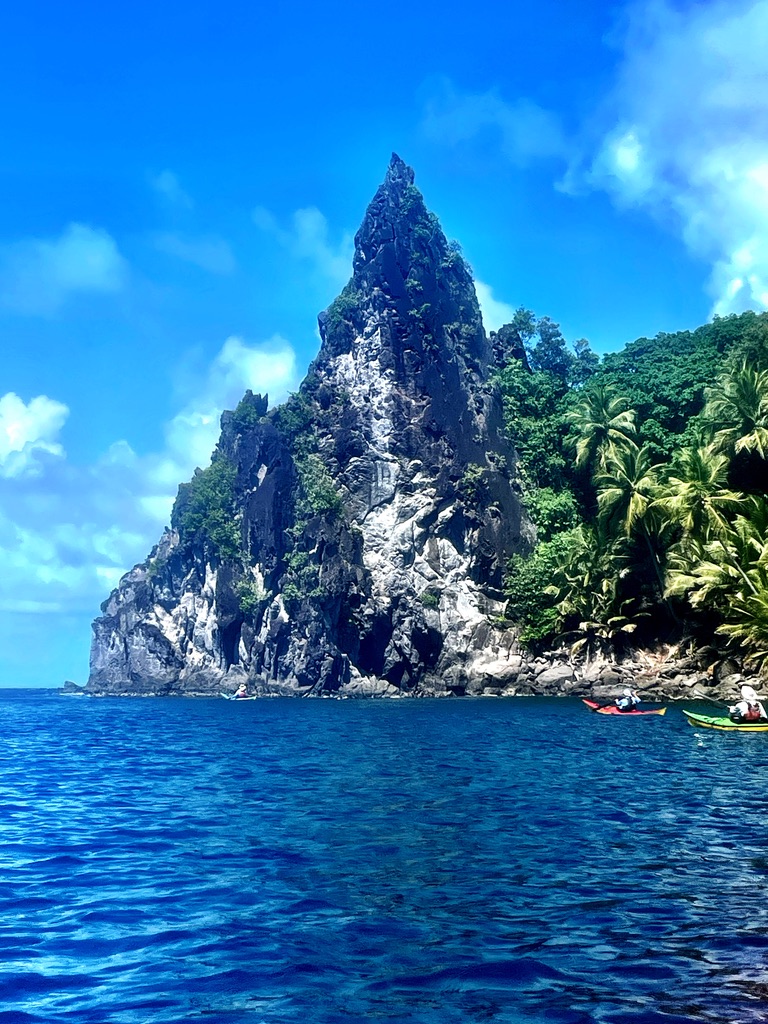
Dominica’s rugged volcanic terrain
Before we met our group from Uncommon Adventures, several of us spent one night at the Jungle Bay Resort, and we agreed that one night was not enough. Their wide range of outdoor activities demands a return trip.
One of three pools
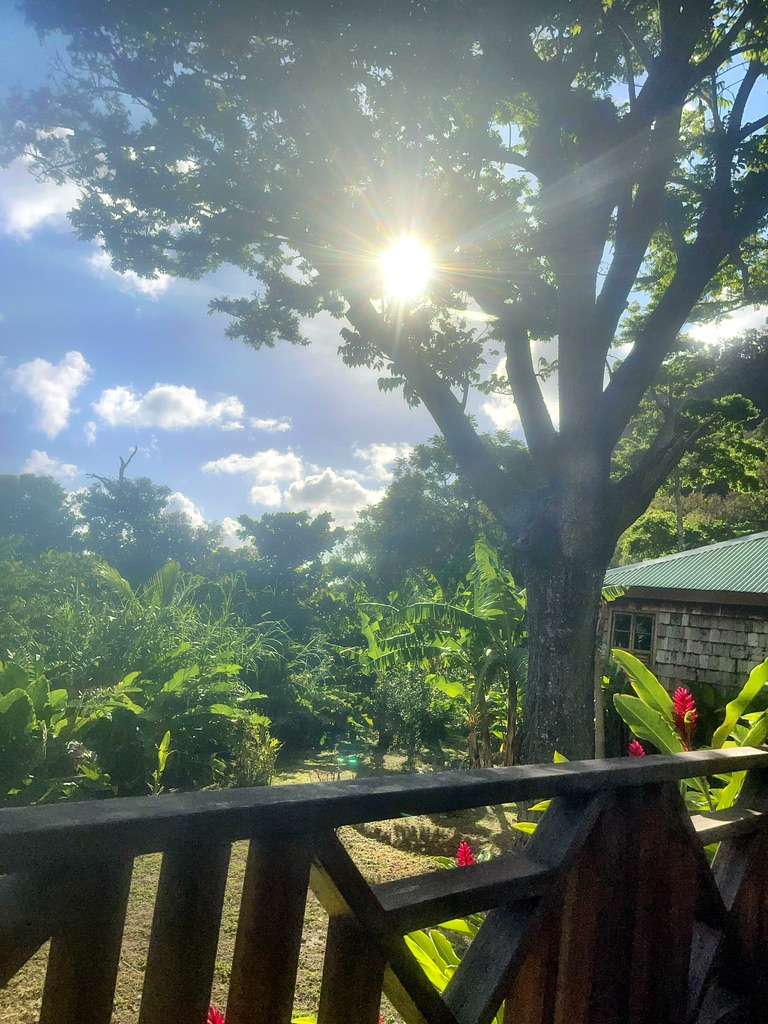
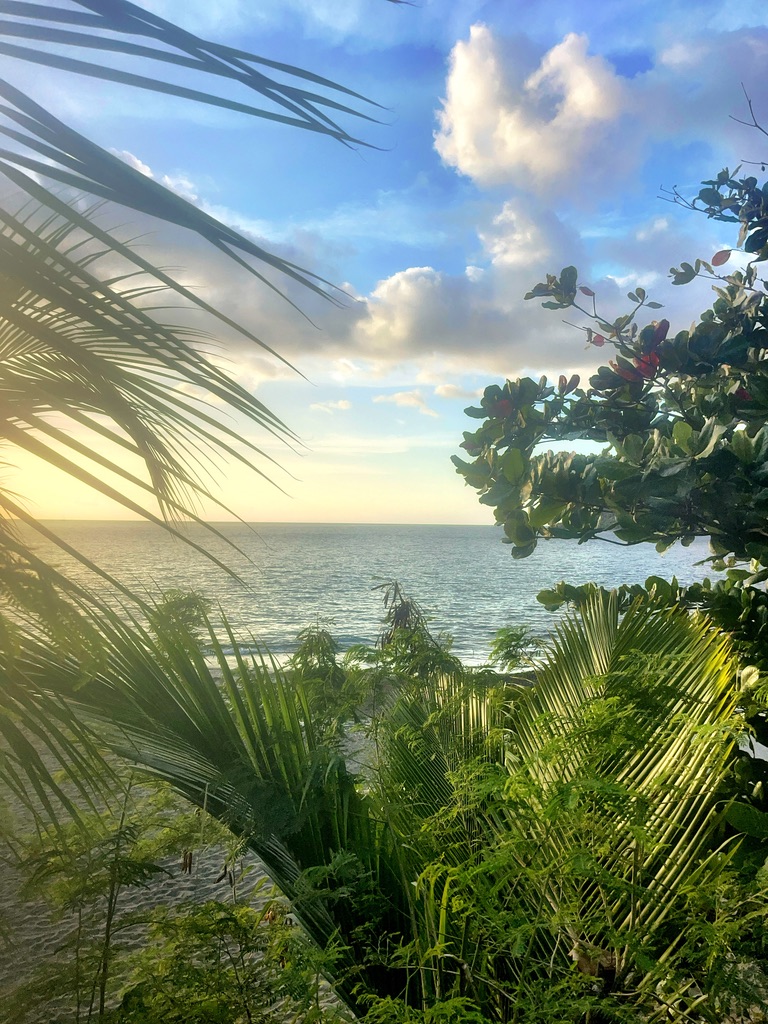
View from our cabin
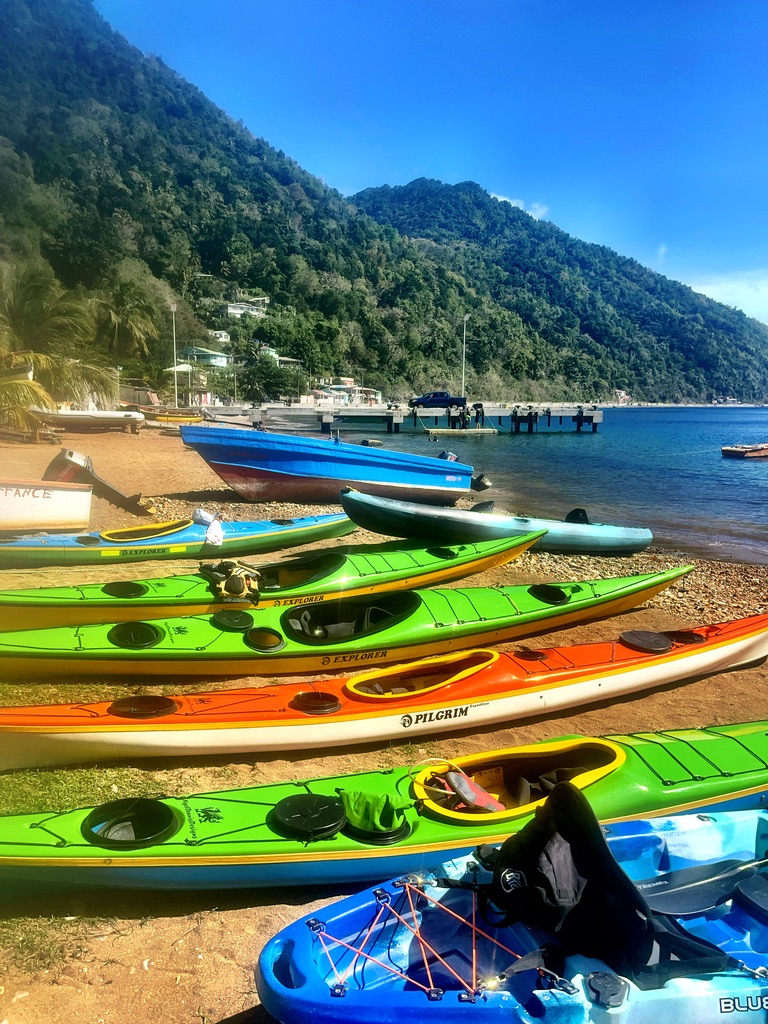
The next day, we arrived at the Soufriere Outdoor Centre, only a short and steep drive from the Jungle Bay Resort. Wes Moses started the Soufriere Outdoor Centre and, with his Dominican colleagues, established the Waitukubuli Sea Trail which parallels the Waitukubuli Trail through the mountains. After meeting Wes at a Sea Kayak Georgia symposium, I had been following the progress of the guesthouse and trail. Up until now, relatively few have paddled the Waitukubuki Sea Trail, but recent coverage in Travel and Leisure and Youtube should change that. That afternoon, we chose boats and outfitted them for the week. Wes had a wide selection of NDKs (Nigel Dennis Kayaks), and I was fortunate to get a Pilgrim Expedition, a boat I have paddled extensively.
Monday—finally on the water. Michael and Dominican guide Kerry Alleyne led to the southern tip of Dominica, where the Caribbean meets the Atlantic. Michael had warned us about winds whipping through the mountains, but none of us were prepared for the abrupt transition from Caribbean paradise to boat-stopping gusts and back, all in under a minute. The winds dropped as the week went on, but it kept us on our toes.
We climbed up to Scott’s Head, the south end of the trail
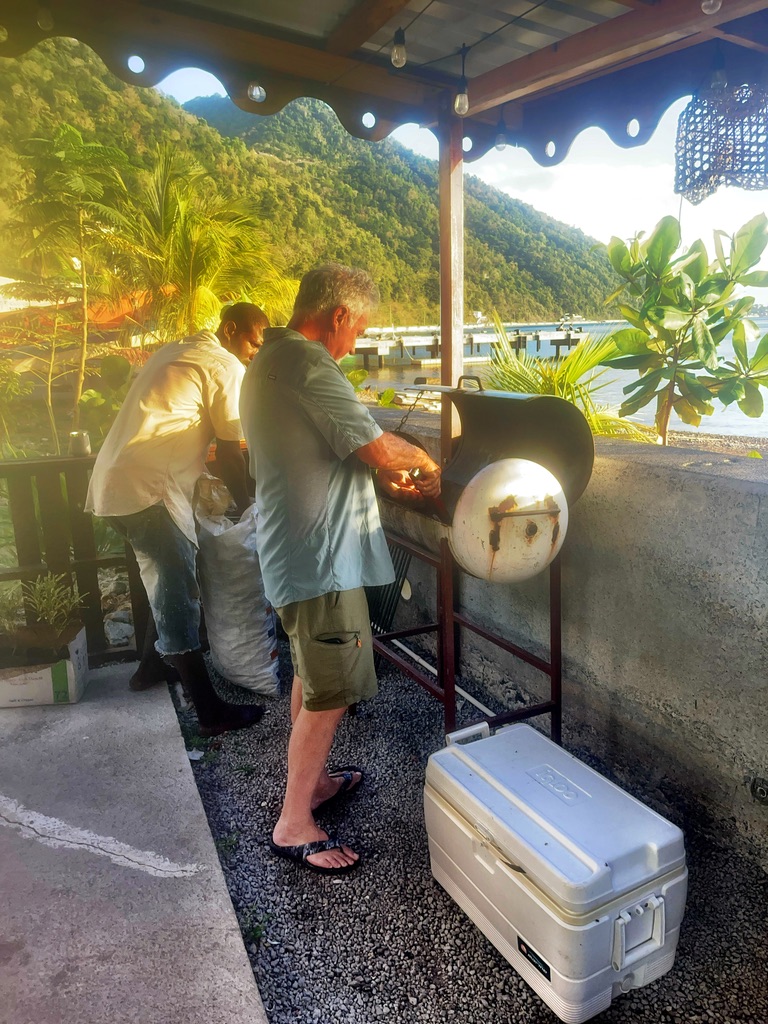
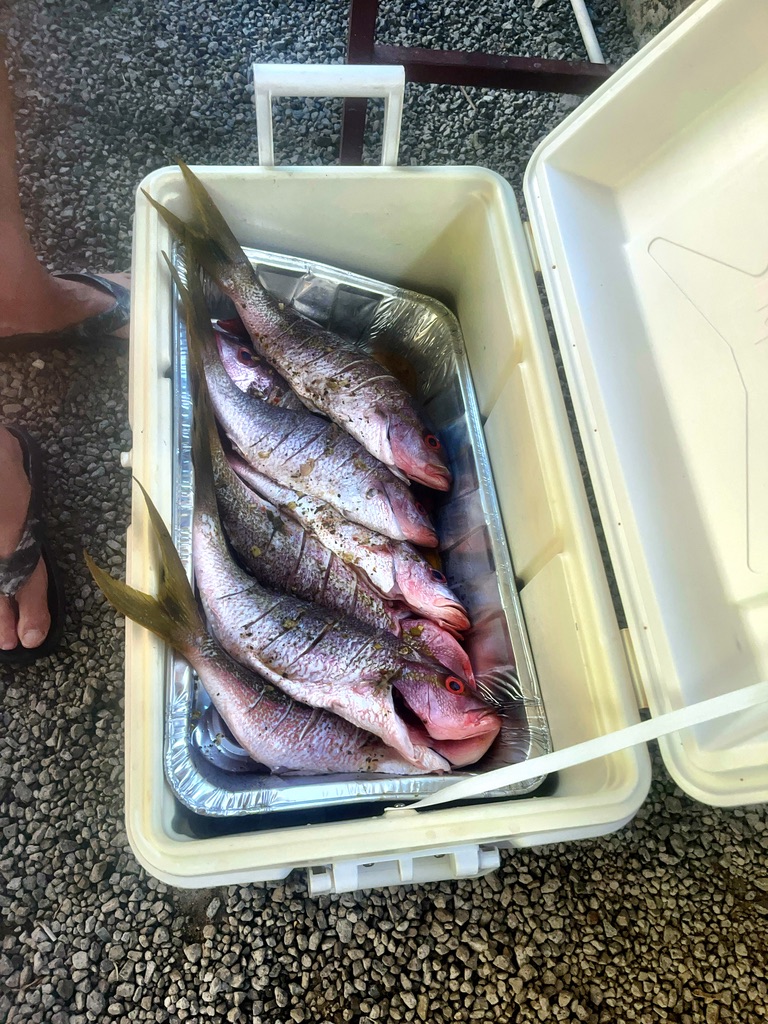
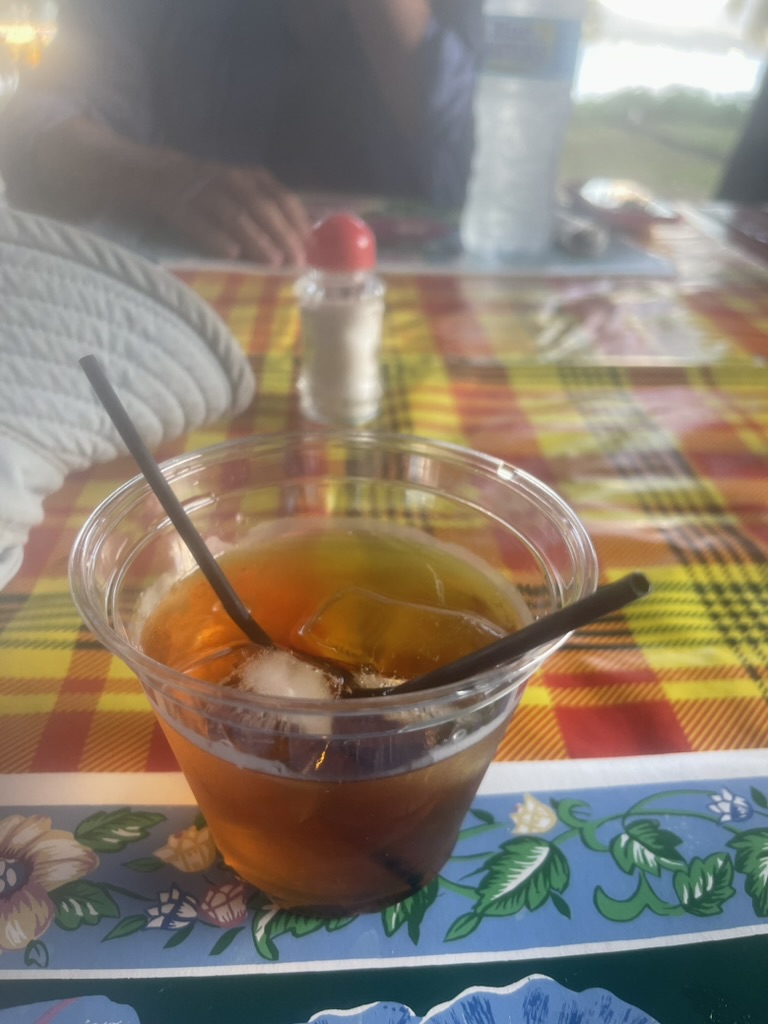
That afternoon, we snorkeled around Bubble Beach Spa, a black sand and rock beach so named for the bubbles emerging from the volcanic thermal springs. After a day of paddling and snorkeling, Michael’s grilled snapper, rum punch, and Kubuli beer were a welcome treat. And we learned the mnenonic for the trail: Wai-tu-kubuli? Because one is not enough. Noone suffered from hunger or thirst that week.
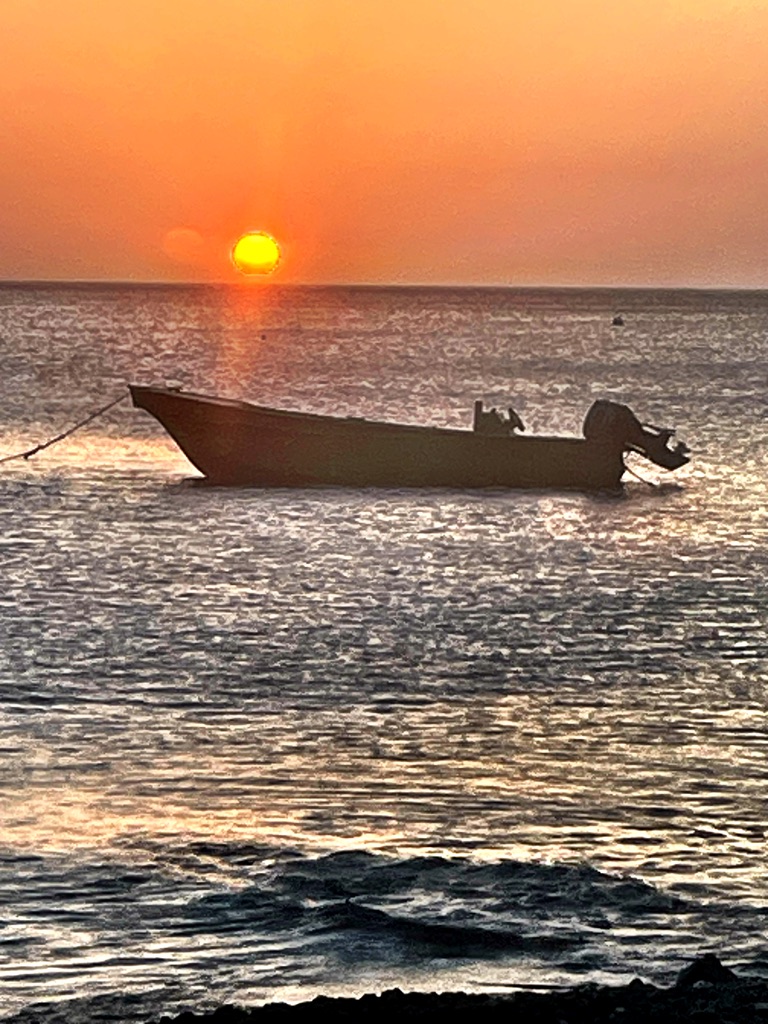
Soufriere Sunset
View of Bubble Beach
Snapper on the grill
Snapper galore
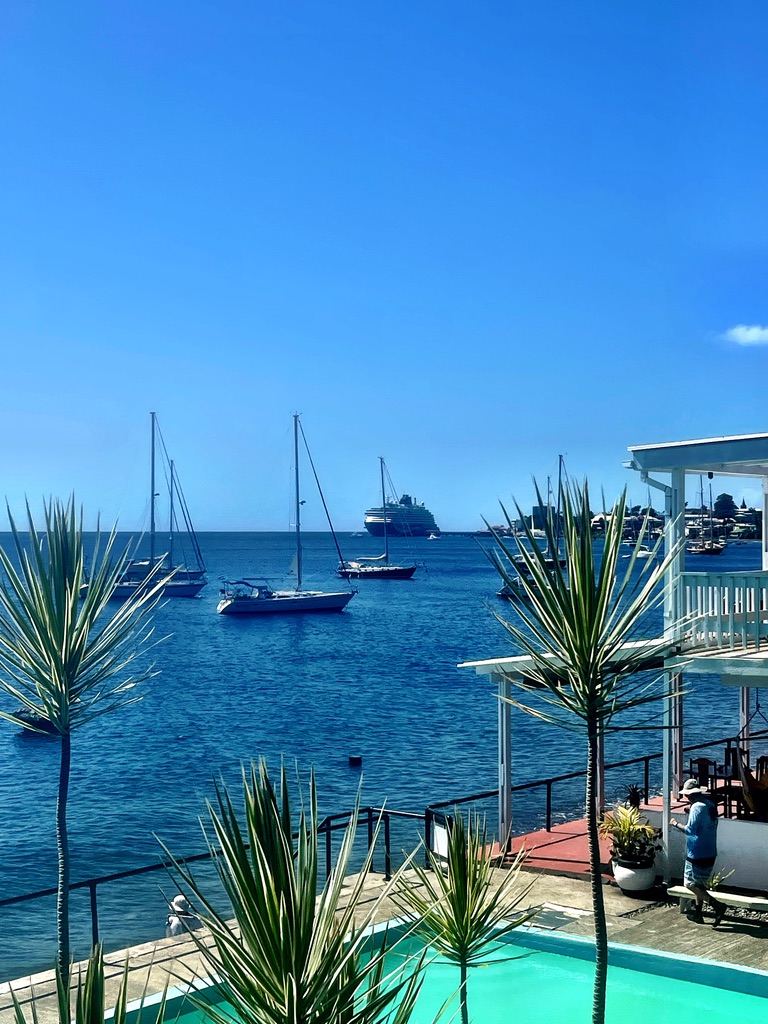
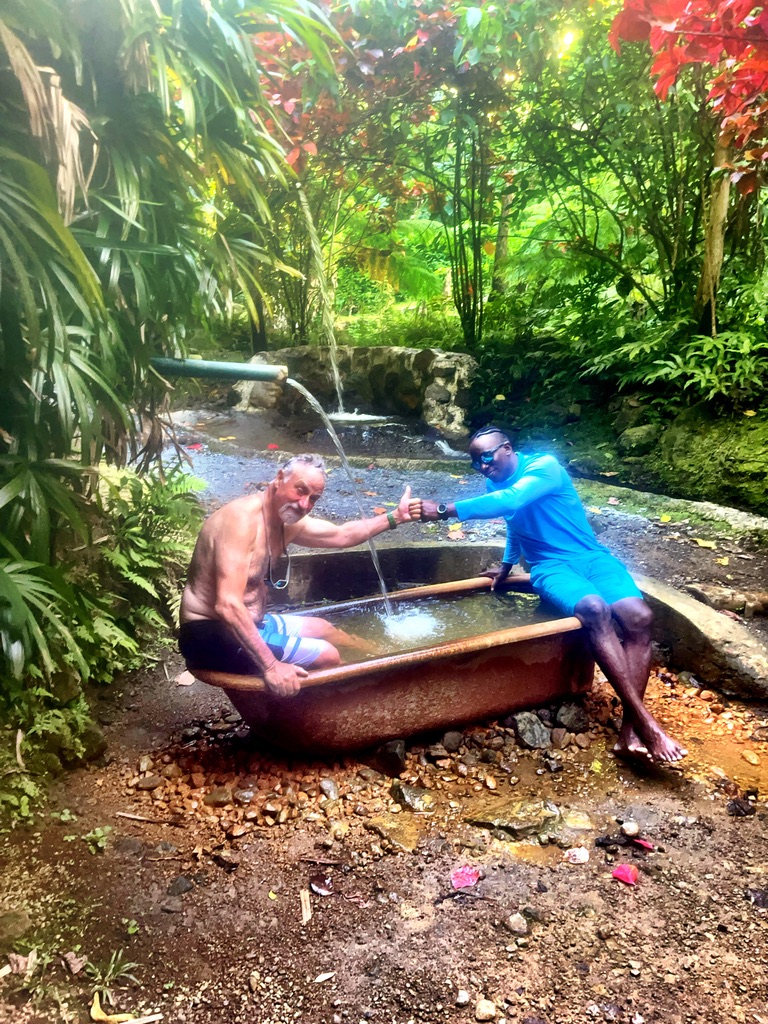
Tuesday morning, we crammed three days worth of gear and clothing into our boats and headed north, passing Champagne Beach, another bubbly snorkeling spot. Our destination: Anchorage Hotel in Rousseau, Dominica’s capitol. Despite the heat, that afternoon’s trip to the hot springs felt wonderful, as we tested out the different levels of heat in the pools.
View from the Anchorage Hotel
The hottest of the hot springs
Kerry and Michael snag the Iron Tub
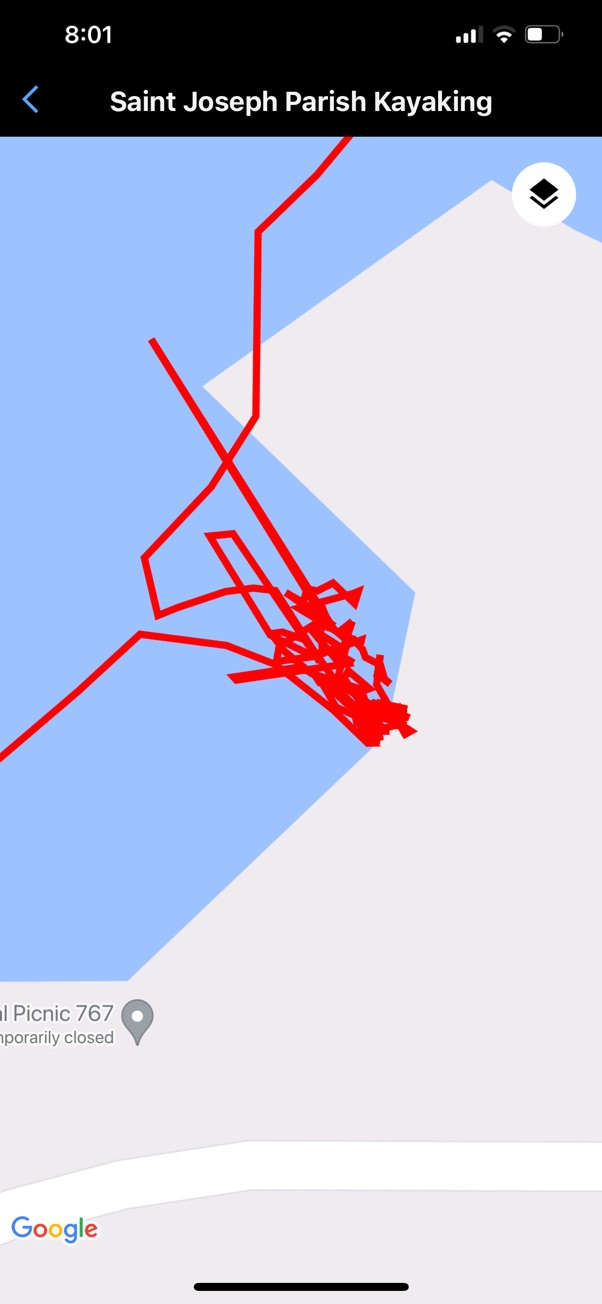
The thermal springs prepped us for our longest day, a 15-ish mile trek from the Anchorage Hotel to Sunset Bay’s Lobster Palace. A slight tailwind and following seas made the trip surprisingly fast and easy. We passed several busy ports along the way, and that was the only time we had to watch for boat traffic during the trip. In Layou, just south of St. Joseph, we experienced what I consider to be the culinary delight of the week: Boyd’s Bakes, fry bread stuffed with a curry-infused smoked fish. Boyds Bakes, in itself, is worth a return visit.
Sunset Bay
Sunset Bay and the Lobster Palace! We dragged our boats on to the beach and settled in for the feast. Noone left the Lobster Palace hungry—we had a three course breakfast!
Caribbean lobster!
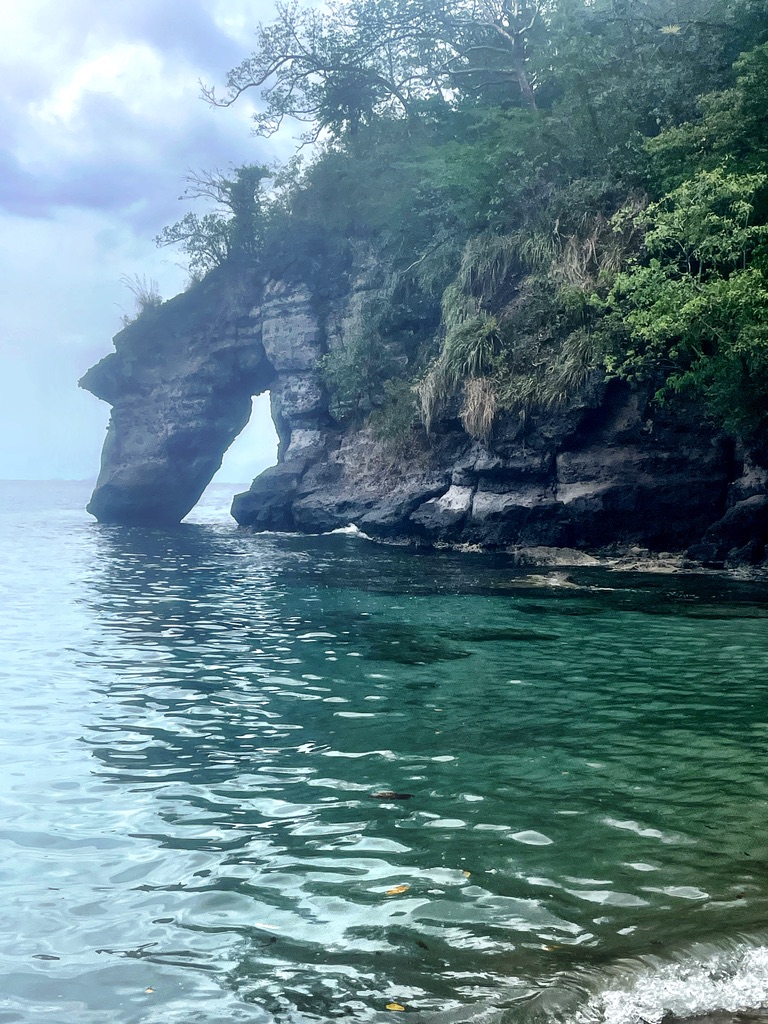
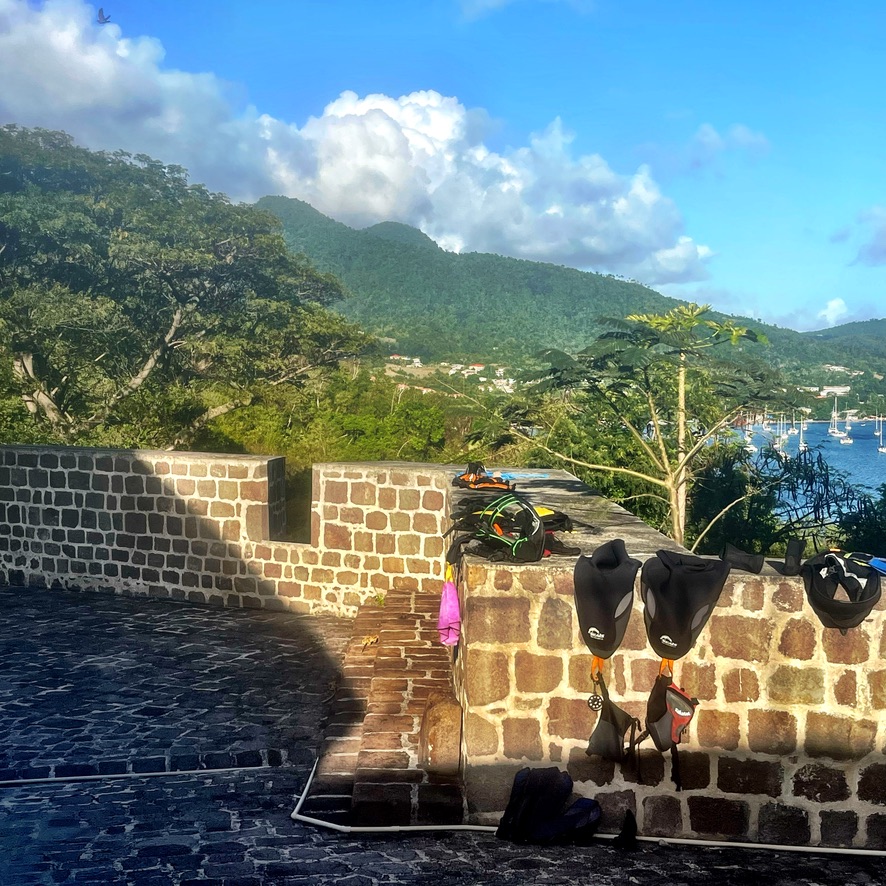
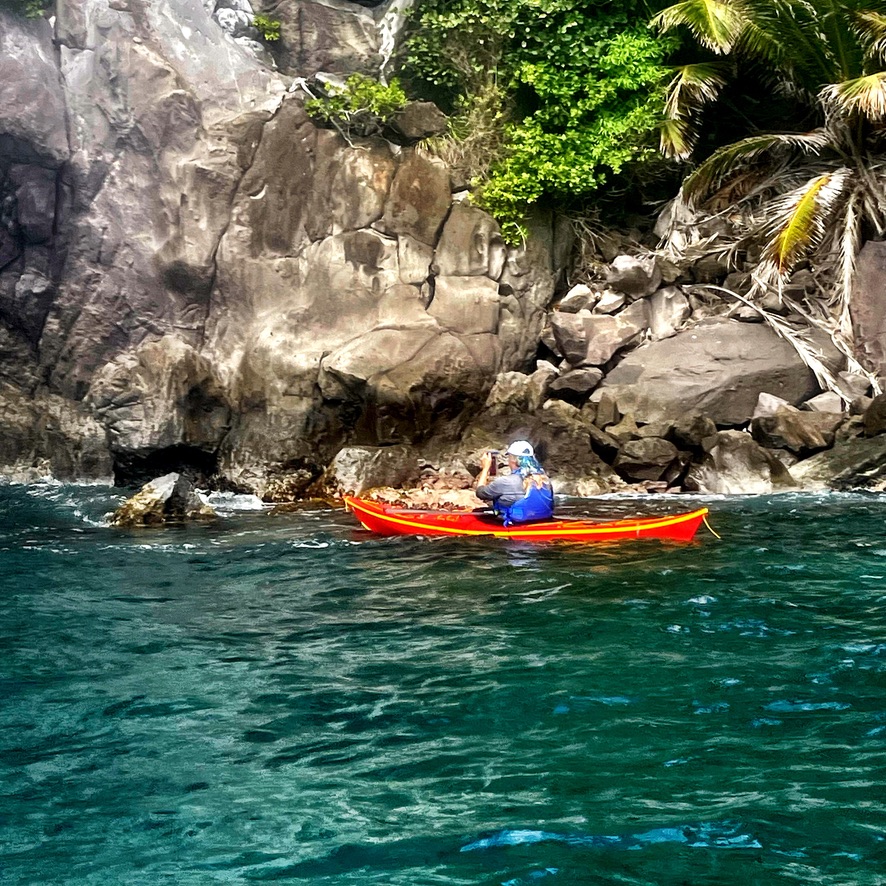
En route to Fort Shirley, we snorkeled at Secret Beach, one of the best snorkeling spots of the trip.
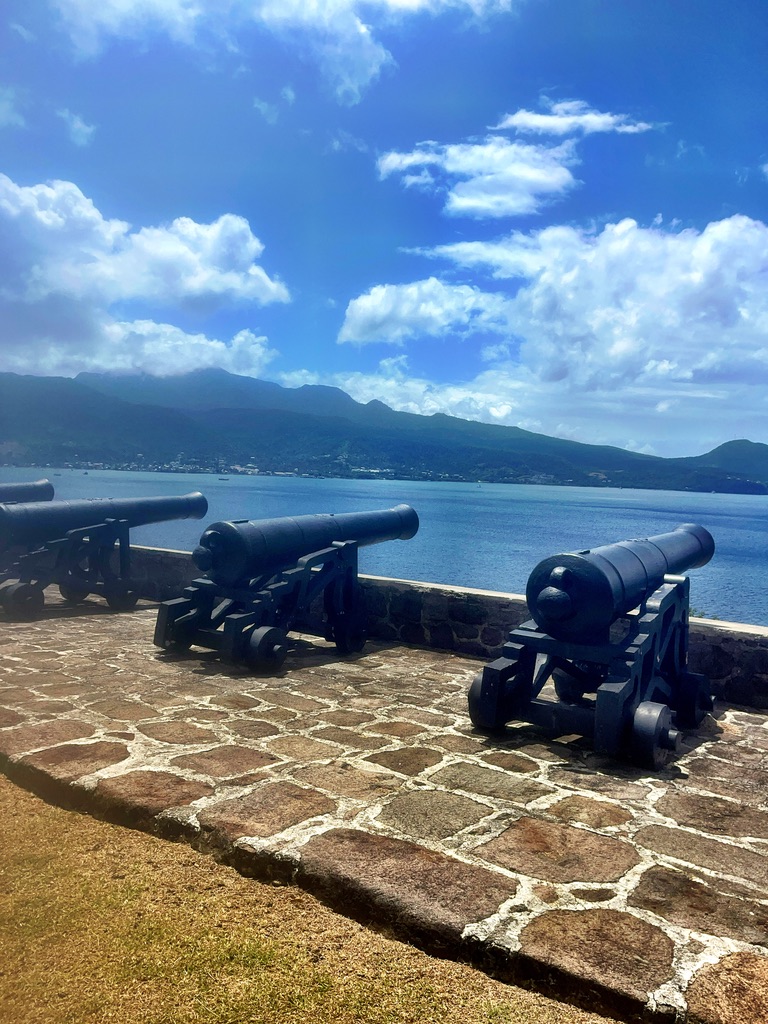
“Fort Shirley is part of the Cabrits National Park in the north of Dominica and can be considered Dominica’s most important historic site and was the scene of the famous revolt of the 8th West India Regiment in 1802 when African slave soldiers took over the garrison for three days in protest over conditions there and the fear of being sent to work in the canefields. Their action resulted in all slave soldiers in the British Empire being made free in 1807.”
Unfortunately the fort historian, Dr. Lenox Honeychurch, was unavailable that day. I am often struck at the somber histories of areas of great beauty where I paddle and enjoy nature.
Fort walls make great drying racks
Ordinance storage, I think
Cannons over Douglas Bay
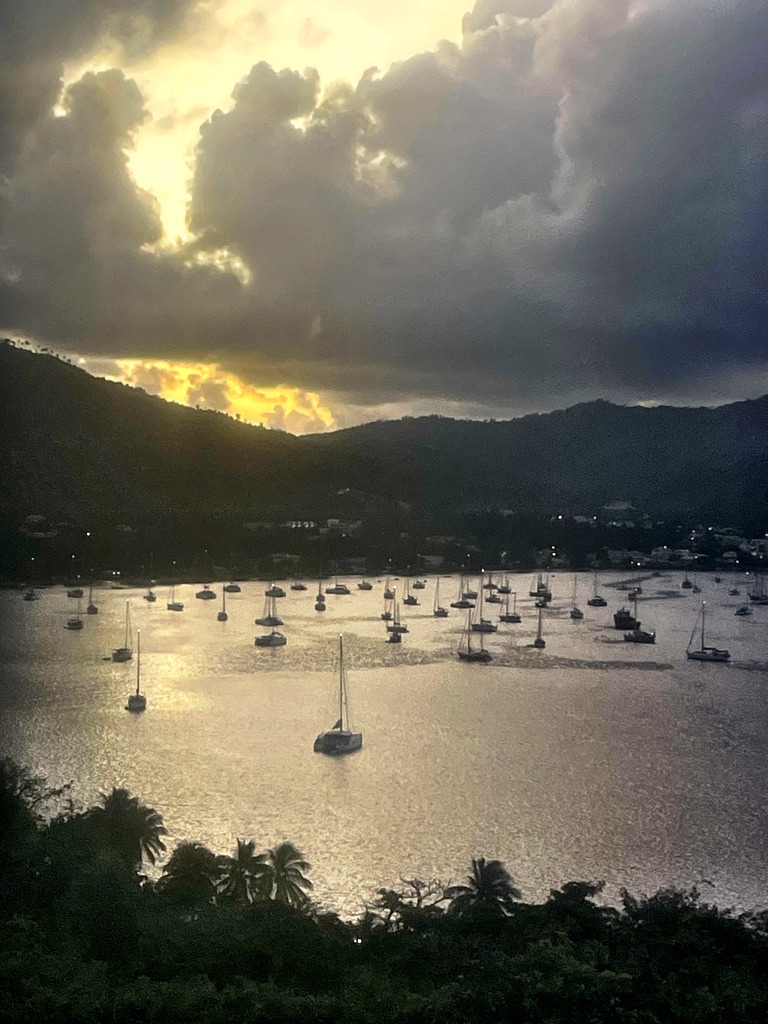
View from our room
Step Up–ginger wine and rum
Layover day—visit to Free Up Farm and Syndicate Falls.
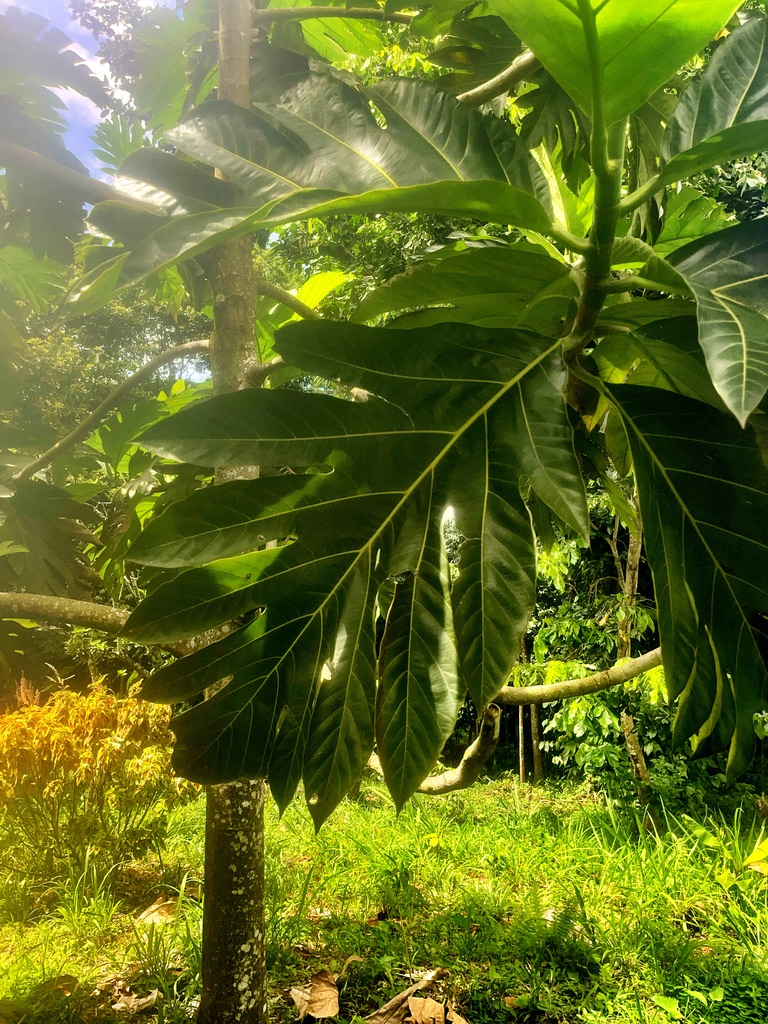
Plants grow big here
Bananas galore
Co-owner and tour guide
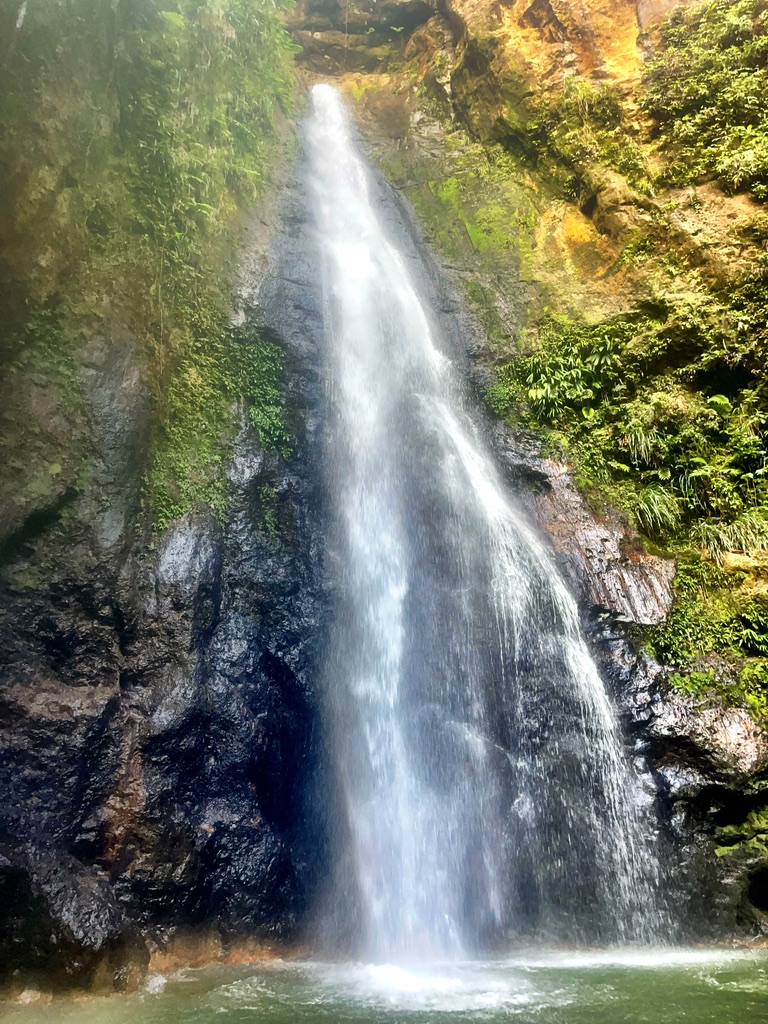
Syndicate Falls
Climbing to the Falls Photo by Cynthia Donovan
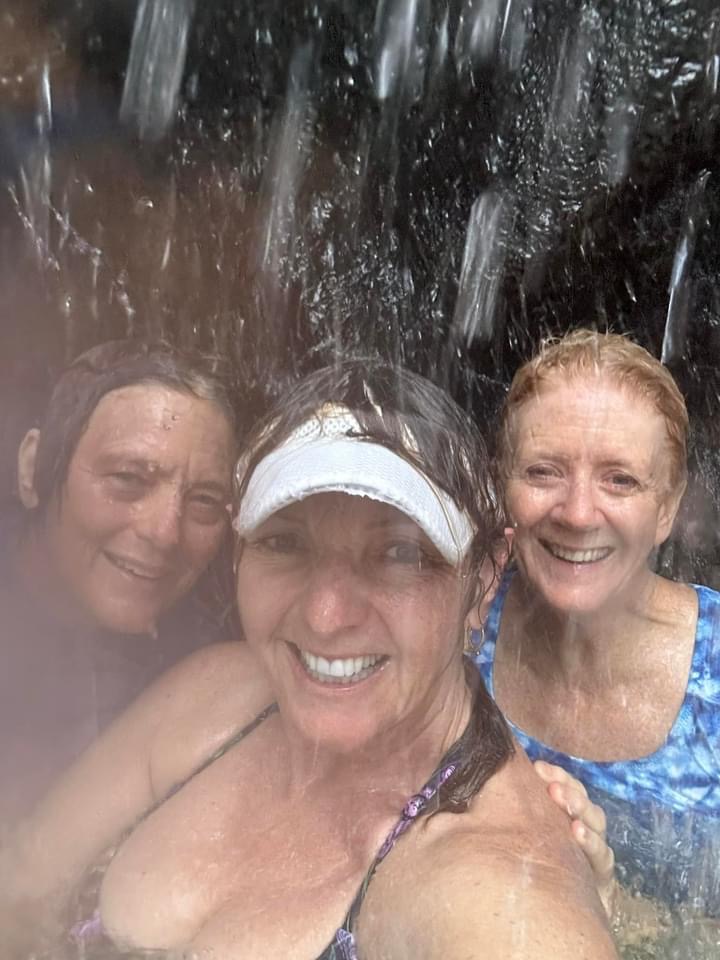
Photo by Margaret Arneth
Nothing beats a cold Kubuli
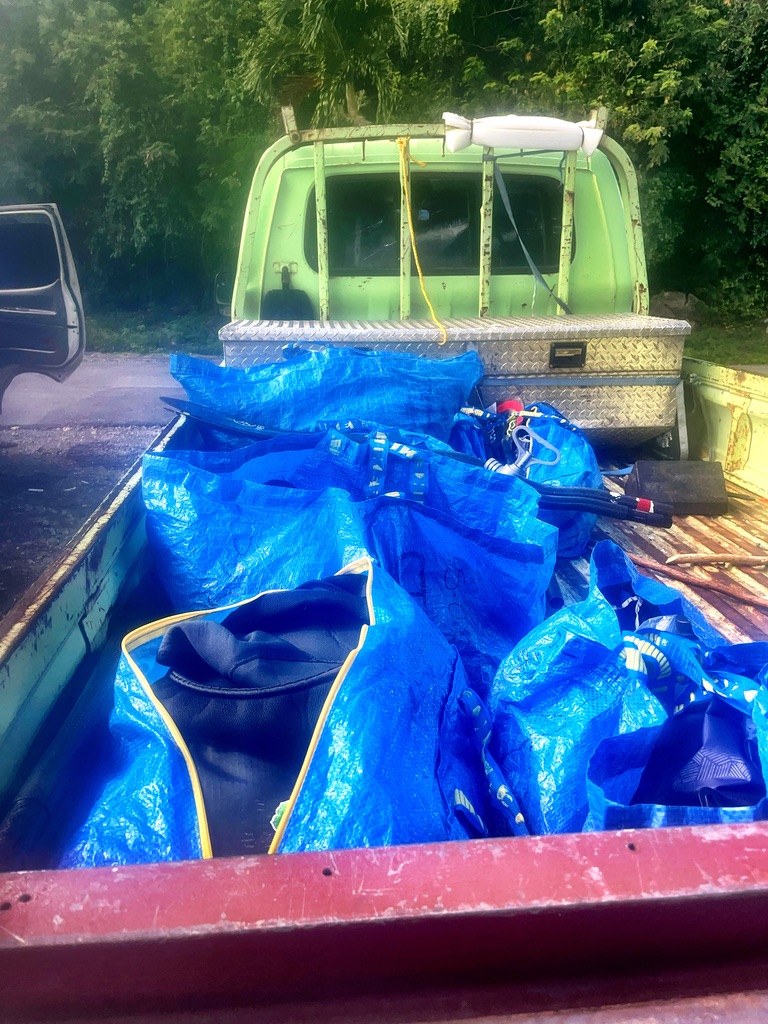
Segment 14—The End! The Witches Hat marks the northern terminus of the trail where the Caribbean once again meets with the Atlantic. We had completed the Waitkubuli Sea Trail, and it was time to unload our boats and send them back to Wes in Soufriere.
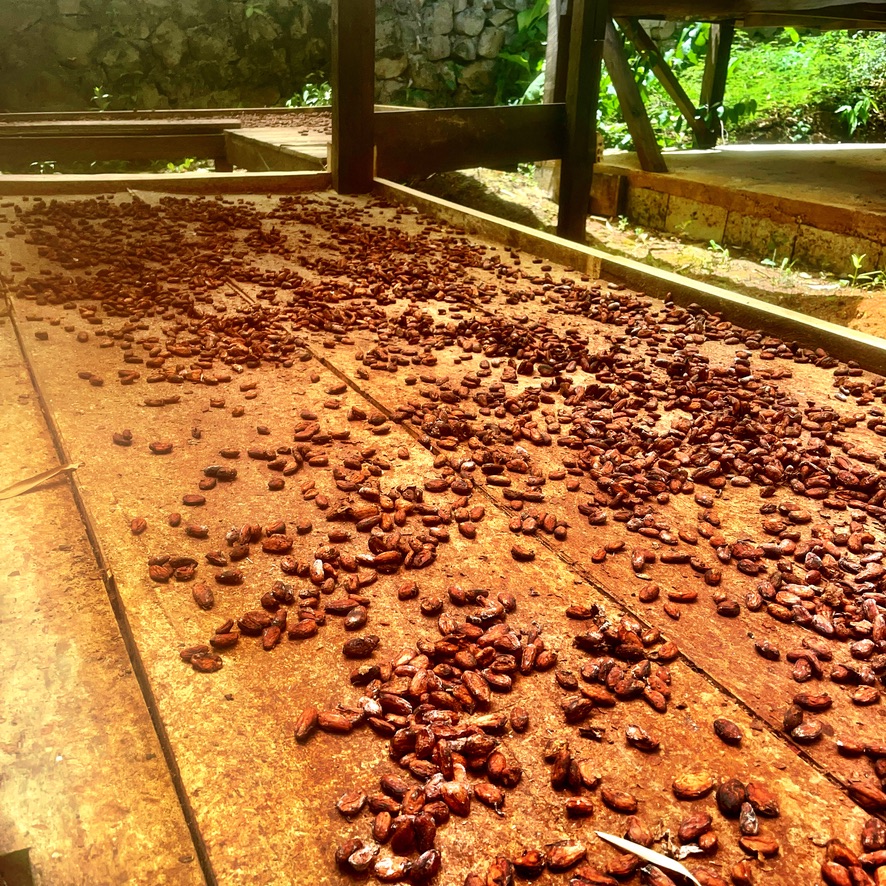
The next morning, the group split, making our way back to the airport. Kevin, Michael, Lisa and I spent the night at the lovely Sea Cliff Eco-Cottages, which also have a gin distillery. Another site worth a return. En route, we saw some promising waves—a surf trip up next?—and the Point Baptiste Estate Chocolate Factory.
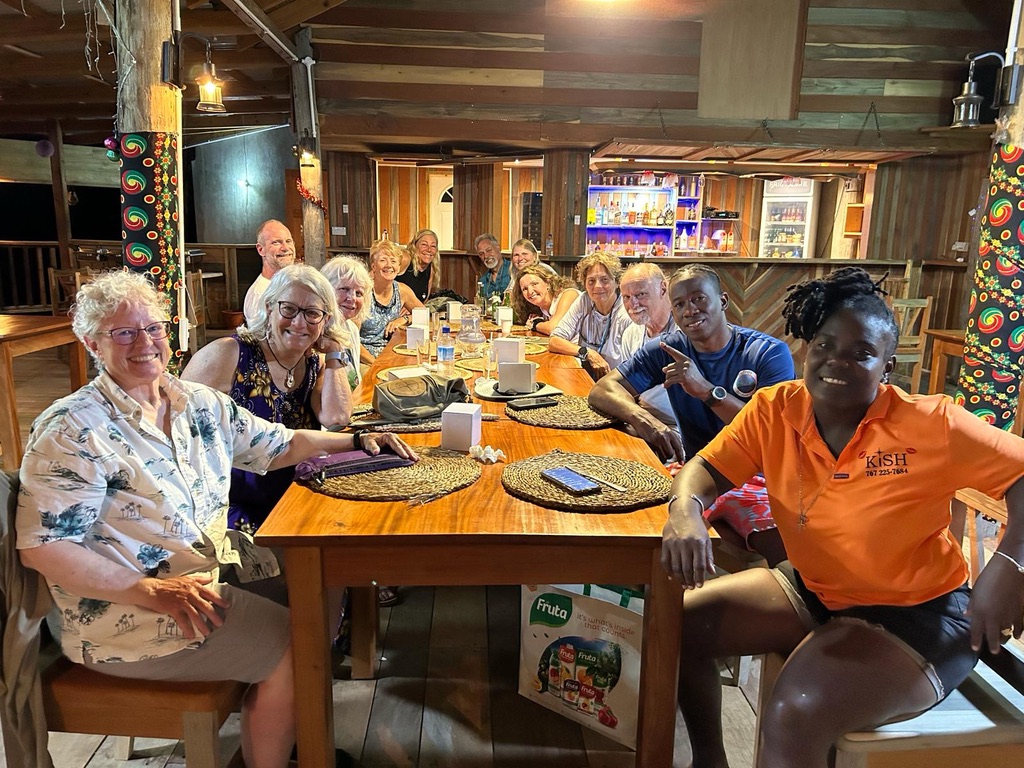
Our amazing time in Dominica had come to an end, and I felt like I had only scratched the surface. So much to do, and so much to learn. Our guide Kerry and our driver Kish from Portsmouth had explained so much to us about Dominica, and that left me eager to return. As they say about Kubuli: Why Two? Because one is not enough. And so with Dominica—one week is not enough.
Early one morning in June 2019, I paddled my 16’ Pilgrim Expedition kayak through Skagway Harbor Marina, past rows of sailboats, fishing boats, and charters and finally beyond the cruise ships towards Lynn Canal. Skagway Harbor is the northern terminus of the Inside Passage, and our foursome—Dawn, David, Anthony, and myself—were beginning our 550 mile journey south to Prince Rupert, BC. We had risen at 4 am to beat the predicted afternoon winds, a routine we maintained for the entire journey. After months of packing, planning, and charting, we were finally on the road, southbound down the Alaska Marine Highway.
A Norwegian cruise ship had just arrived, and soon passengers would flood Skagway, buying t-shirts, jewelry, and raincoats. The previous night I watched a Disney cruise ship leave Skagway’s small harbor, tooting a familiar Disney melody to signal its departure. We passed the ferry terminal where the Alaska Ferry ‘Malaspina’ had carried us along with our boats and piles of gear. The thirty-eight hour ride—what some call the poor man’s cruise—previewed what we would see over the next month. For others, though, ferries are a lifeline and primary means of transportation. And here lies the reality and, perhaps, the beauty of the Inside Passage—cruise ships, ferries, and fishing boats also ply this swath of Alaskan wilderness.
Alaska’s Marine Highway (Courtesy of Alaska.org)
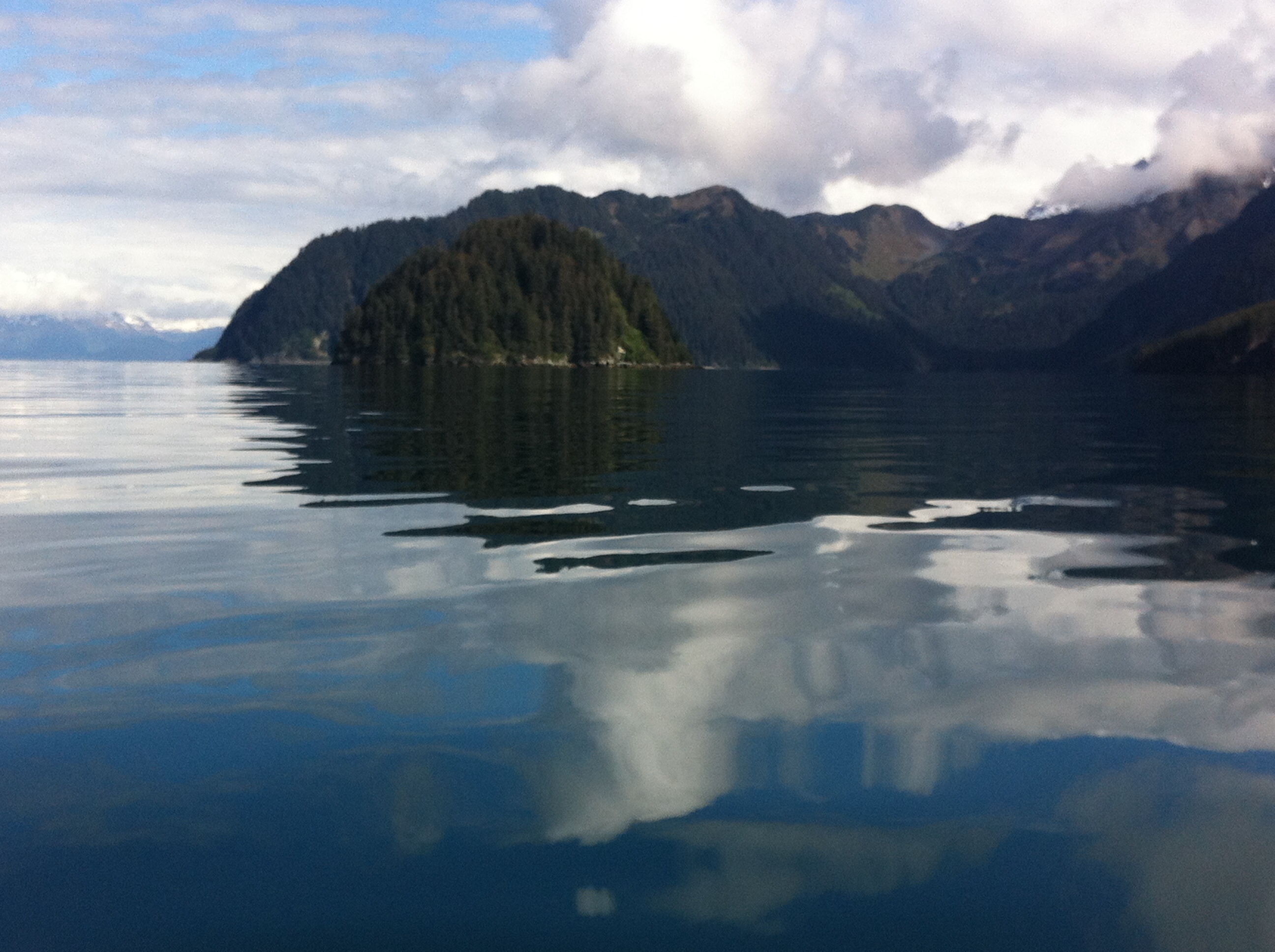
“Whales every day,” Dawn had promised. True, few days passed without whale spouts or, even better, the fluke indicating the whale’s deep dive. Six weeks in Alaskan wilderness lured me, but so did the people and towns that populated Alaska’s Marine Highway, a segment of the Inside Passage. The Inside Passage is an approximately 1,000 mile route from Seattle, WA to Skagway, AK so named because the barrier islands buffer ocean swells from the Gulf of Alaska. The Inside Passage links people and places along southeast Alaska’s roadless coastal region, just as rivers served as highways throughout the lower 48 prior to roads. I embarked on this journey seeking adventure, but, in the end, my trip resembled a great American road trip, a mixture of crowds and solitude, rambling conversations and introspection.
Skagway’s crowded marina faded behind us, and the rocky shores of the mile-wide Lynn Canal surrounded us. Clear skies and glassy seas made our first day 15 mile paddle to Haines, Alaska a perfect shake-out day. For the first hour, the bear barrel in my cockpit cramped my legs, and I was grateful for our calm conditions. I had practiced cramming weeks of food, water, and gear into my boat again and again, but it still didn’t fit. At our first stop, I rearranged the barrel and other gear, a big improvement. Midway through the trip, I mailed home the bear barrel and other seemingly useless things—how could I still have too much stuff in the confines of a kayak?
A headwind made our last few miles into Haines difficult, no sooner than we paddled into the harbor the wind laid down. We pulled our boats onto the boat ramp and looked up towards the town. Southeast Alaska’s 12-18’ tidal range means that boat ramps are quite steep at low tide. The Harbormaster directed us to the nearby campground and pointed our carts to ferry our gear up the hill. No sooner than I had loaded a cart, a man called out “I’ve got a truck” and hauled our boats and gear to the campground. We wouldn’t have this luxury in our wilderness sites, but his kindness and a coin-operated shower crowned our first day. Harbormasters, shopkeepers, and random strangers—Alaskan hospitality is unparalleled. The harsh environment fosters both independence and interdependence because survival depends on relying on each other, a lesson paddlers learn well.
A rare sunset. We rose at 4 to be on the water by 6.
Skagway to Juneau: Headwinds on the Lynn Canal
By 6 am the following morning, we had packed, carried gear and kayaks down the ramp, and begun paddling south towards Juneau. Charts covered the decks of our kayaks, but navigating Skagway to Juneau is straightforward—follow the Lynn Canal south. The Lynn Canal is actually an inlet and considered the ‘Gateway to the Yukon.’ Over a hundred years ago, more than 100,000 prospectors traveled north up the Lynn Canal to stake a claim on the Klondike Gold fields. Many died, but many remained, transforming life in southeast Alaska forever. The Gold Rush began a population influx of North Americans and Russians into native populations, creating traumas and tensions that continue today.
We weren’t alone in the canal—cruise ships, fishing boats, and ferries motored past us. Cruise ships mostly passed in the late evening or early morning, often when we were getting ready for bed or packing up. I watched the boats as they passed, wondering what people were doing or if they even knew we were there. The ships seemed close but their wakes didn’t reach us until long after they passed. So many people in the canal, but we were so very alone.
The wind can be your friend or enemy in a canal. While preparing for the trip, we learned that the Inside Passage doesn’t have either northerly or southerly prevailing winds, so a fifty percent chance of headwinds on any given day. But, headwind or tailwind, a canal funnels wind. Leaving Haines, the winds increased to over 20 knots in our faces, and we crossed the mile-wide channel, hoping the canal might offer a windbreak. Headwinds and breaking waves made the crossing feel like paddling on a treadmill. The scenery never changed. We kept going—what choice did we have, and finally reached a beach on the tidal flats where glacial Katzehin River joins the Lynn Canal.
Our team had trained extensively in rough water, in coastal regions of the UK and the US, and the conditions were well within our skill sets. But Alaska’s remoteness and cold temperatures figure large in assessing risk so we decided to camp for the night. A rescue in these cold conditions would be dangerous. The cold water chilled us, even with our drysuits, and fleece layers, and my hands had become stiff with cold, even with paddling mitts. We got out of our boats to search for one of those campsites that had looked so inviting from afar. We sloshed upstream through ribbons of water snaking across the tidal flat, towing our boats with our safety lines. Finally, we reached a high point, above the presumed high tide line, and found a home for the night. Warm and dry, I didn’t let myself think about the bear tracks running through our site.
Muddy flats
Every night, after dinner, I sat in my tent and listened to the weather report on my VHF radio. We were beyond cell phone reception. Knowing the wind direction and speed helped us plan the next day’s paddle. Most days we paddled between 20 and 25 miles, stopping for lunch and an occasional break. Paddling point to point rather than along shore cut our distance but made landings and breaks more difficult. Sometimes, I was so stiff by the time we stopped, I fell out of the boat into the water. I have never loved my drysuit more.
Several days beyond Haines and only a short distance from Juneau, our radios alerted us to a storm blowing up the canal, a storm fierce enough to warrant a weather day. We aimed for Bridget Cove, hoping to find refuge from the oncoming storm. Only a short distance by road from Juneau, Bridget Cove is a popular getaway spot. Another example of Alaskan hospitality, a man let us stay in Camp Freedom, a campsite and fire put area his son had built, and we rode out the storm in relative luxury. Only several days into the trip, I was starting to realize that people might be the highlight of our wilderness adventure. Looking back so many road trips and adventures, I remember the people I’ve met along the way.
Almost to Juneau, but first the Mendenhall flats, a mudscape impassable in anything other than high tide. Fortunately, Juneau’s tide peaked at noon so we reached the flats around 9:30 am to ride the tide to hot food and clean sheets. We paddled to the edge of the flats where the water diminished to a trickle. The navigational markers told us where the tide would flood, so we waited. And waited. Inch by inch, we muscled our boats down the slowly rising stream. High above us, small planes buzzed, carrying tourists to see Mendenhall Glacier, a sight we never saw. I knew Juneau was near, and my patience was wearing thin. The water rose enough to carry us, just barely, and our boats lurched forwards and backwards. We bumped the river’s edge and each other, as if the Three Stooges had possessed our boats. Bumper boats and warm showers in our near future, we laughed and laughed.
Juneau to Petersburg: Whales Tails, Bergie Bits and a Holey Boat
Clean sheets, a hot meal, and dry gear—I felt like a princess and a regular tourist. I bought stuff and shipped it home, toured museums, and drank too much wine. I walked the streets, upstream and down through throngs of disembarking cruise ship passengers. Surely some of these people had floated by our campsites, but miles of water and tons of steel no longer separated us. Now all of us crowded the streets, evaluating which attractions or stores merited a visit during our short time ashore.
Thirty-six hours later, we were ready to get back on the water and back to solitude. On a rainy Sunday morning, we perched on the floating docks at the Aurora Harbor Basin and crammed our gear, food, and water back into our boats. Even though we repacked daily, somehow the gear never fit the same way twice. My cockpit seemed suspiciously full of water, and after removing some gear, a small geyser erupted below my footpegs. My boat needed repair and fast. Everyone weighed in—the harbormaster, local sailors, and my team, until the marina hive mind arrived at a consensus: Flextape. I was skeptical. Petersburg, our next stop, lay over a hundred miles south. For the first several hours, I checked the repair obsessively, releasing my skirt to check for water. Only fiberglass and a strip of Flextape separated me from Alaskan waters. I continued checking over the next several days, but less frequently as I began to trust that my repair would hold. And it held until we reached Petersburg, where my boat received a proper repair.
We left Juneau and its crowded streets and joined the stream of marine traffic in Juneau’s harbor. We crossed the Gastineau Channel to avoid congestion, but a constant buzz alerted us to landing seaplanes. I’m used to looking left and right when crossing boat channels, but rarely up. I got used to it quickly—one more oddity that became the norm. Alaska’s coastline and roadless areas make seaplanes a vital part of transportation, and they, too, follow this marine highway.
Look Left, Look Right, Look Up
We continued south down the Lynn Canal, past Point Arden to the west and Bishop Point on right, and on past Slocum Inlet, Taku Harbor, Limestone Inlet, and Point Anmer. Each name represented a crossing, a point of interest, or a campsite. Months before, charts spread across my living room, I studied these sites and considered angles for crossing large and possibly treacherous inlets. Abstracted from the realities of wind, waves, and weather, these sites seemed mysterious, but they became embodied as the daily conditions dictated our paddling and camping.
The Juneau-Petersburg was the coldest and rainiest of the trip. Several nights during this leg, I woke up hungry in the middle of the night, but the thought of grizzlies killed any hope of a midnight snack. Day after day, we set up camp in the rain and broke camp in the rain. Nothing escaped the moisture. But one glorious evening, though, the sun emerged and stayed out just long enough to dry out gear and shake off the black sand from the previous night’s campsite. Dry clothes, dry bag, and dry tent—pure joy and a precious luxury! And even more fun, a young couple within weeks of completing the Inside Passage south to north joined us on our gravel beach. We traded stories and tips about upcoming highlights of our trips. The only fellow paddlers we met during our entire trip.
We continued south down the Lynn Canal, past Point Arden to the west and Bishop Point on right, and on past Slocum Inlet, Taku Harbor, Limestone Inlet, and Point Anmer. Each name represented a crossing, a point of interest, or a campsite. Months before, charts spread across my living room, I studied these sites and considered angles for crossing large and possibly treacherous inlets. Abstracted from the realities of wind, waves, and weather, these sites seemed mysterious, but they became embodied as the daily conditions dictated our paddling and camping.
The Juneau-Petersburg was the coldest and rainiest of the trip. Several nights during this leg, I woke up hungry in the middle of the night, but the thought of grizzlies killed any hope of a midnight snack. Day after day, we set up camp in the rain and broke camp in the rain. Nothing escaped the moisture. But one glorious evening, though, the sun emerged and stayed out just long enough to dry out gear and shake off the black sand from the previous night’s campsite. Dry clothes, dry bag, and dry tent—pure joy and a precious luxury! And even more fun, a young couple within weeks of completing the Inside Passage south to north joined us on our gravel beach. We traded stories and tips about upcoming highlights of our trips. The only fellow paddlers we met during our entire trip.
Yard sale
This rainy period also offered one of our trip’s greatest challenges—a foggy crossing of Tracy Arm in Stephens Passage. Denis Dwyer who has written extensively on the Inside Passage designates crossing Tracy Arm as a ‘crux move’ on the Inside Passage because cruise ships and tours enter this fjord to see whales and glaciers. Under any circumstance, crossings warrant caution: in addition to boat traffic, winds, tides, and currents create swell and potentially hazardous conditions. Fog adds another element of danger and beauty as well. Like most paddlers, we anticipated crossing in the mornings when winds tend to be low. Surprisingly, afternoons rains made the sea glassy, and we mostly crossed inlets and bays in the late afternoon. We deliberated briefly at Tracy Arm: go or no go. The fog was light enough to see any approaching ships, so we settled on our angle, checked compasses, and began paddling. We didn’t linger or chat during the crossing, but kept an eye out for ships and fog. Once across, we were relieved and without incident happy that we had completed one of our trip’s crux moves.
While we paddled down Stephens Passage past Tracy Arm, icebergs, or bergie bits, as many call them, took shape through the fog. The grey skies and fog made their eerie blue light even more dramatic. For the next several days, we tracked bergie bits as they moved miles and miles with the daily tidal flows. The bergie bits, along with the cruise ships, put the vastness of Alaska’s waterways in perspective: after paddling all day towards a ‘tiny’ bergie bit, I reached an ice mass that was indeed larger than my house.
Blue Ice
Despite the cold and rain, this leg had few windy days which meant that we had plenty of time for sightseeing and thinking. Sometimes I chatted with Dawn, and we guessed cloud shapes. But mostly, we paddled on, lost in our own thoughts, and my mind wandered. I thought about my life in Florida, and what I wanted to do when I got back. Before the internet, before gadgets, I rode buses, trains, and planes, staring out the window, sometimes bored, sometimes thinking. This time helped me sort things out, and I returned home refreshed and with answers or new approaches to big questions in my life. More often now I scroll through my iPhone, and I wonder if the freedom to space out is a luxury that we have lost. The freedom of not being tethered or entertained.
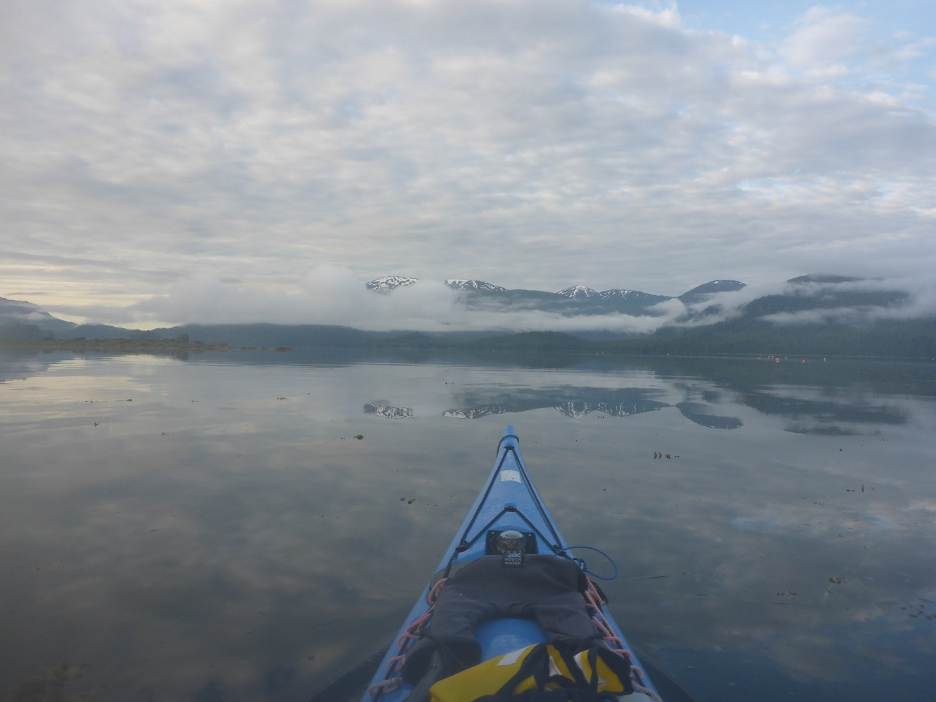
Glassy water gave me time to reflect
These glassy seas also gave us the most whale sightings, or soundings. The sound of their spouts carried for miles, and we heard them before we saw them. After several, usually three, spouts, they breached, and, if we were lucky, we saw the tail as they dove deep. Stellar sea lions, otters, and seals also popped up. Seals, with their dog-like heads, popped up to watch us. Stellar sea lions, known to be aggressive, swam up behind us, revealed first by their heavy breathing. Sea kayaks don’t turn very fast, and the sound of heavy breathing right behind me always made me paddle faster.
One of my greatest fears was a close encounter with a bear, but we saw relatively few bears. The salmon were running late that year so the bears remained high in the mountains, eating berries. My Alaskan friends take bears in stride, just as Floridians co-exist with alligators and snakes, but I was happy that they stayed far away.
Dawn Stewart floating on glass
Our glassy seas enabled us to complete this leg faster than we anticipated. Even though we had trained for—and hoped for—more exciting conditions, too little is better than too much. We had all heard stories of trips gone bad. We reached Petersburg on a Friday morning, again excited for showers, food, and clean clothes.
Petersburg to Ketchikan: Highs, Lows and Mud Flats
A buoy covered with sea lions greeted us as we entered the Wrangell Narrows leading to Petersburg. Within an hour of arriving at the Petersburg marina, we had stored our gear, found lodging, and ordered fish sandwiches at Coastal Cold Storage, conveniently delivered to the Harbor Bar next door. My Pilgrim Expedition had been whisked away on a storage truck and reappeared Sunday morning, repaired by local kayaker Ken Hamilton. Even though I had stopped obsessing over the Flextape repair, a permanent repair was a huge relief. Such was my introduction to Petersburg, Alaska which—hands down—was my favorite stop on the marine highway.
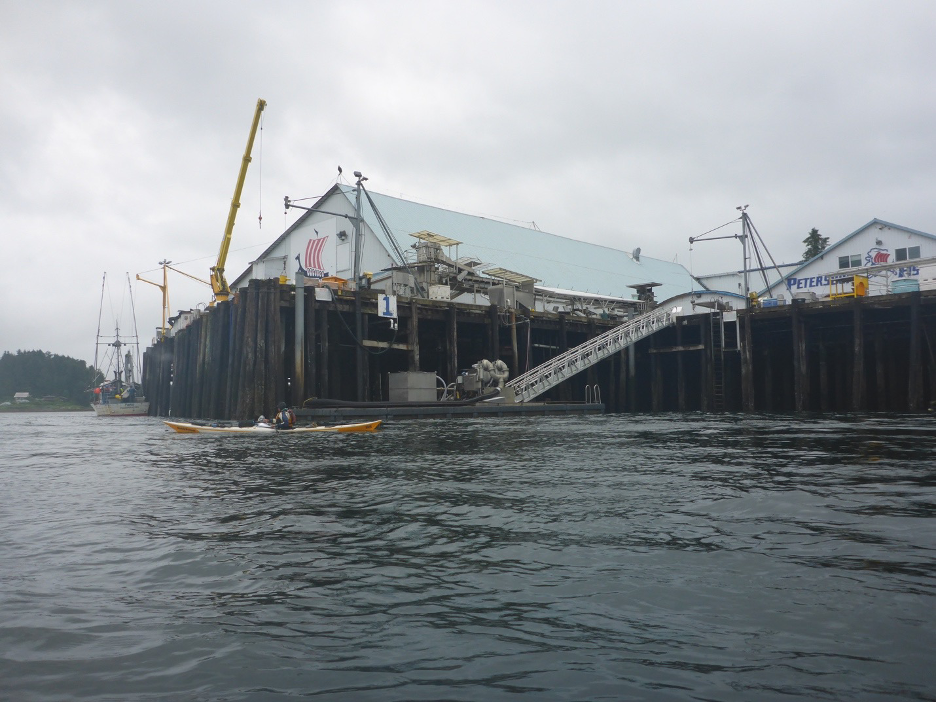
Petersburg Fishery
Fishing boats and processing plants dominated the harbor, not cruise ships. The stores catered to tourists but also local or seasonal residents who needed cold weather gear and other supplies. The streets and stores were calm enough that I had time to speak and joke with local residents. A friend’s daughter was moving temporarily to Petersburg, and that gave me an opening to ask about life there. I felt sure that she would enjoy her months living there.
Again, cleaning myself, my clothing, and my gear dominated my time our shore leave, but I found time to visit almost every store on Petersburg’s main road, several of which allude to the town’s Norwegian heritage. We had missed the town’s Little Norway Festival which marks the start of the fishing season. My sense of adventure didn’t include trying the ‘Mystery Shots’ masked in brown paper bags at the Harbor Bar. The bartender told me that they mix random samples for these shots. I commented that my days of garbage can punch are long behind me.
Sunday morning came quickly. We carted our gear back down to the back down the ramps to the floating docks. It was mid-tide so the ramps less steep. Nonetheless, I gripped the cart’s handle tightly, imagining the nightmare scenario of cart and gear flying down the ramp and into the water. Timing our actions to the tides was critical during the trip but especially so the next morning when we crossed Dry Straits, a large mudflat just north of Wrangell.
Early the next morning we paddled south and soon the outlines of the mudflats appeared. A 6:17 AM high tide meant we faced the flats during the ebb. We saw channels, and our charts showed channels, but even those began to run dry. One large channel remained, and if we didn’t reach that channel, we would be stuck on the flats for hours until the tide flooded back. The mud was firm, unlike much of Alaskan mud, so we pulled our kayaks across the mud toward the channel. Dragging a loaded kayak across mud is strenuous work—sometimes I walked pulling the tow rope over my shoulder, and other times I walked backwards. No-one complained—it was simply something we had to do, and a warm and sunny sky eased the pain. Wind and rain would have made a different story.
Walking our boats
Timing tidal flows occupied a great deal of time and mental space. Alaska’s vast tidal ranges made choosing a campsite difficult and a chore that could take several hours. From the ferry going north, we spotted beautiful beaches, but later realized that many of these were submerged at high tide. Like Goldilocks, we needed the just right beach. Steep enough to remain above the tide line, and a bay deep enough to remain passable at low tide. Daily, we checked our tide charts and the kelp line that marked the previous tide.
The hunt for a campsite
After finding a site, we shuttled boats and gear to high ground, a task that could take over an hour, depending on the tide and the condition of the beach. A slippery rocky beach could produce a trip-ending ankle injury that might require an evacuation, so, in reality, the most dangerous part of the trip. Dawn had designed straps with handles so that the four of us could carry one boat at a time, standing upright rather than stooped over. We stepped carefully, aiming for the small bits of sand or dry rock that offered secure footing.
After Wrangell, we pointed south down Zimovia Strait into Ernest Sound and beyond the tiny community of Meyers Chuck into the vast Clarence Strait. Again, good weather allowed us to cover miles quickly, and soon we were two days out from Ketchikan. This leg proved to be the hottest, and each night, the sun beat down on us until it dipped below the horizon sometime after 10 PM. I lay in my tent sweating and finally understood the phrase ‘stewed in your own juices’.
Unable to sleep, I lay in my tent and reviewed charts, my GPS, and my Garmin Inreach, something I did most nights before bed. My Garmin Inreach was both a rescue lifeline and a means to send short, Twitter-length messages to my husband. Being outside of cell service and the internet was freeing, but I appreciated the contact with Kevin and the knowledge that my Inreach could summon help, in itself a freedom of sorts. My younger self backpacking in the 1970s might have scoffed at these gadgets, but my older self considers them a lifeline. I still have mixed feelings about being tethered, but overall the Inreach and the connections it offers me freedom to disappear into the wilderness yet remain connected to my husband.
We saw few cruise ships on this leg because we veered off the Alaska Marine Highway. I found that I missed the cruise ships and ferries which were conspicuous by their absence. That surprise me, but empty roads can be creepy when you expect to see people. Beyond Meyers Chuck, we merged back onto the Marine Highway and joined in the parade of boats and seaplanes coming and going from Ketchikan. Even though my daily experience of the Alaska Marine Highway was mostly wilderness, the boat traffic and the anonymous people on them played a big role in my experience. I enjoyed seeing those big boats every day and wondering about the people on them. Even if the connection with those passengers was remote and abstract, I savored the connection to other people.
Cruise ships and crowds would reappear in Ketchikan. On our last night before Ketchikan, we crossed the Behm Canal and camped on Pt. Higgins at the edge of the forest.
Ketchikan to Prince Rupert: Heading to Canada
Wind whistling through the trees woke me, and I knew immediately that our morning’s paddle down the Tsongas Narrows would be a slog. At some point overnight, grey skies obscured the previous evening’s warm sun, and I added an extra layer for warmth under my drysuit to prepare for the cold. Fighting the biggest headwind of the trip, we inched along, heads down, seeking windbreaks wherever possible.
A small beach out of the wind led us to Totem Bight State Historical Park, which housed replicas of totem poles from the region. Dawn and I walked through the park to see the totem poles, while cruise ship passengers stared at us in our drysuits and PFDs. There was some irony about emerging from the wilderness to a museum that showcased a culture deeply entwined with the natural world. The totem poles and accompanying signs educate people about the First Nations people who inhabited the region prior to European contact. The rangers I spoke with were proud of their efforts in restoring totem poles and educating visitors. But, outside of museums and stores that sold native art, I wondered how native culture meshed with the dominant north American ethos. I wondered what this exhibit meant to cruise ship passengers and others whose Alaska voyage was shaped by buffets, casinos, and shopping.
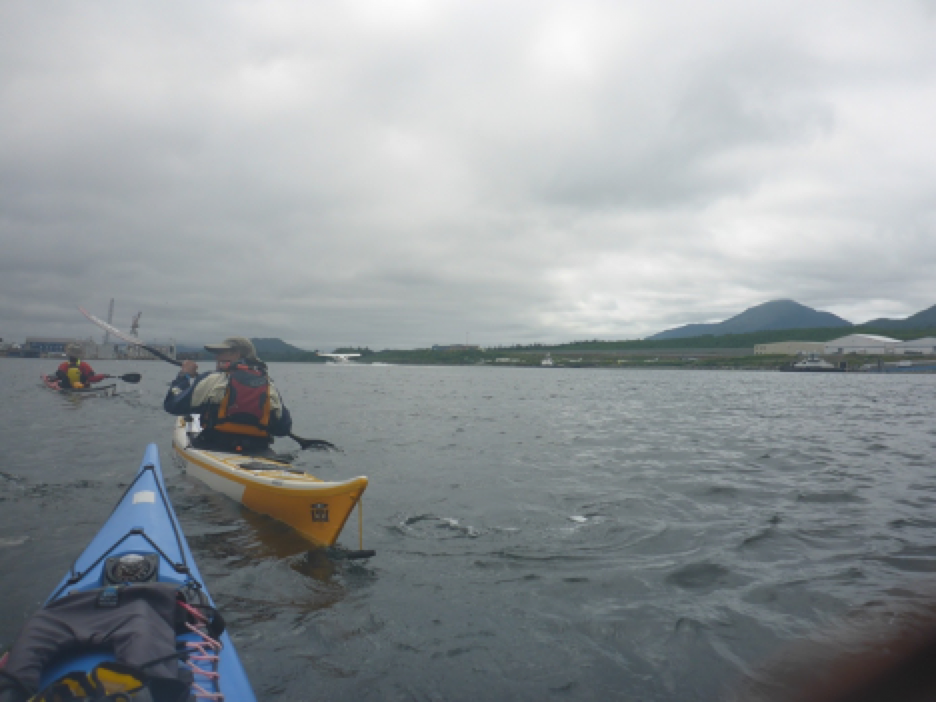
We heard Ketchikan before we saw it, and we dodged seaplanes and boats as we paddled to our harbor. Ketchikan stretches out along the eastern side of the Tsongas Narrows waterfront, and its airport sits across the water on the west. A small ferry carries passengers back and forth. Perhaps because I stayed in a hotel across from the cruise ships, Ketchikan seemed louder than anywhere else. But this vantage point demonstrated the small town rhythms of Ketchikan. During the day, cruise ship passengers dominate the town, but, after 7 PM, after passengers reboard their ships, the residents emerge from their homes and shops. The sounds of crowds and shopkeepers entreating people to enter had disappeared. It was quiet. Locals strolled along the waterfront, and fisherman, lined the town’s creek, hoping for salmon to begin their run. The owner of one of the ubiquitous jewelry shops showed me her collection of native art and talked of life in Ketchikan. I told her of my kayak trip, and the next morning she photographed our departure and emailed the picture to me.
Prince Rupert, BC was calling. Three weeks of paddling, and we were within a week of completing a trip years in the making. Several large crossings remained, including the final crux move: Dixon Entrance, a large body of water open to swell from the Gulf of Alaska. But, weeks of paddling and multiple crossings behind me, my confidence had soared. I recalled our first day, the bear barrel crammed between my legs. Not an auspicious start. The logistics of getting ourselves, boats, and gear still loomed ahead. Dawn and I bought one-way tickets to Prince Rupert, not knowing how long the trip would take. David and Anthony drove gear and boats to Prince Rupert, and the question of ferry space back to the US nagged at them.
We continued south, accompanied by ferries and cruise ships, and our remaining days dwindled to three or four. On a gloriously sunny day, we stopped at the early hour of 3 PM to camp on a beach. This early day gave me a chance to savor our final days of the Alaskan wilderness. We assessed our site and the tide chart—the tidal range was over sixteen feet. We were near the Canadian border, and Alaska is one hour behind British Columbia. That night, at 2 AM, as the four of us stood, watching the tide creep towards our tents, wondering which time zone the tide obeyed. Fortunately the tide receded, but no-one slept much that night.
Our weather radios predicted a weather change, and by the next morning, winds and seas had risen. Not exactly desirable conditions for Dixon Entrance. We slogged across Observatory Inlet, fighting wind, tide, and current, another treadmill paddle. Once again, the scenery remained the same for hours, but we had no choice. Inch by inch, foot by foot, we made progress until we completed the crossing. Our reward—a pod of orcas played against the cliffs ahead of us!
Our goal that morning was Port Simpson or Lax Kw’alaams, BC, a small native community that we hoped would have cell service. It was time to scout options for our return home. Canadian charts and maps, I had noticed, included more native names than Alaskan charts. Just south of Dixon Entrance, for example, lies Haida Gwaii, that many know as Queen Charlotte Island. On our ferry ride north, a Tlingit crew member told us that many sites are now known by their first, or native, names, an important aspect of retaining cultural heritage.
Like many small communities in coastal Alaska and British Columbia, Port Simpson or Lax Kw’alaams relies upon ferry service. According to Google Maps, travel between the two towns requires both road and ferry. Even smaller routes are critical “roads” in a marine-based transportation system that provides access to necessary goods as well as medical care. But, in our port stops, I’d seen signs protesting imminent cuts to the ferries, and our ferry had already eliminated the bar service. Since then, ferry service on the Alaska Marine Highway has been drastically reduced, affecting residents and adventurers alike.
Prince Rupert: The End of the Road
We landed at the Cow Bay Marina in Prince Rupert. After a celebratory ice cream bar at the gift shop, we focused on our chores—unloading our boats, Canadian customs, and cleaning up. I had wondered if we wouldn’t all give a big whoop when we finished. Looking back, perhaps smaller, and more significant, insights and burst of joy replaced that big whoop. Perhaps, this the end of this journey was too much to take in all at once. We had excitement for sure, whales, wind, and seals, and glimpsed life in the few exits along the Alaska Marine Highway. And this wilderness highway spared me billboards like the incessant “South of the Border” signs on I-95 that I loved as a child. But the time and space to think and dream that bored me as a child now felt like a paddling meditation. And this might have been the great gift I received: the time to simply be.
No better way to spend a balmy November week in Florida than paddling the Ten Thousand Islands. Post hurricane season and before waves of northern fronts and tourists. Janice, Director of Paddle Florida, and I both needed to scout for different reasons. Janice for an upcoming Paddle Florida trip, and me for the Everglades Challenge in March. We had done multiple trips to the south, and it was time for a new adventure.
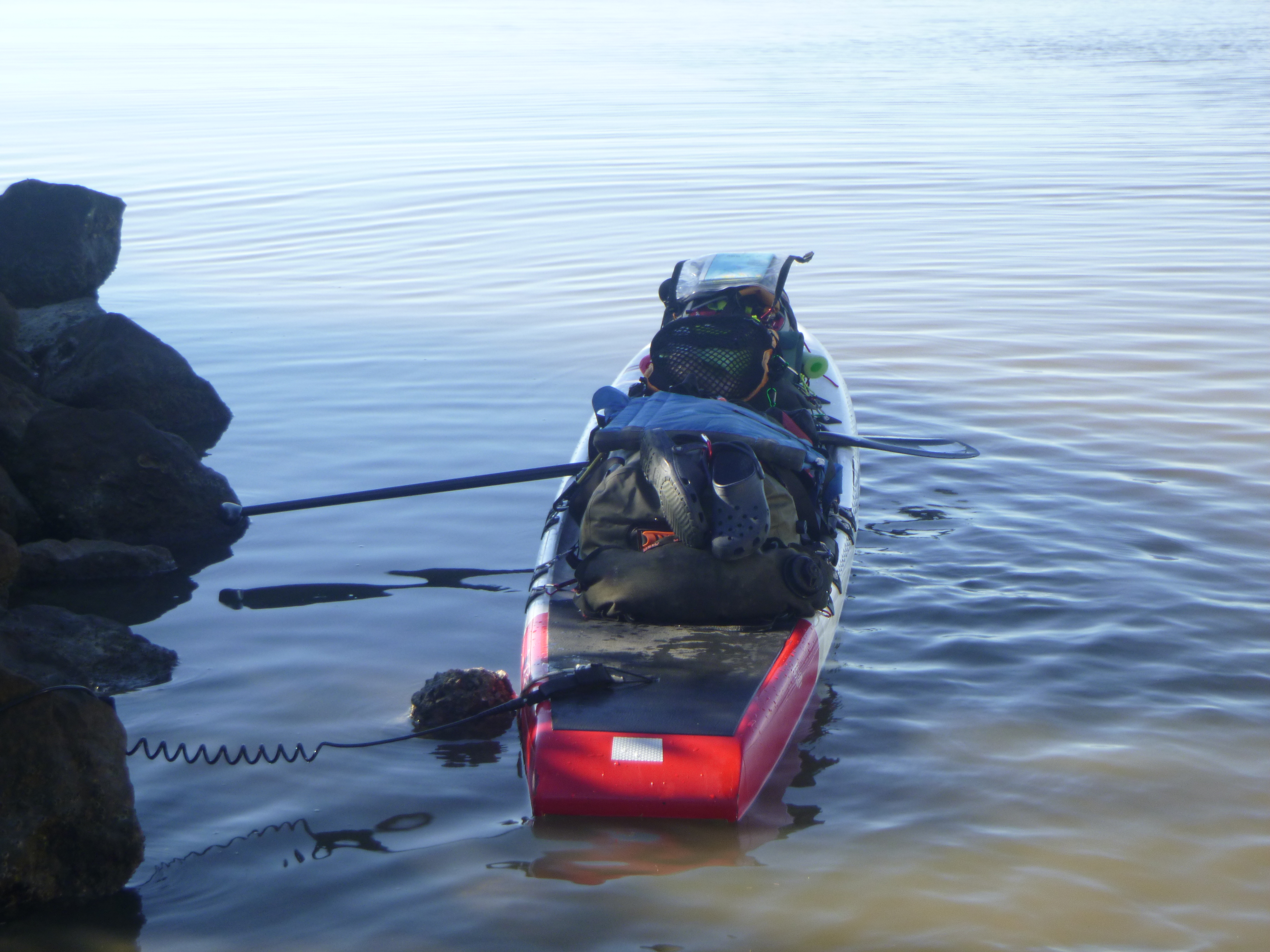
Ready to launch
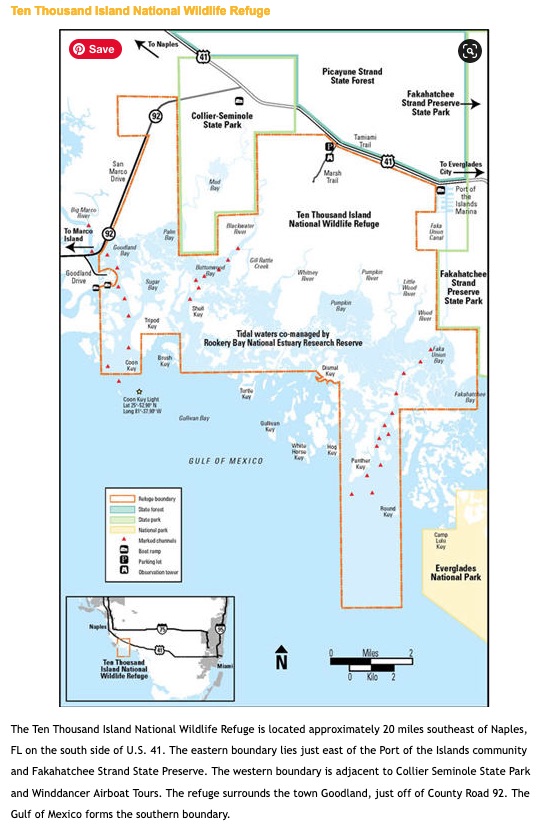
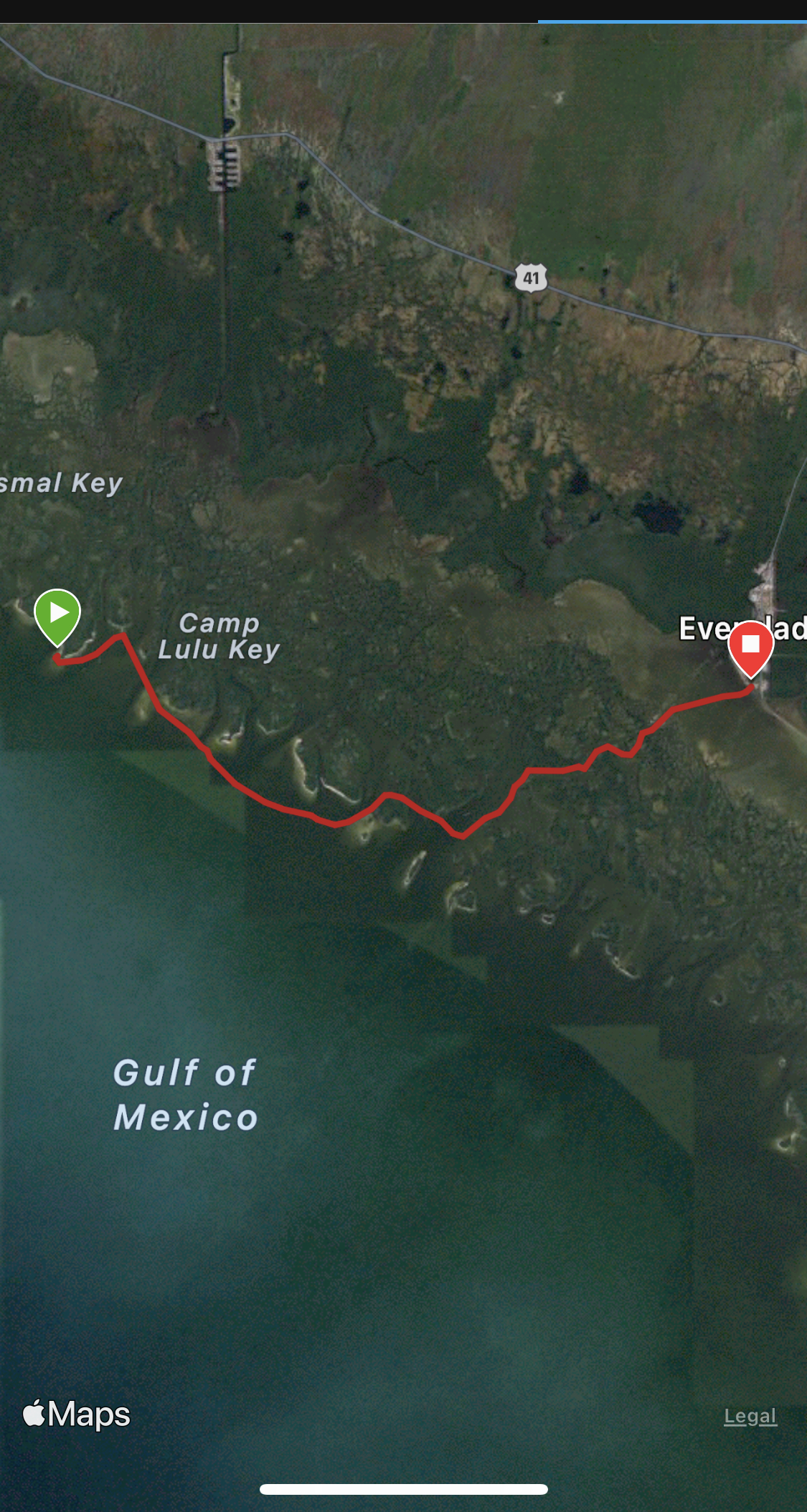
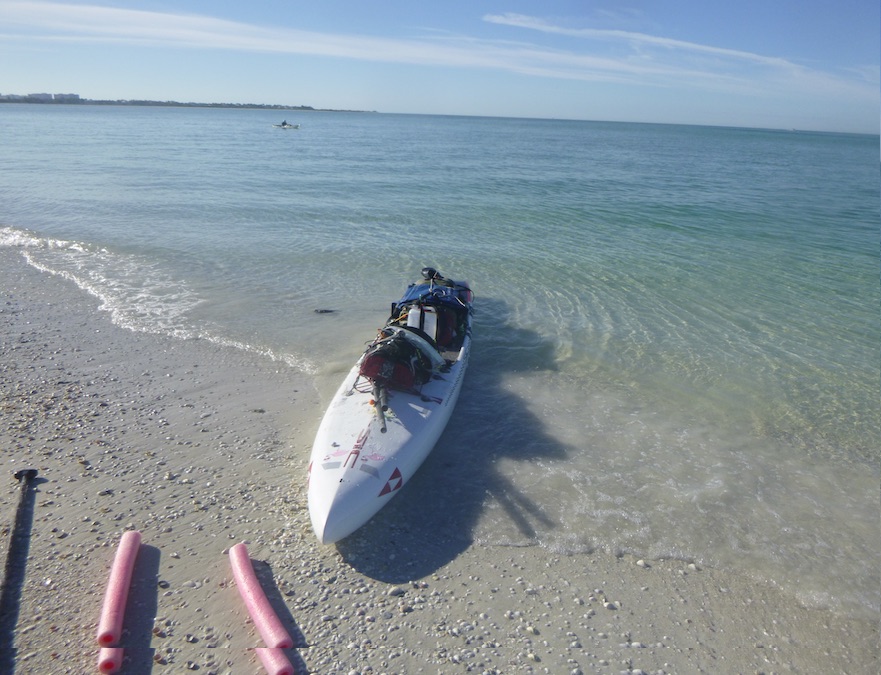
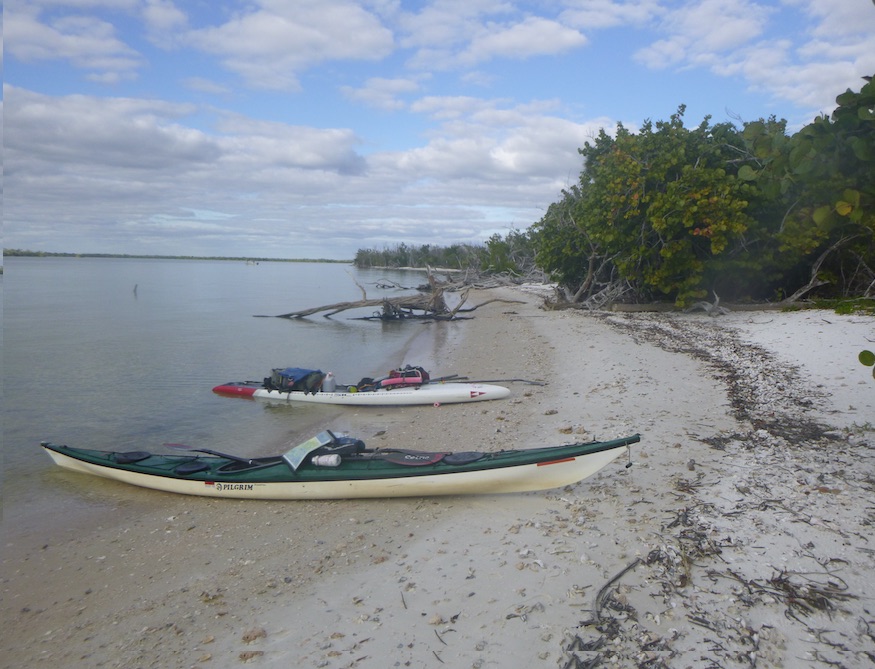
We launched from the Ranger Station in Everglades City and headed northwest towards the Ten Thousand Islands National Wildlife Refuge. Janice in her NDK Pilgrim Expedition, and I on my SIC RS 14′ x 26. The first day of paddling was familiar from previous trips—Indian Key Pass, Picnic and Tiger Keys, and Camp Lulu Key, where we crossed out of the Everglades National Park.
While Janice and I took note of the various agency boundaries, the birds flying overhead and the sharks swimming below did not. The flora and fauna of the Everglades, Ten Thousand Islands and Rookery Bay are breathtaking. Well, maybe not the raccoons.
Camp Lulu Key
After a brazen raccoon cut our lunch break short, we continued past Panther Key to our first campsite: White Horse Key. Despite rumors to the contrary, there are plenty of raccoons in the Ten Thousand islands and Everglades. I’ve met many of them.
Day 1: Everglades City to White Horse Key 13.05 miles
Morning coffee
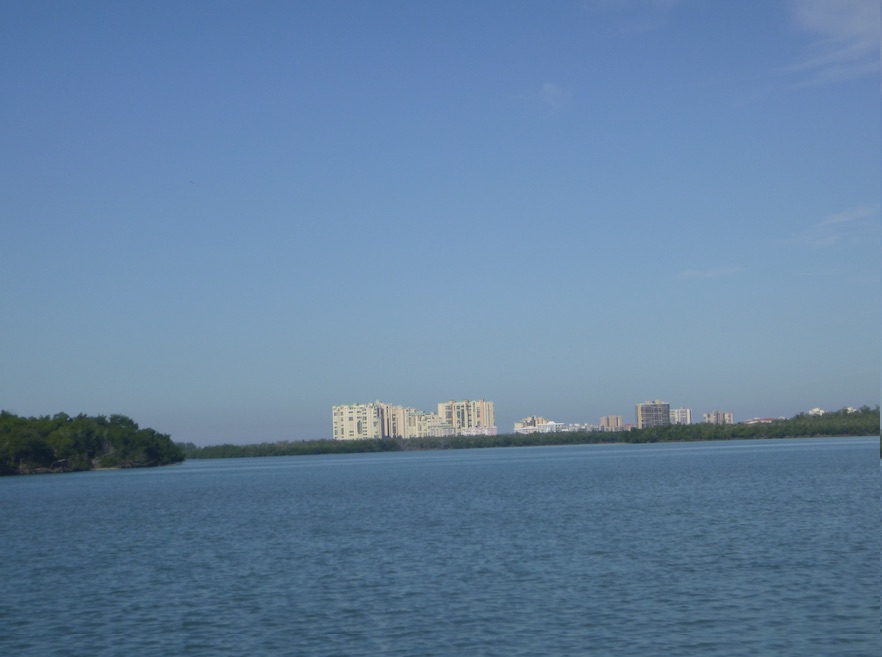
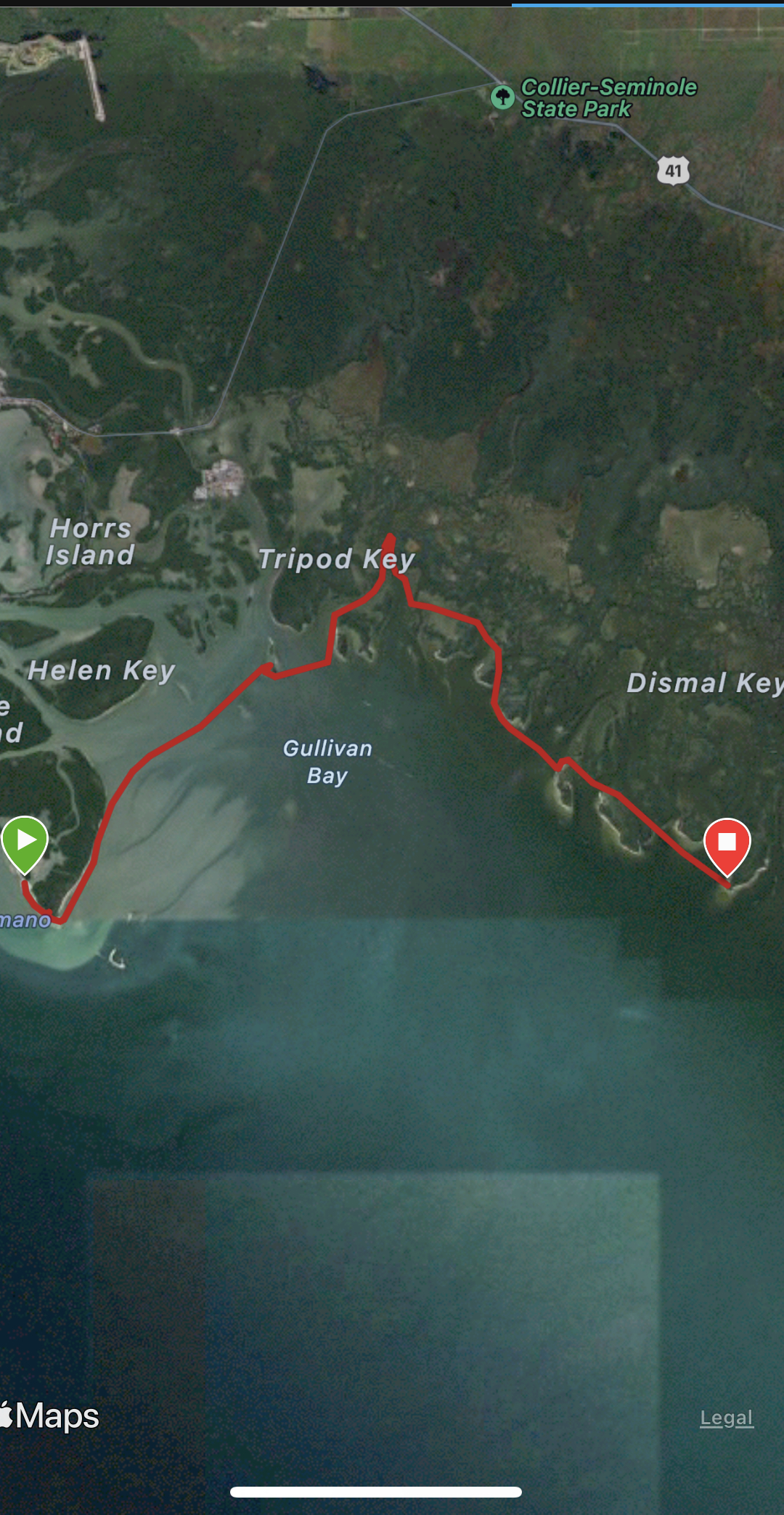
The next morning, we continued northwest. As soon as we rounded the corner of Gullivan Key, the hulking buildings of Marco Island appeared. They stalked us for the next 5 days..
Stalked by condos
Day 2: White Horse to Sea Oat 18.59 miles
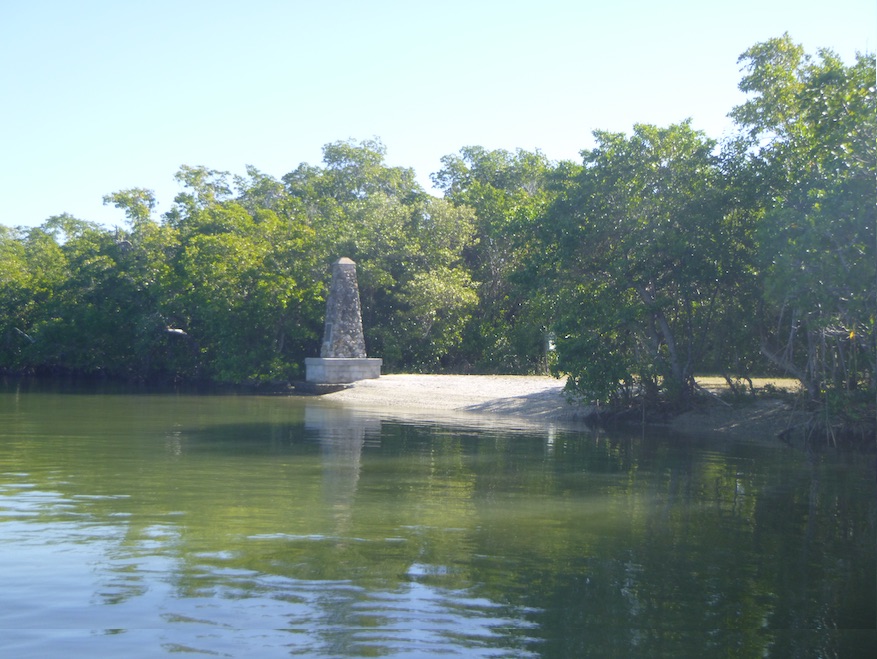
The tide carried us up Coon Key Pass towards Goodland and the Big Marco River. After the chaotic boat traffic in Goodland, the Marco River was surprisingly pleasant. We paddled up a ditch and under a bridge to reach Isle of Capri’s Paddle Park, a nice launch site and lunch stop. At this point, we had entered into the Rookery Bay Preserve, whose website has plenty of information about launches, routes, and camping. These waters are ideal for paddlers, plenty of birds and wildlife, calmer inland waters, and much less boat traffic.
From the Paddle Park, we wove our way through a mangrove tunnel and, after a few false starts, emerged near Johnson Bay and the Isle of Capri. We paddled towards the gulf and our night’s campsite on Sea Oat Island. Unlike the Everglades, the water was clear. No wonder people love this area.
Scenic Marco Island condos
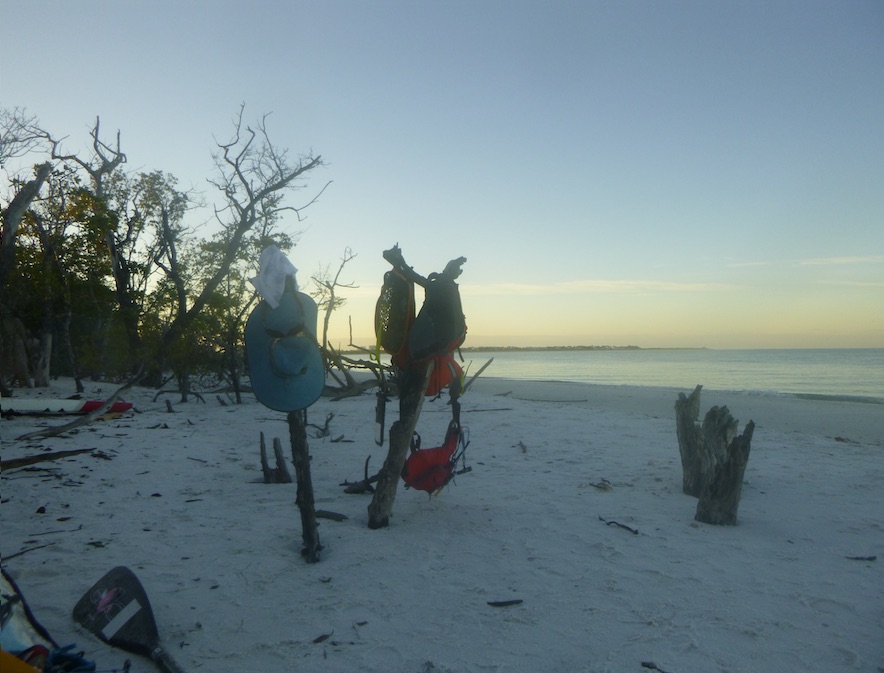
Hanging gear art
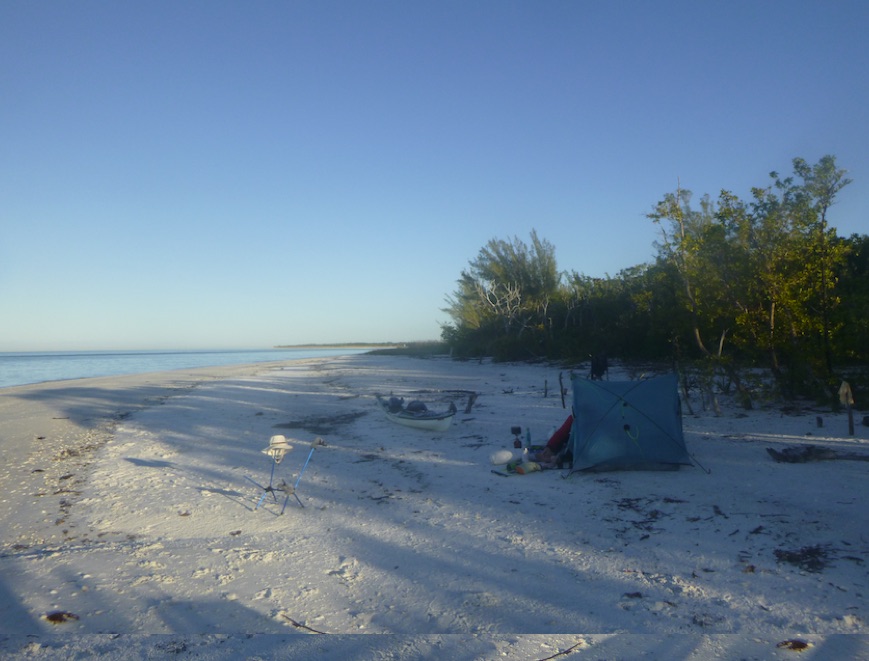
Tent life
On day 3, we continued scouting different sites, but none more important than the Snook Inn, the halfway point on the Everglades Challenge. After an epic fail with one of my (usually good) homemade dinners which I tossed into the fire, I wanted real food. But, as work comes before play, we had some scouting to do. From Sea Oat, we paddled past Keewaydin Island and explored Rookery Bay until we reached the Shell Island launch.
Children’s time capsule
glassy waters
Docked at the Snook Inn
Stuffed with coconut shrimp and the Snook Inn’s famous grouper sandwich, the chop and traffic of Big Marco Pass awaited us. It was a relief to round the corner and paddle parallel to the beaches of Marco Island. We crossed Caxambas Pass and made camp on Dickman Island.
Day 3: Sea Oat to Dickman 17.79 miles
There’s always a walk
Setting up just in time
A rare site not facing Marco Island
On to Cape Romano, a highlight only second to the Snook Inn, via Goodland. We meandered through the mangrove channels towards Goodland which both gave us more training miles and laid out less exposed routes for Paddle Florida. We stopped for lunch at Goodland, and I remembered one of Kevin’s and my first SUP and Sail trips. We’ve come so far.
Mangroves near Goodland
Goodland Boat Park where we met Sharknado, a kindred spirit
A moment of calm
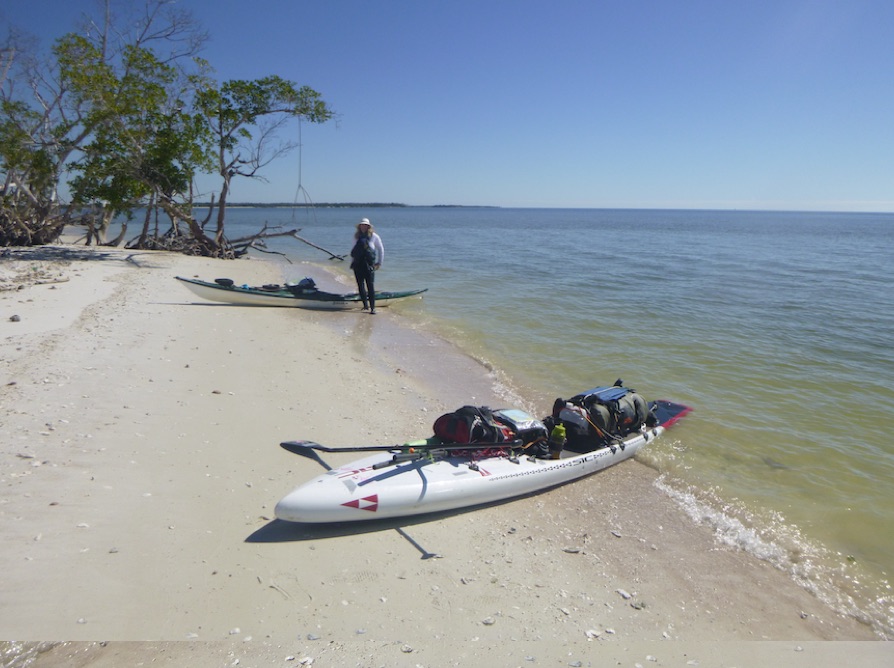
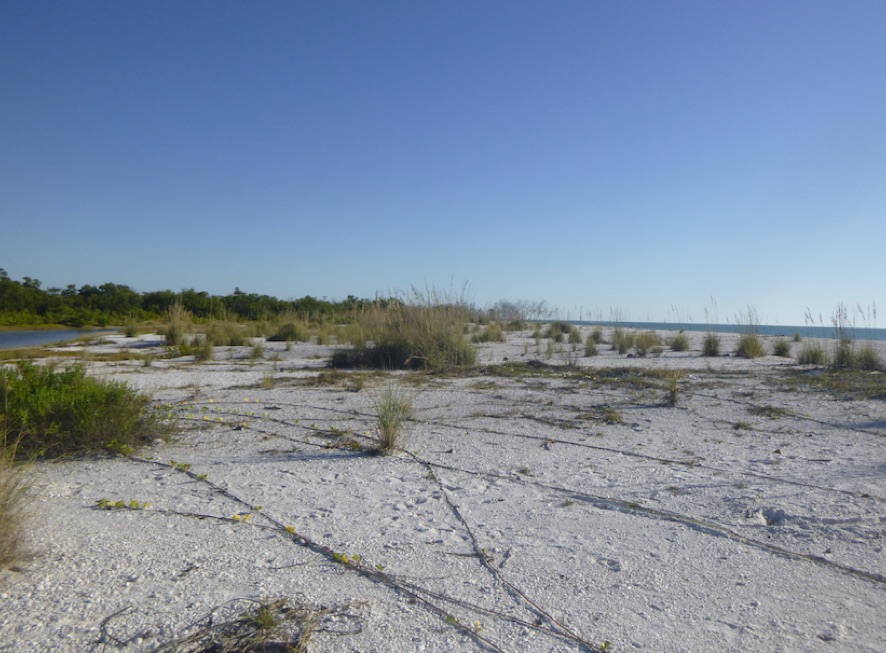
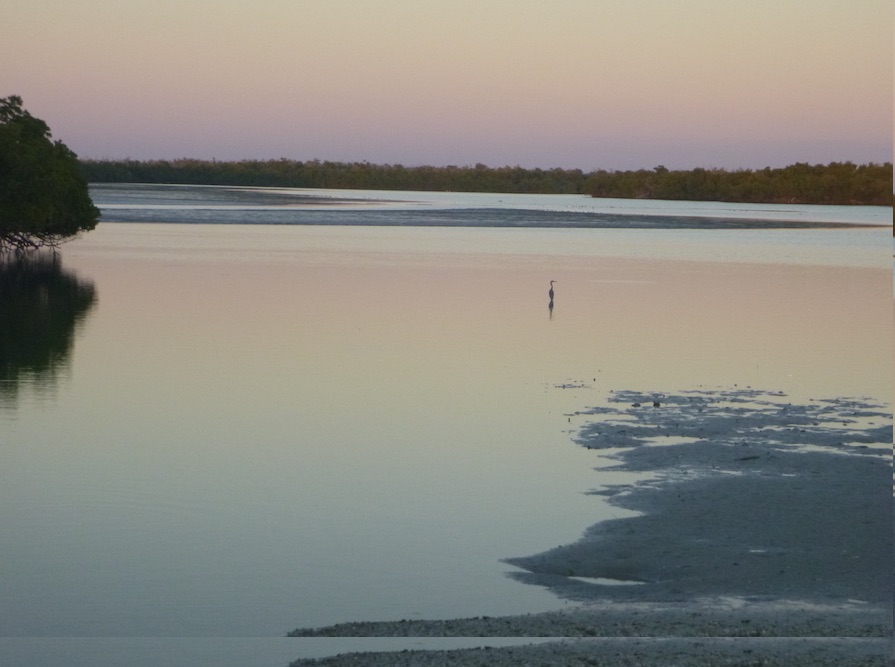
Fueled by a power lunch of diet coke and Cheeto Puffs, we paddled towards Cape Romano. We passed Helen Key and followed the Morgan River to Morgan Bay, where our charts dubiously noted a passage between bay and gulf. We didn’t really believe that the passage was where we said it was, but we did want to explore the bay. The tide was falling, and birds walked where we recently paddled. The beach between bay and gulf beckoned. The dome houses could wait until tomorrow.
Day 4: Dickman to Cape Romano 13.91 miles
Between bay and gulf
Our beach
Lower and lower
How low can it go?
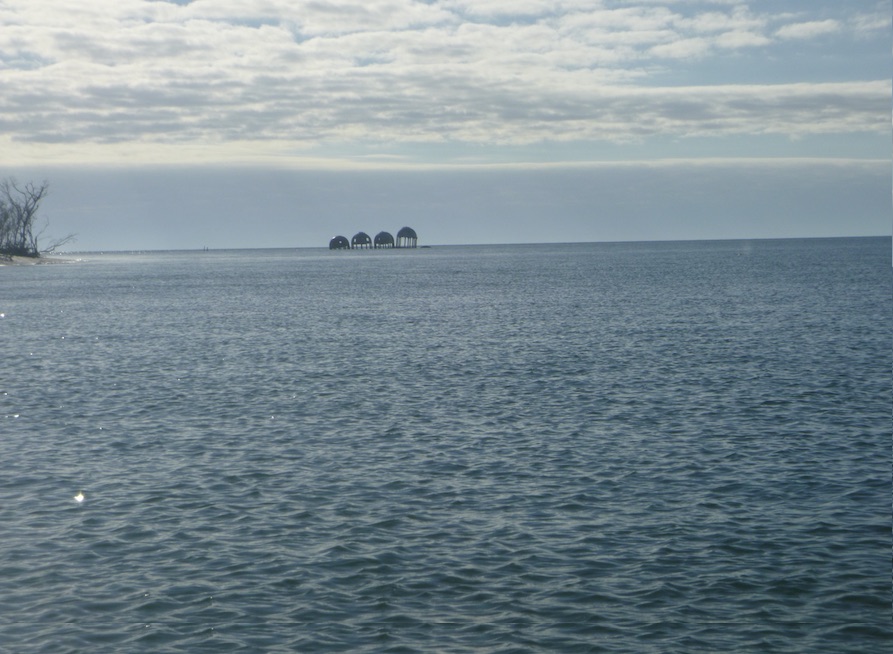
The next morning, we carried boat, board, and gear across the sand to the gulf, and we paddled to the dome houses just around the corner. I had first seen the dome houses of Cape Romano over 10 years ago while on a kayak camping trip with my husband Kevin. At the time, the buildings were on the beach, but erosion has washed away the sand, and now the domes are in the water.
Cape Romano beach
Dome houses
After Cape Romano, we paddled towards Coon Key and towards yet another Shell Key that the Paddler Florida folks would visit. The weather was changing, and a front was coming. Our timing was good. We set up camp on Panther Key, which set us up for our final paddle into Everglades City.
Day 5: Cape Romano to Panther 13.27 miles
Pool noodles to protect the board from shells
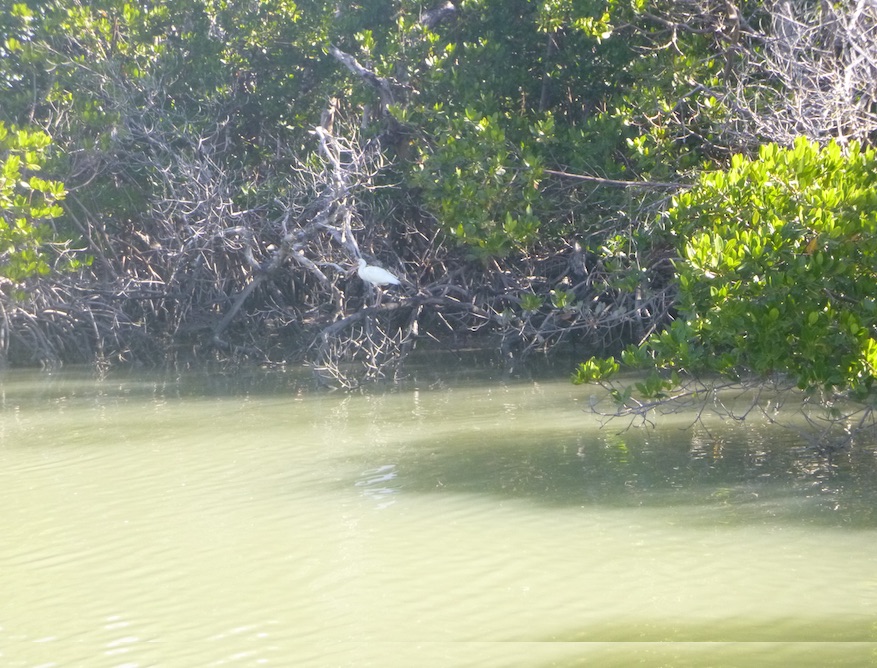
Ibis waiting for lunch
Coon Key break
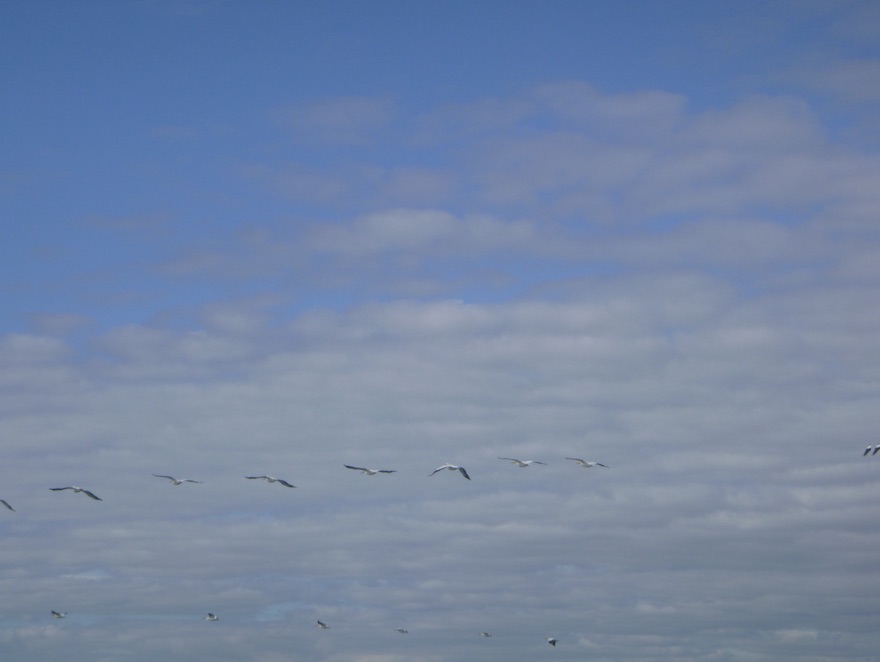
White pelicans
Pelicans in flight
Flying pelicans
Panther Key: home of bugs and raccoons
The tides had rarely been in our favor, and our paddle back to Everglades City was no exception. We needed to reach Everglades City in time for breakfast at Nely’s Corner in Everglades City. To do that, we needed to leave well before low tide at 7 am. Alarm at 4, launch at 5. 7.22 miles to go. One cup of coffee in camp, more at Nely’s Corner. As our eyes adjusted to the darkness, we paddled east, skirting the extensive shoals around Lulu Key, where we saw headlamps moving as campers began their morning routines. The sun rose over Indian Key as we began to fight the outgoing tide.
The sun returns
We hugged the shore and discovered side channels to avoid the tide. By 10 am, we had unloaded gear and rinsed off at the ranger station. By 11 am, we sat at Nely’s, sated with coffee, a breakfast sandwich, and a to go box of Key Lime pie for Kevin.
This trip was exploratory, long morning coffees and plenty of time to absorb the beauty. My next trip, probably the Everglades Challenge in March, won’t be so leisurely. I’ll be racing through, maybe at night, trying to make the checkpoints in time. Two radically different trip styles, but each bringing its own joys, challenges, and lessons. I’m grateful that I can experience this area in so many ways.
Just a short paddle from Skidaway Island in Savannah, Georgia, lies Ossabaw Island, offering a glimpse into Georgia’s cultural and ecological history. I had kayaked and camped on Ossabaw Island several years ago with Ronnie and Marsha of Sea Kayak Georgia, but I hadn’t seen the buildings or explored the island’s interior. When Kathryn Lapolla of Savannah Coastal Ecotours invited me to join her and a group of basket weavers from Tennessee on Ossabaw Island, I leapt at the chance to return.
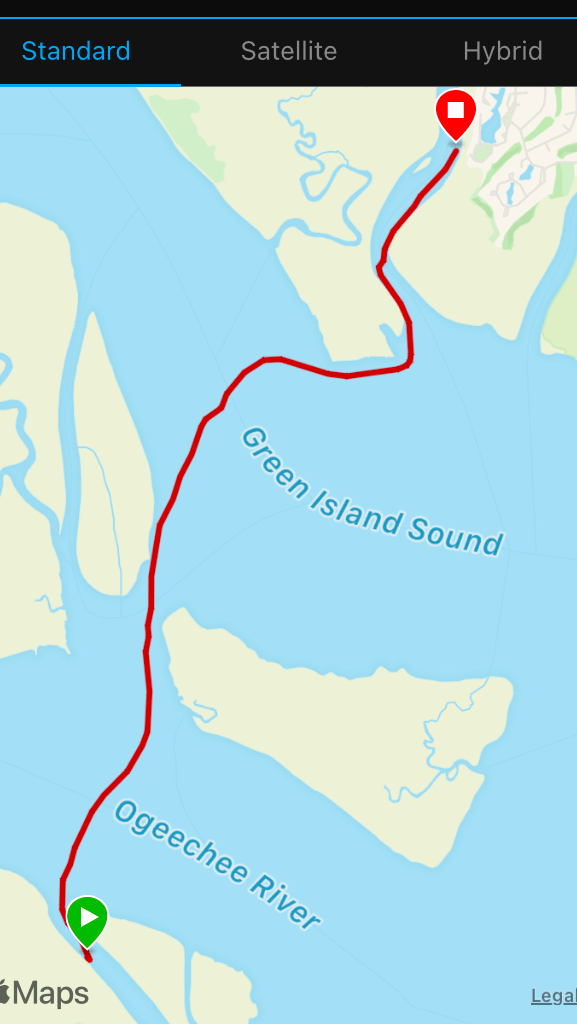
Ossabaw Island is one of the Sea Islands, a chain of barrier islands stretching from the Carolinas to north Florida. Unlike many of these islands, Ossabaw, St. Catherines and Wassau have remained largely undeveloped. But the structures that remain on Ossabaw reveal both a unique history that parallels that of the Low Country. The island’s beauty obscures a rich and difficult history, including centuries of slavery and later Reconstruction wherein African Americans gained and soon lost access to land. Paddling across the Ogeechee River, I bore in mind that a place of joy to me might yield pain to others.
From the Landings to Ossabaw
Kathryn and I prepared our respective crafts, an NDK Sportive kayak and a 14′ Bishop A’u paddleboard, for a 10 am departure. Although the trip was only 6 miles, Georgia’s strong tidal flows make tidal planning essential. Kathryn’s husband Fran had already shuttled the weavers to the island, along with gear and food for the week.
We arrived at Torrey Landing, just a short walk from the Clubhouse where we were all staying. On my last visit, I camped at the South End Beach Camp, a primitive site almost 8 miles away. The Clubhouse with its community kitchen and expansive porch felt luxurious.
Where we practiced the art of porch sitting
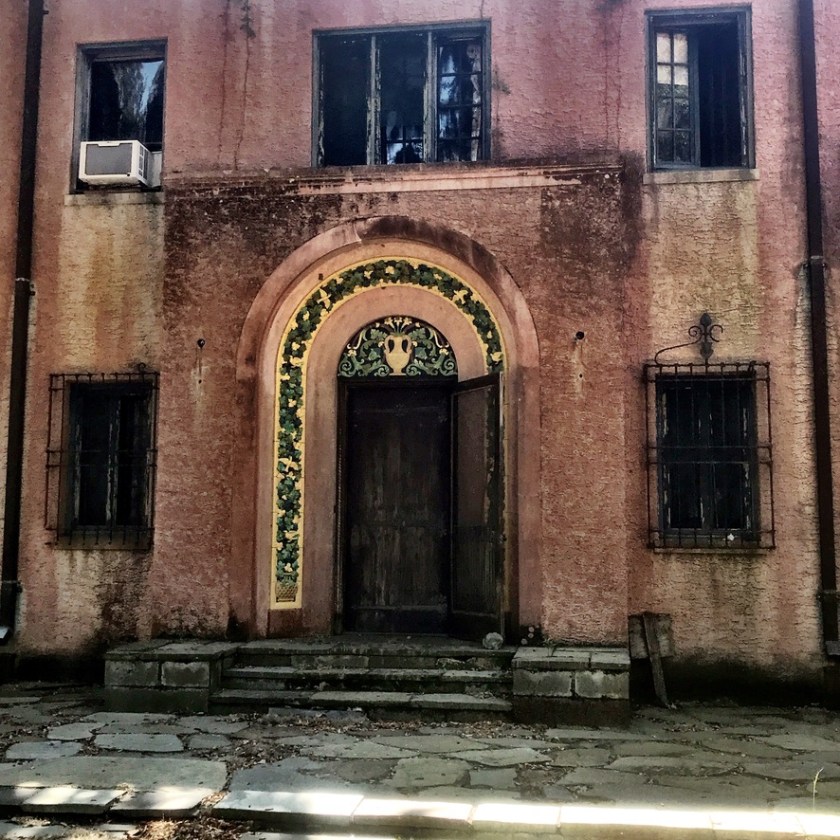
The Boarding House
Main House
Ossabaw Island’s history is similar to that of the Low Country, with waves of indigenous settlements, followed by European settlers. One notable exception was visionary Sandy West (1913-2021) who cultivated the artistic oasis that Ossabaw later became. According to the Ossabaw Island website, archaeologists and historians documented numerous indigenous communities prior to the arrival of Spanish and English settlers. In 1763, John Morel, Sr. purchased the island and brought 30 enslaved people to produce indigo and later sea cotton. After the Civil War, parcels of land were distributed to the newly freed people to farm as part of Reconstruction. Unfortunately, this was a short-lived promise. Soon thereafter, Andrew Jackson rescinded this distribution and returned much of the land to ante-bellum landowners.
Eleanor Torrey West, known as Sandy, inherited Ossabaw from her parents and founded the Ossabaw Foundation to preserve the island. She later deeded Ossabaw Island to the State of Georgia with the provision that it would remain undeveloped. She lived on the island full-time and welcomed groups of artists, writers, and educators to stay for short periods. And that is how I came to be weaving a basket on Ossabaw Island.
Concentration
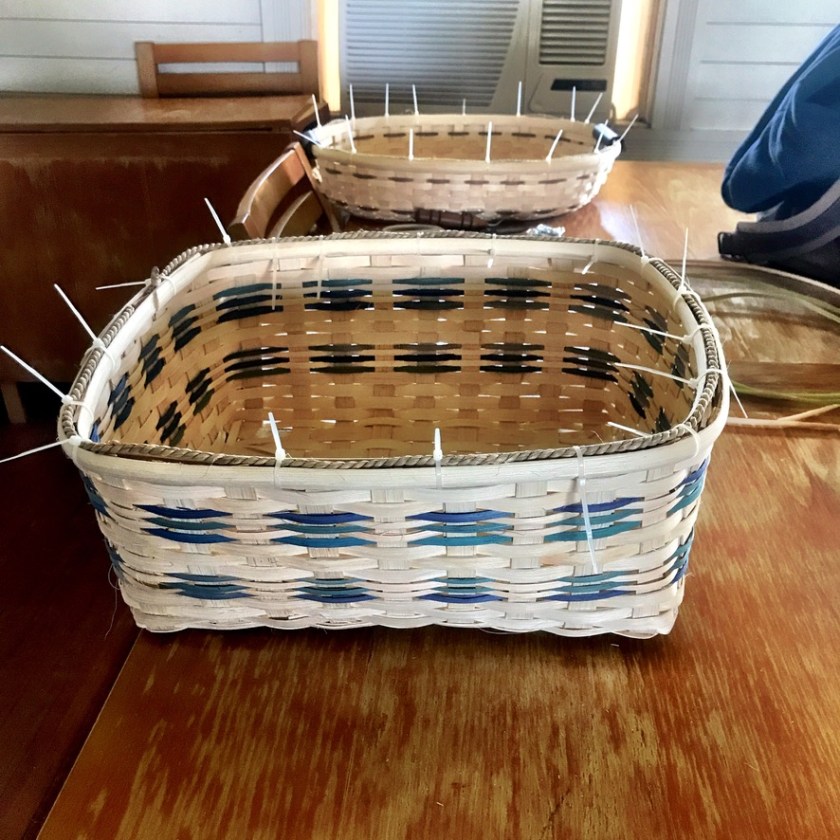
How it starts
Almost done
I came to Ossabaw to paddle, but I became strangely entranced by the process of making a basket. Kathryn had warned me that the weavers weren’t going to let me go without making one. I was game, but wary, as the least artistic person ever. But with Barbara’s excellent instruction (and mistake fixing), I actually made a basket. I loved visiting with the weavers. They come every year and told island stories of years past.
Donated to the Ossabaw Foundation
But it wasn’t all about basket weaving. Kathryn and I explored the island by boat and board. One day,we surfed the tiny waves rolling in around Bradley Point on the south end.
Kathryn and her Sportive
Bradey River Landing
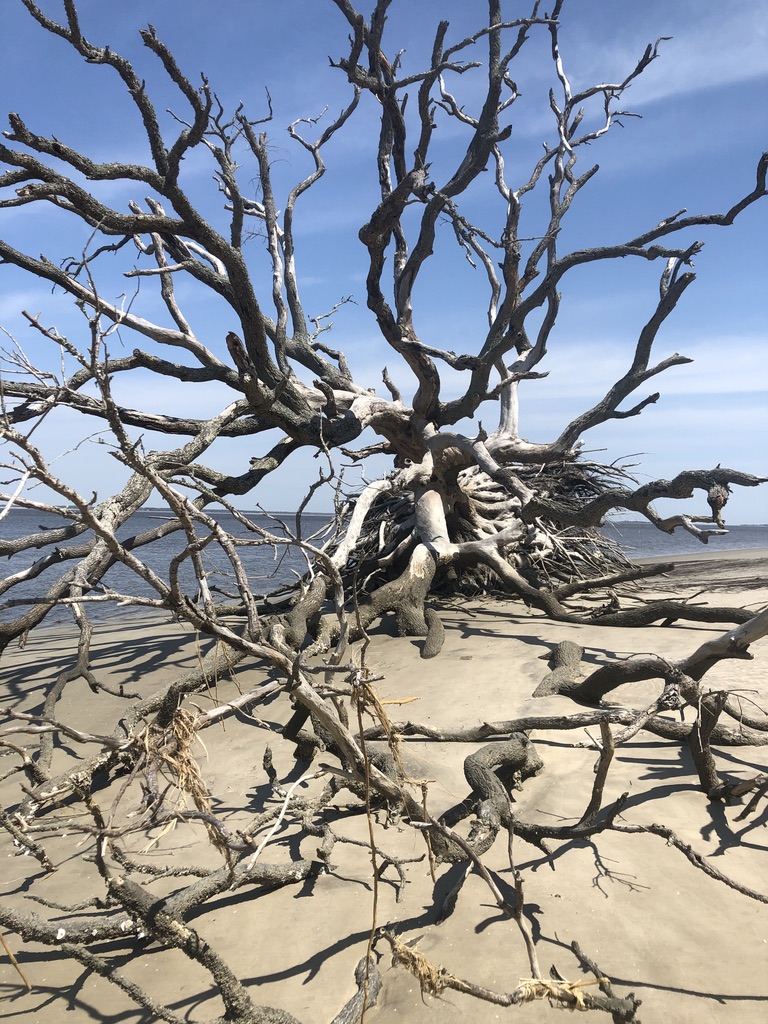
Expansive sand
Ossabaw Dreaming (Photo by Kathryn LaPolla)
Exploring creeks
Bluffs
Another day Fran hauled boat and board up the Bradley River. We rode the tide downstream and back to the landing, looking out for gators and dolphins along the way.
The tidal currents of the Ossabaw River created an endless pool for my SUP practice. As part of my technique training through Paddle Monster, Coach Larry Cain had assigned both land and on-water drills to improve my stroke. I paddled upstream, practicing my catch and exit, floated back down and repeated, again and again. An alligator surveyed my first few passes, until the sun and repetition lulled it to sleep.
Photo credit: Pam Bullock
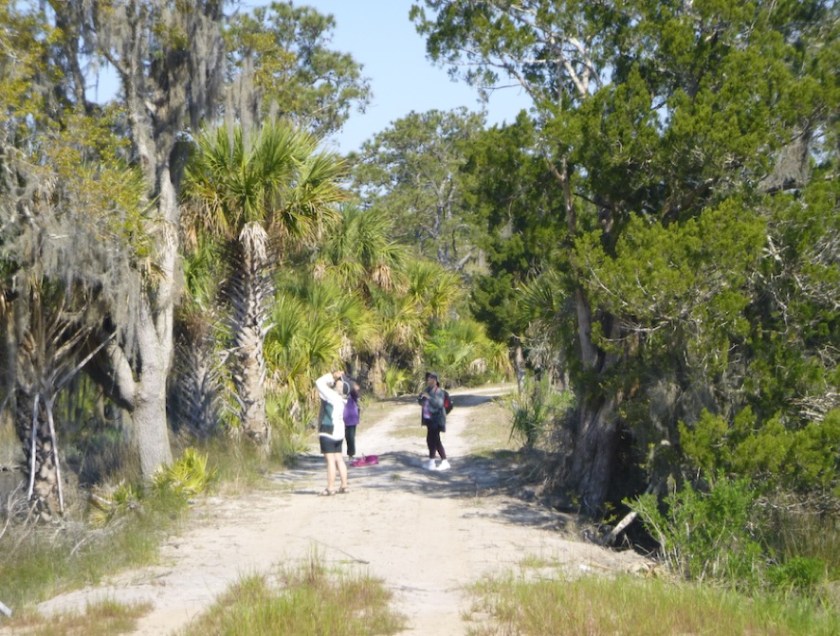
We also toured the island by land, piling into the back of the Foundation truck. We saw Middle Place, site of the Genesis Project, another Sandy West creation. From 1970-1983, artists and others spent from a week to a year on the Genesis Project, “a cooperative, semi-sustainable community” where they lived “close to the land.” I wish I had learned about the Genesis Project when I was writing Living Sustainably. I found these communities fascinating, but found few in the deep south.
Foundation truck
Genesis residence
Genesis building
We saw the once-elegant Main House and looked for bird life towards the south end of the island.
Wood storks
Birds!
Sea grass
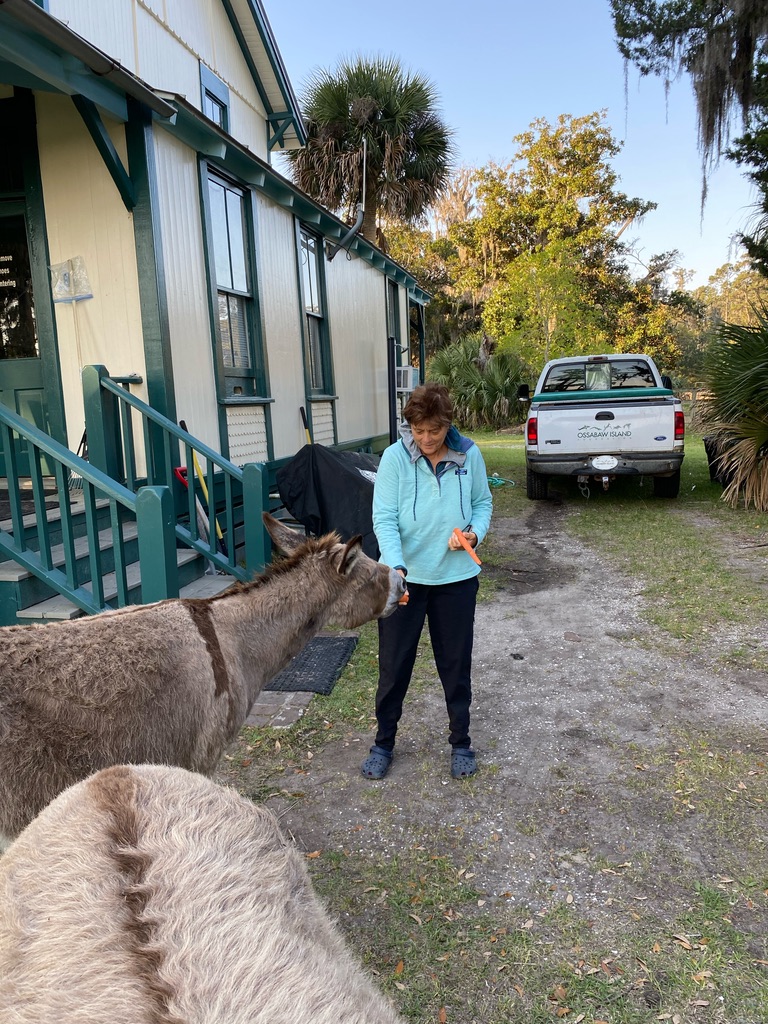
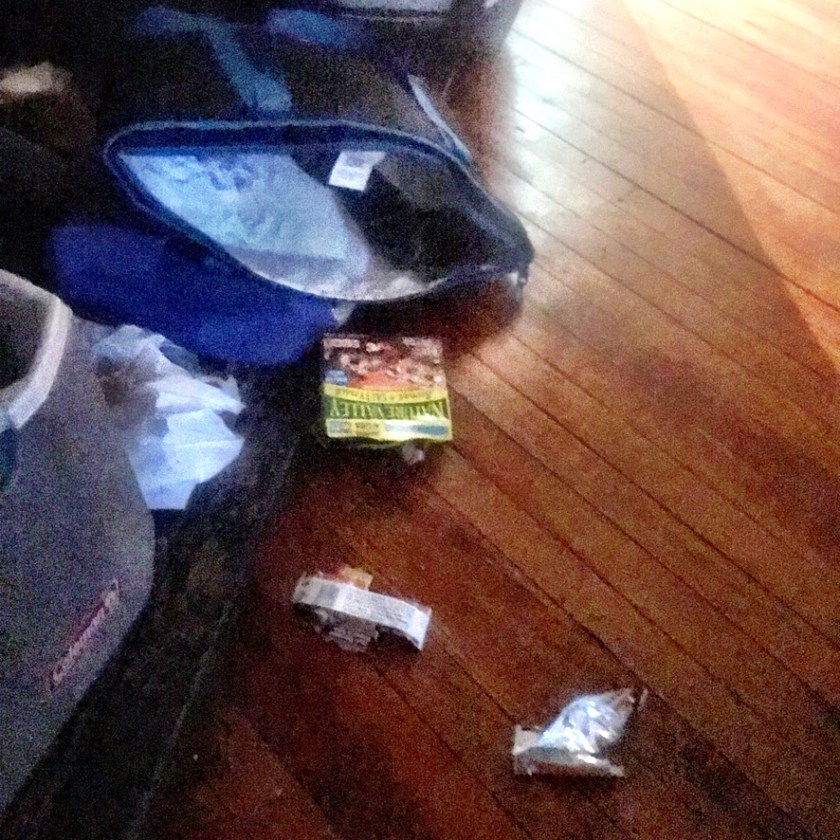
Ossabaw had no shortage of wildlife, some wanted and some not. Sandy had introduced donkeys to the island, and they loved their apples and carrots. A less welcome raccoon slipped into the house early one morning and helped himself to granola bars and snacks.
Photo credit: Pam Bullock
Hungry donkey
Evidence
And suddenly, it was time to paddle back to the mainland. Ossabaw is a magical place, revealing so much cultural and ecological history. The fate of Ossabaw Island is in the hands of the State of Georgia. I hope they live up to Sandy West’s expectations.
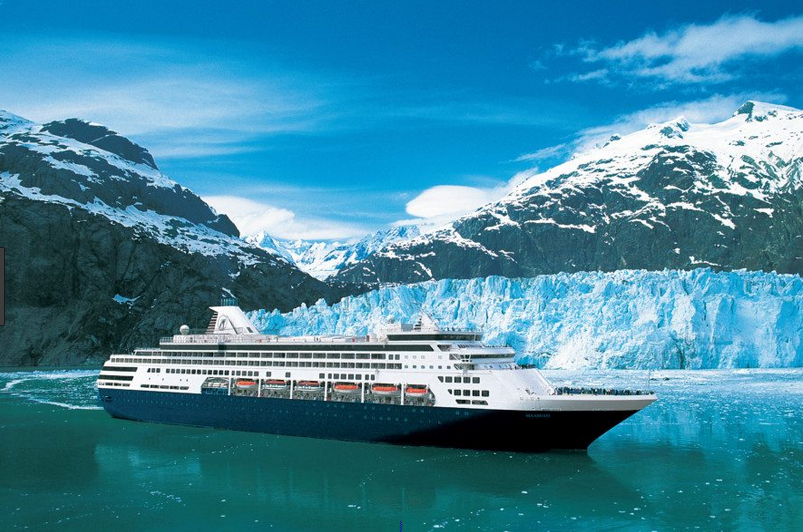
Forty days and forty nights in a Pilgrim Expedition on Alaska’s Inside Passage? Which boat, some ask, assuming I’ve booked a cruise. No casinos, midnight buffets, or lounge chairs on the mighty Pilgrim Expedition, a 17′ sea kayak designed to handle the rough waters of the Irish Sea. Or, in this case, the Gulf of Alaska. My task: cramming food, gear, water, and clothes into my boat without sinking it.
S.S. Solitude? (Courtesy of Alaska Tours.com)
Pilgrim Expedition basking in warmer climes
What is the Inside Passage? The Inside Passage extends over 1,000 miles from Seattle, WA to Skagway, AK. The barrier islands buffer the wind and swell from the Gulf of Alaska and create a relatively sheltered passage for boats of all kinds. The Alaska segment runs approximately 500 miles, depending on route. Many of these areas are roadless, so the Marine Highway system is essential for travel in southeast Alaska.
Alaska’s Marine Highway (Courtesy of Alaska.org)
Our plan. Our team of four (Anthony, David, Dawn, and myself) will kayak from Skagway, AK to Prince Rupert, BC, just south of the US-Canada border. We anticipate thirty to forty days on the water, depending on weather. Logistically, paddling north to south made sense. Months ago, we secured our ferry reservations from Prince Rupert to Skagway so we can paddle back to a car in Prince Rupert. David is dodging tornados driving boats and gear across the US to Prince Rupert. Dawn and I bought one-way tickets so getting home will be part of the adventure.
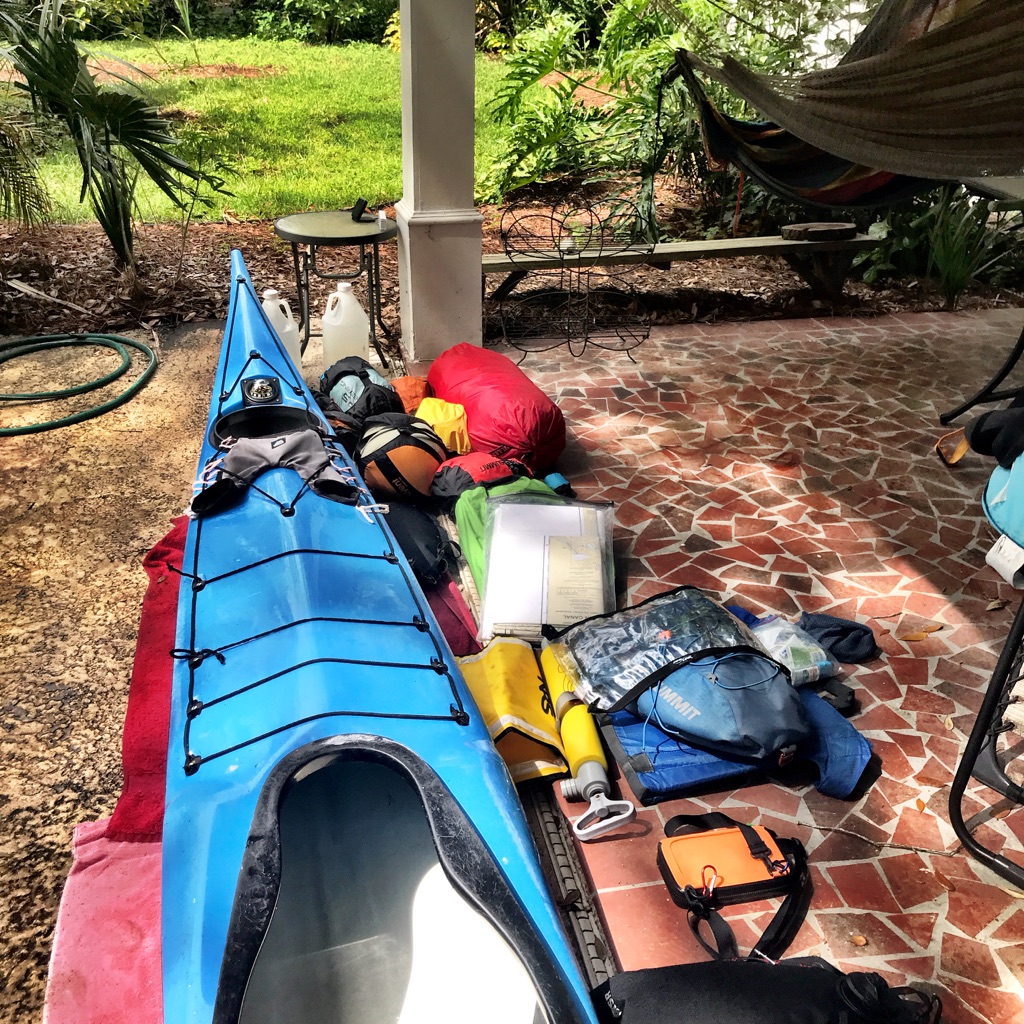
Like a jigsaw puzzle
It fits!
Our gear. Kayak camping always requires lots of gear, but Alaska’s remoteness and rough conditions demand even more. I’ve packed and repacked drybags of all sizes. Warm clothes, an back-up stove, and water filters. Sets of clothes for sleeping and a different set for cooking. A drysuit and underlayers for paddling. My dromedary water bags hold over 24 liters of water. Somehow it fits. Now. I’m sure there will be hard choices at the last minute.
I’ve already forgotten what’s in TVP Surprise
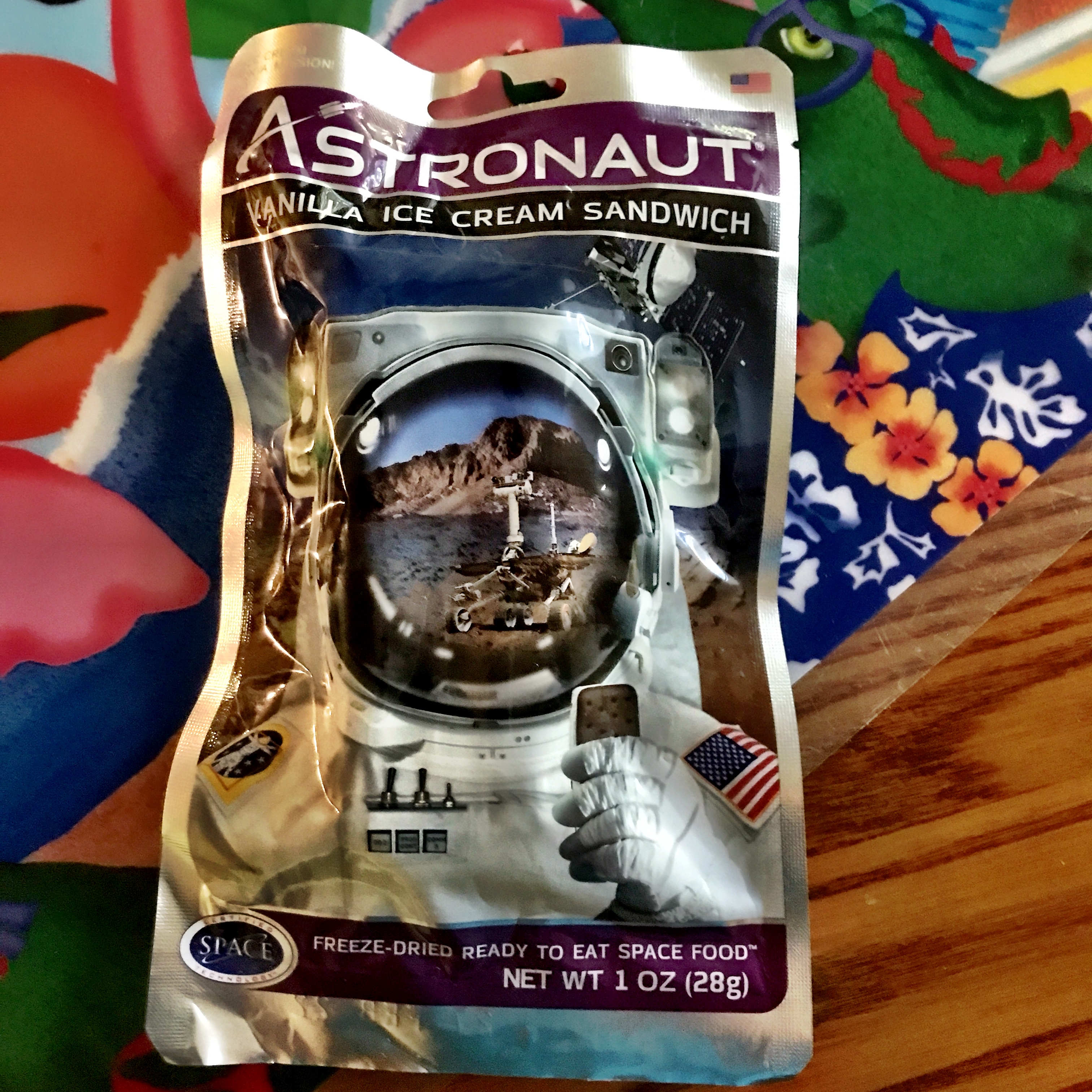
At home, I experimented with dehydrated and freeze-dried foods and a vacuum sealer. Kevin, my guinea pig, was a great sport about testing new concoctions on our sailing trip to Flora-Bama. After a hard day of paddling, even TVP Surprise will taste fantastic. And I can’t wait to try my dehydrated Ice Cream Sandwich.
I will savor this one night
One decision point: how much food to pack. We need to carry enough food to account for the inevitable weather delays. Many paddlers mail packages to themselves along the way, and I might do this on my upcoming hike along the Appalachian Trail. Others purchase food along the way, trusting what appears on the shelves of local stores. I decided to pack approximately half of my meals and make do with whatever I find in Juneau, Ketchikan and towns along the way. Some creative meals perhaps, but that’s part of the fun.
Culinary delights (Valero.com)
Lions and Tigers and Bears, oh my. Brown bears (or grizzlies) and black bears populate Alaska, and we are paddling through their kitchen. Bears are apparently less habituated to humans on the islands along Alaska’s Inside Passage, and we hope to minimize bear-human interactions. Our group of four is small enough to fit on postage-stamp size campsites, but large—and loud—enough to repel curious bears. On previous Alaska trip talking and singing has kept bears at a good distance. (Go away little bear..) Odor-proof bags, bear barrels, a bear-proof Ursack, and good campsite hygiene should minimize encounters. These precautions matter for our safety and for the safety of future campers and the bears themselves. We will carry bear spray but I hope to never use it.
What’s left of my charts
Two bags of charts
From Paper charts to GPS. I hated to do it, but I cut up my charts, taking care to keep the compass rose and lat/long lines. They might look funny, but it gained me some much-needed space. I marked what remains with possible campsites and water sources. As much as I love paper charts, I also have a GPS. Denis Dwyer’s blog Sea Kayaking the Inside Passage has been a terrific resource.
My dream weather
More realistic
Oh for calm days and daily whale sightings, but storms and rough weather are Alaska’s reality. Think Deadliest Catch. We’ve all trained in rough water conditions and carry multiple communicatin devices, e.g., VHF radio, a PLB (personal locator beacon), and a Garmin Inreach, just in case. The weather will dictate our paddling, and I’m sure we’ll have some weather days holed up in our tents.
Deadliest Catch (Courtesy of HowStuffWorks.com)
My boat, gear, and food is en route to Alaska, courtesy of David. I’ll have time in both Prince Rupert and Skagway to make final decisions. I’ve been prepping for months and I’m ready to go. It’s time to dip my blades in the water and launch my Pilgrim Expedition into the Skagway River.
It’s that time of year. The best time of year–Matanzas! Only four more days.
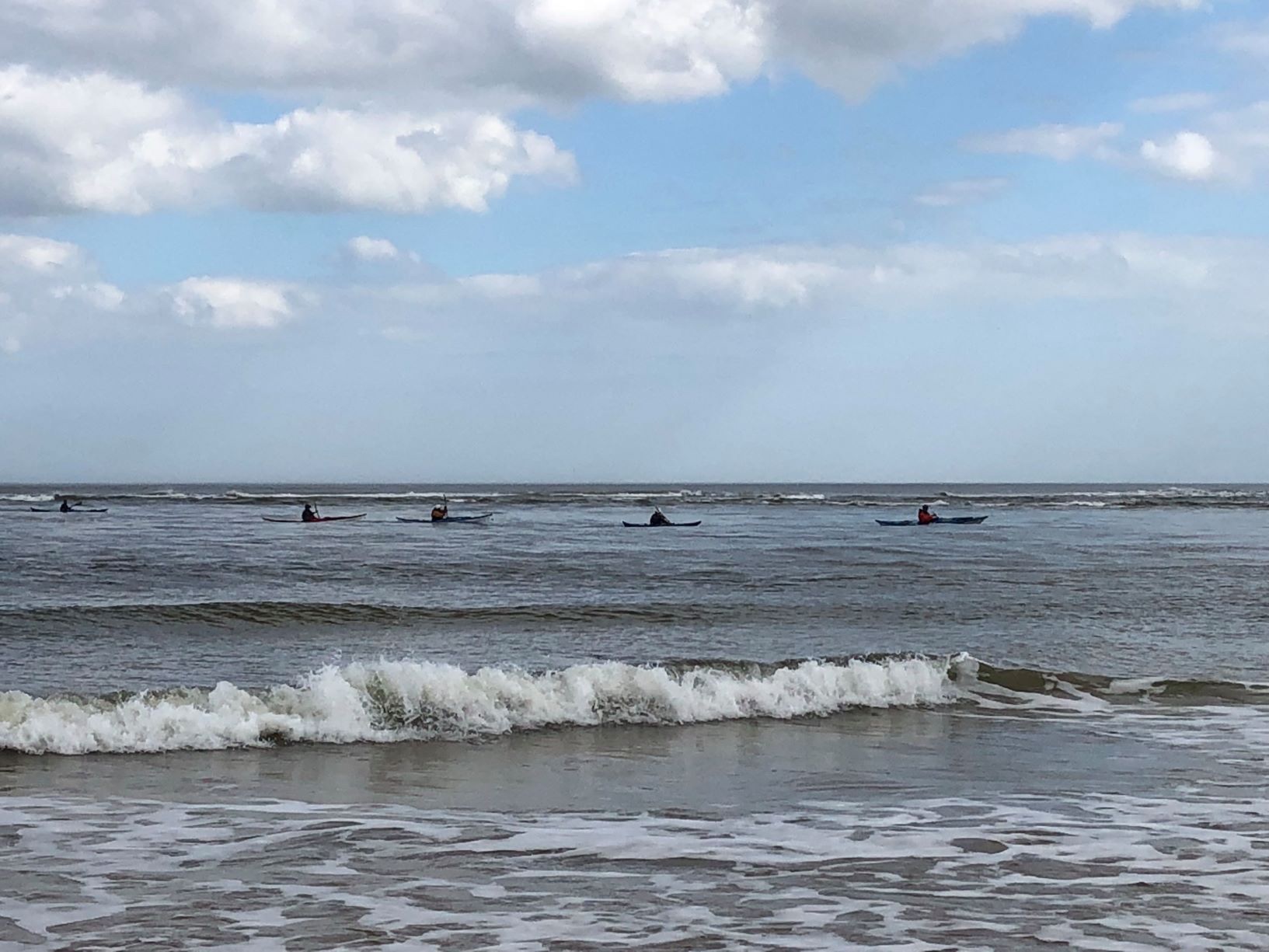
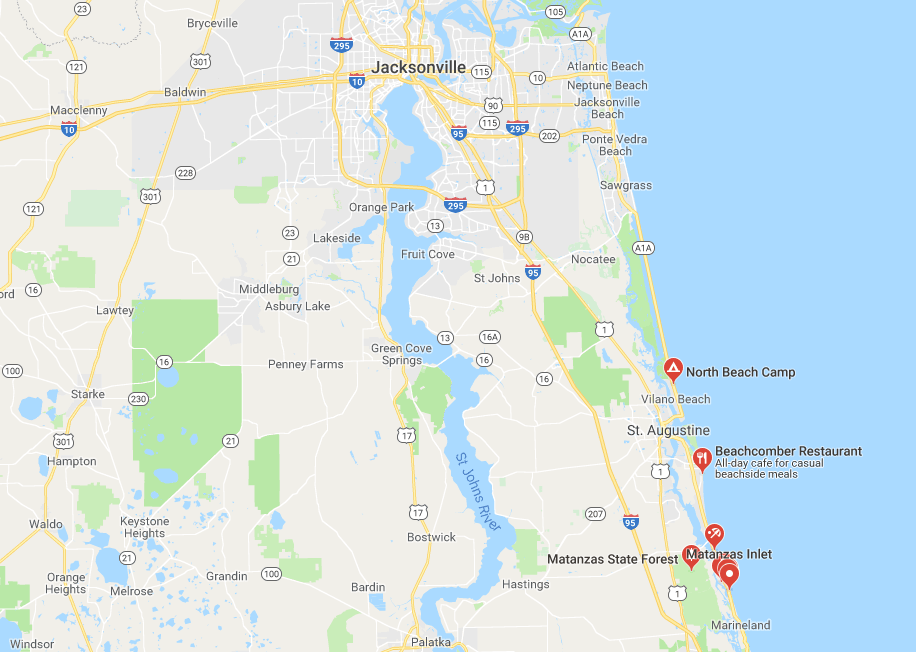
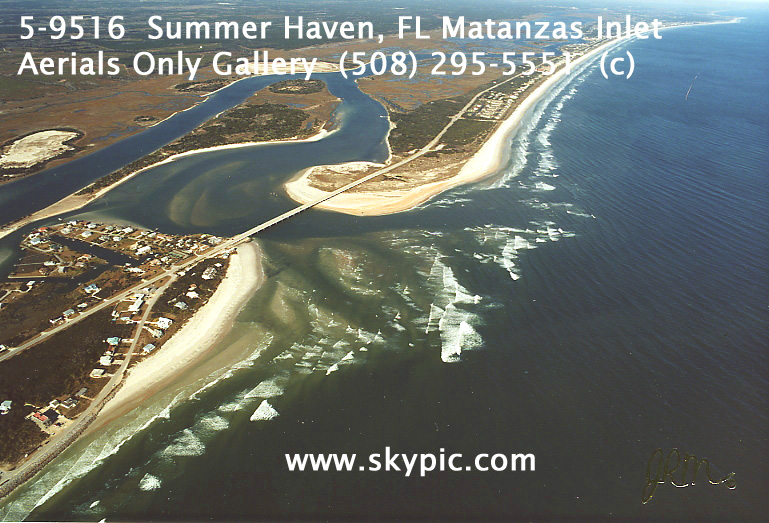
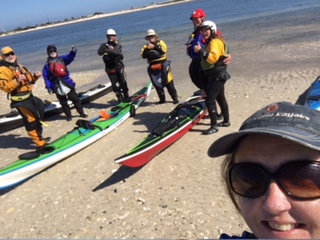
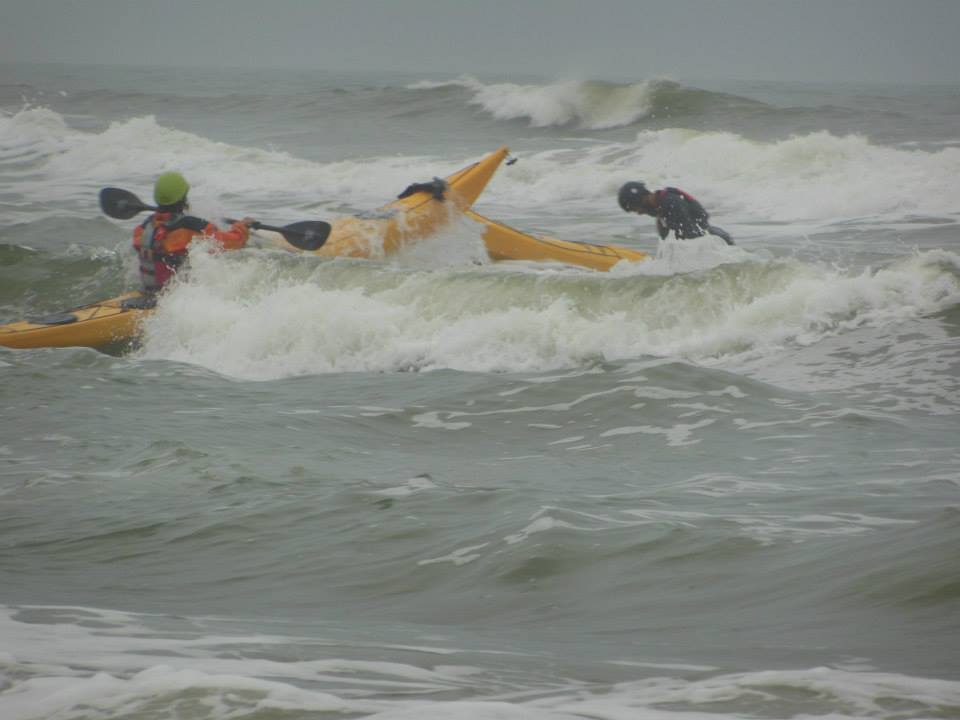
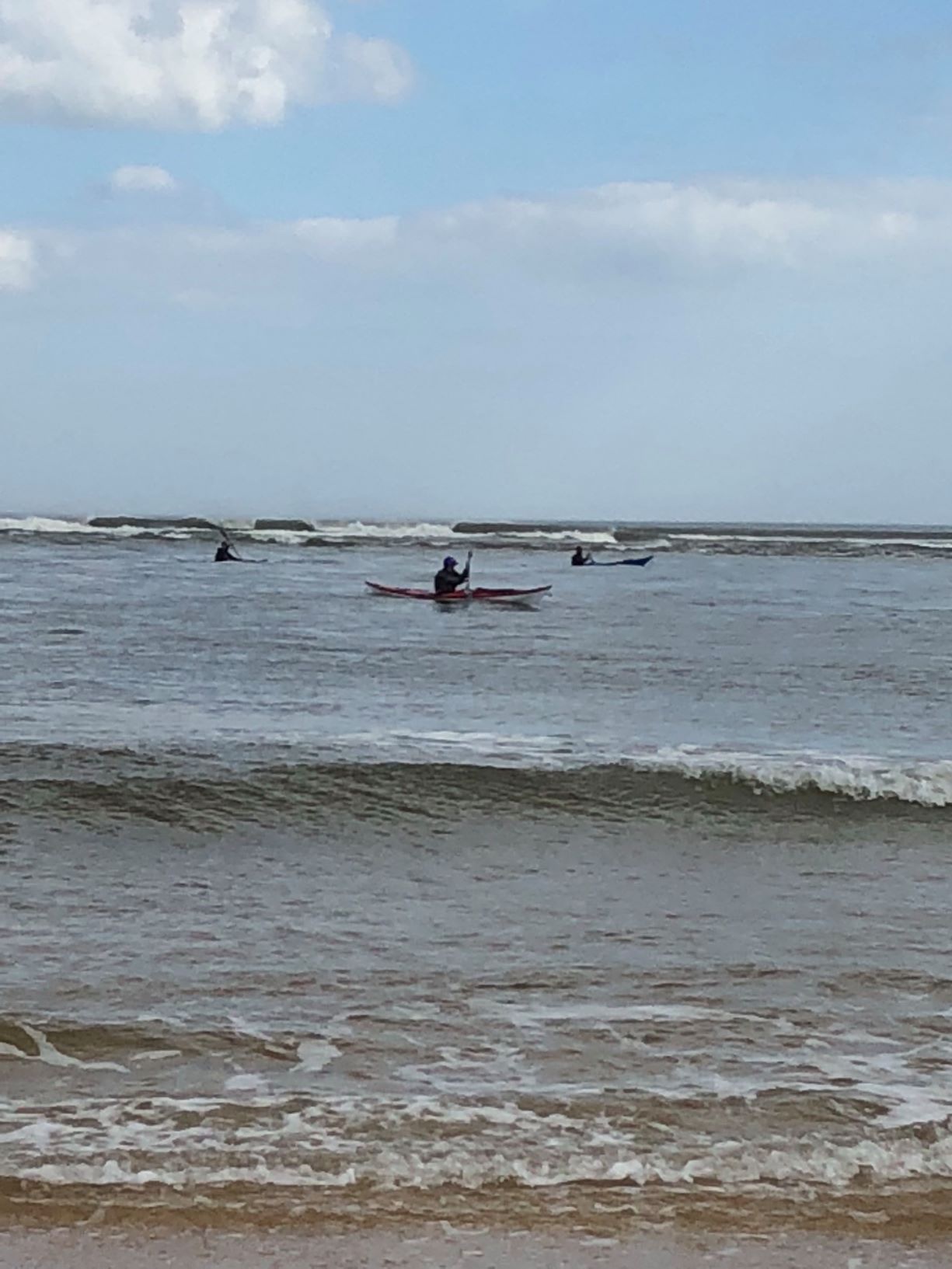
Every February Dale Williams of Sea Kayaking USA gathers his band of paddlers for a week of rough water training in Matanzas Inlet. Shaped like a ‘C’, the Matanzas River flows from St. Augustine Inlet southward to Matanzas Inlet so tidal flows and currents affect both north and south inlets. St. Augustine was the first permanent European settlement in what would later become the United States, and this historically-rich region reveals much about our past, missions, battles, pirates and plunder. But who can focus on history in the surf? As I bounce around in the chop, surf, and shoot through standing waves, enjoying the coastal chaos that river mouths offer, my world shrinks to body, boat, and blade.
Matanzas Inlet in north Florida (Courtesy of Google Maps)
We’re paddling sea kayaks, many of us in 16′ NDK Pilgrims and Romanys, designed by Nigel Dennis from Anglesey Island in Wales. Nigel designed these boats to handle the lumpy waters, or ‘jobbledy bits’, off the coastal UK. We’ve discovered that these kayaks make terrific surf boats, and we have plenty of surf in the southeast.
With the right conditions—swell, wind, and current, Matanzas Inlet offers near perfect waves for surfing our 16′ kayaks. Long boat surfing occupies a tiny niche in the kayak world, but the few of us who surf are addicted. Dale chose Matanzas Inlet because its shifting sandbars provide both excellent surf and a range of conditions to accommodate different skills levels. Not surprisingly, these conditions result in numerous opportunities for self- and assisted rescues.
We gather from many points in the US. The Texans, Louisianians, and Floridians among us don drysuits against Florida’s February chill, while some of the braver folks from Michigan and New England wear shorts. For them, Florida’s February might as well be summer.
Some of us are training for the American Canoe Association’s (ACA) Advanced Coastal Kayaking Instructor Award, which requires a combinations of factors including 3-5 foot seas, 15-25 knots wind, 3-4 surf break, and 5 knots current. This means not only surviving these conditions but teaching, playing and rescuing in them. Each morning and evening, we meet on the porch of our shared house for Dale’s “academics”, where we discuss surf and rescue techniques and topics such as navigation and marine weather. By the time we reach our launch site, the day has warmed to a temperature even I can tolerate.]
An historical marker describing the 1565 ‘Massacre of the French’ marks our path through the dunes. We refer to ‘Matanzas’ so casually—”Are you coming to Matanzas this year?” Even though Fort Matanzas National Monument sits just upstream, it’s difficult to imagine that this tranquil inlet hosted such bloodshed and cruelty. The Spanish massacred over 300 stranded French mariners in this place. I’d reflected on this before, the incongruity that places of great beauty and tranquility mask bloody histories. Just north, for example, Fort George Inlet near Jacksonville was the southernmost point of the Low country slave trade.
Our schools teach a myth of origin that revolves around New England, pilgrims, and religious rebellion, but Spanish rule of Florida began in 1513, prior to any British settlements. The First Coast endured waves of French, Spanish, and British newcomers who eradicated indigenous populations, and, often, each other. In 1742, the Spanish built Fort Matanzas to guard against British incursions, and they ruled Florida until 1763. The British gained control from 1763-1783, ceded Florida back to the Spanish in 1783, and regained the territory in 1821.
The sandbars that guard the entrance to the river mouth shaped Florida history. The shallow waters of Matanzas Inlet protected Fort Matanzas and St. Augustine from British invaders, but they also led to plunder and piracy. Pirates chased ships aground onto sandbars along the Florida Coast and plundered the cargo. Wreckers, as described in Tim Robinson’s Tales from Old Florida later replaced pirates and salvaged materials from ruined boats, establishing settlements in the process. River mouths were treacherous to anything other than small, nimble boats.
This 1742 map shows how the Matanzas Inlet shoreline has changed, which is what happens with sandy coasts. Unlike the rocky coasts of the northeast and Britain, our river mouth hydrology changes with every hurricane and every major storm. NOAA charts illustrate permanent land masses and static navigational features, but sandbars come and go, so that we re-learn our coasts after every storm.
And this is why we train here. To learn how to navigate through the changing hydrology of sandbars and river mouths. Some paddlers were exploring these features for the first time, learning to brace and roll in the waves. Others, like myself, were learning to lead other paddlers, to bring groups safely through a surf zone with breaking waves up to four feet. This means not only leading groups out through waves, but bringing them back through the waves. Like climbing, it’s easier to go up or out than down or in.
The strong tidal currents of the Matanzas River, combined with strong winds, made rescues and group cohesion difficult. An out-going tide could sweep boat, victim, and rescuers out to sea. We had some unusual challenges, one afternoon, a bank of fog descended on us, rare for Florida. This is why we practice in this venue, to be prepared when the rescues, capsizes, and out-of-boats experience are real.
Surfing at Jax Beach Photo credit: Joe Crespi
On our first morning, the conditions were big, maybe too big, but the waves were clean. Dale gave us free time to play and surf as a warm up for our subsequent training. At one point, I realized that we had company—two dolphins were also playing and surfing in the waves. As they leapt over the waves, they exposed their full bodies—nose to tail, something I rarely see. It’s a gift and a privilege to play with dolphins. So, forgetting the pressures of training and the ravages of history, I surfed under the bright February sun.
Caves, puffins, and clapotis…the Dingle Peninsula in southwest Ireland is a kayaker’s dream, a bucket list destination for many. In an uncharacteristically warm and sunny July, our group of eleven explored arches, islands, and headlands in Dingle’s coastal waters by day and pubs by night. With an all-star team of Dale Williams and Debbie Kearney of Tybee Island, Georgia and Nigel Dennis and Eila Wilkinson of Holyhead, Wales, how could our trip not be great?
First day’s launch
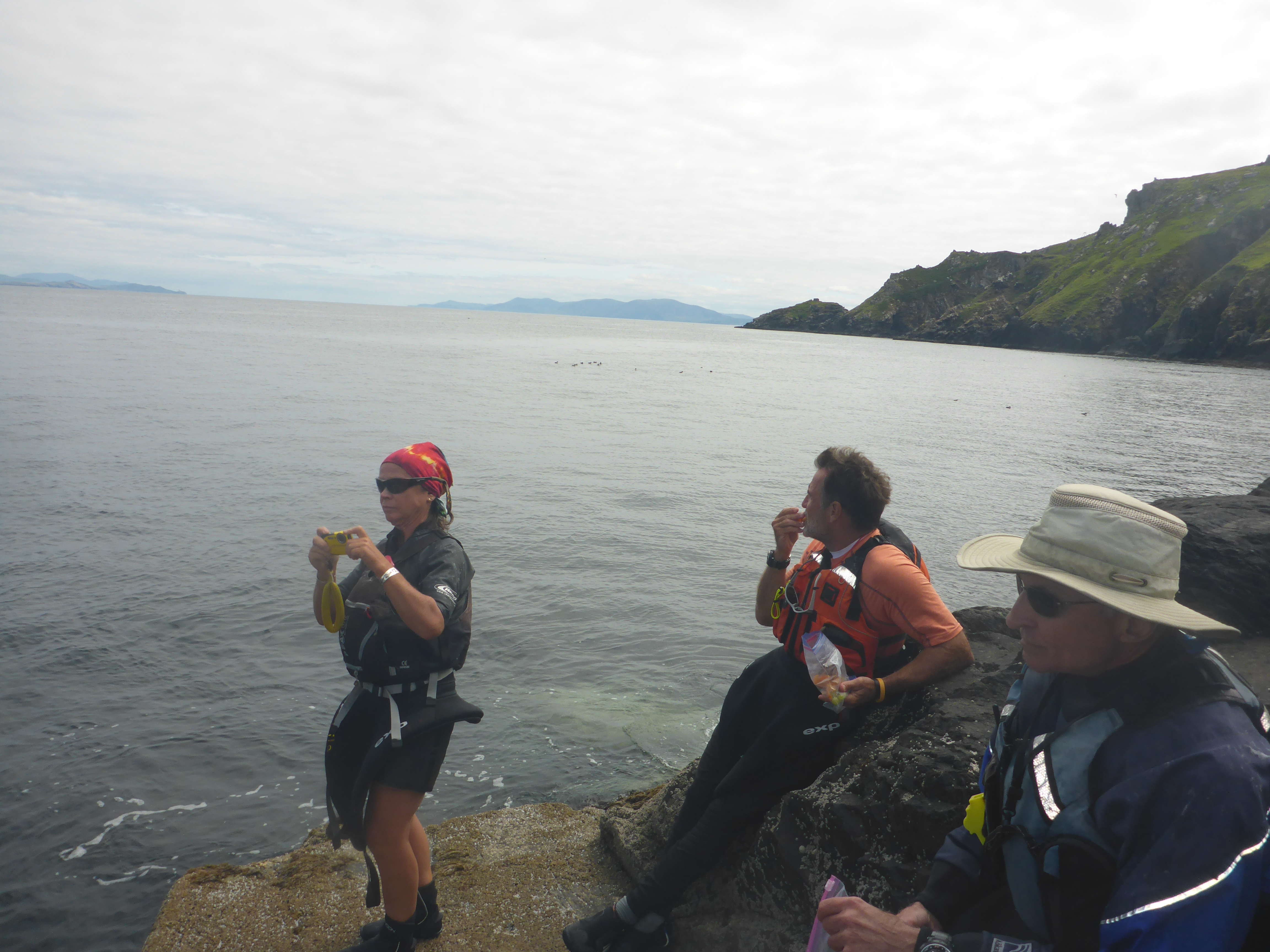
Lunch in a protected cove
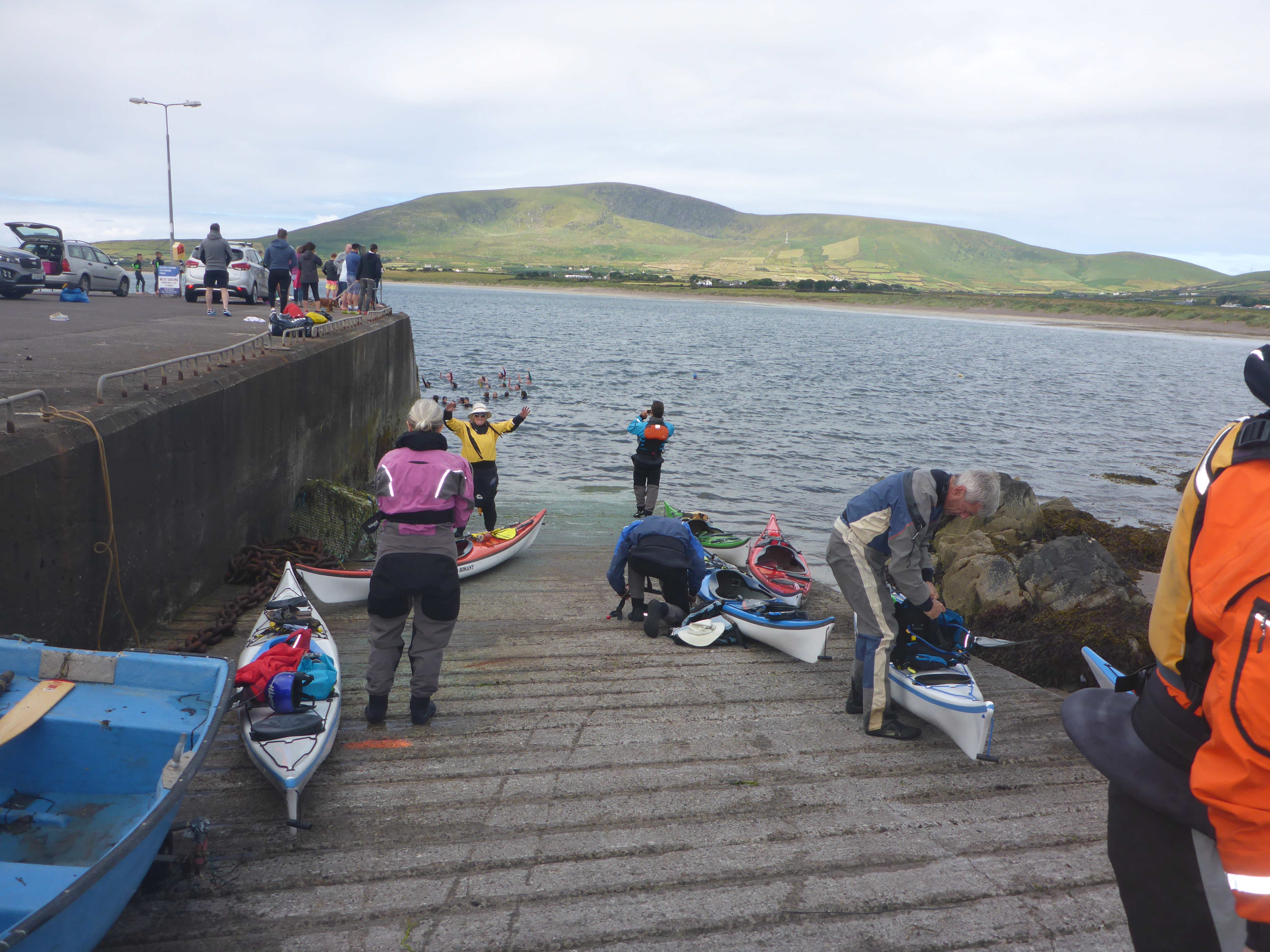
On our first day, we launched from Ventry Harbor for a shake-down paddle along the coast. We shared our launch with a group of Irish children taking swimming lessons. Clad in wet-suits, groups of children jumped off the pier to tread water, a good exercise for those living close to cold water. (I felt very warm in my drysuit.) Seeing the children and the boats around the harbor reminded me how much Ireland’s history, culture, and economy is tied to the sea. I learned more about Ireland’s marine heritage when we paddled to the Blasket Islands later that week.
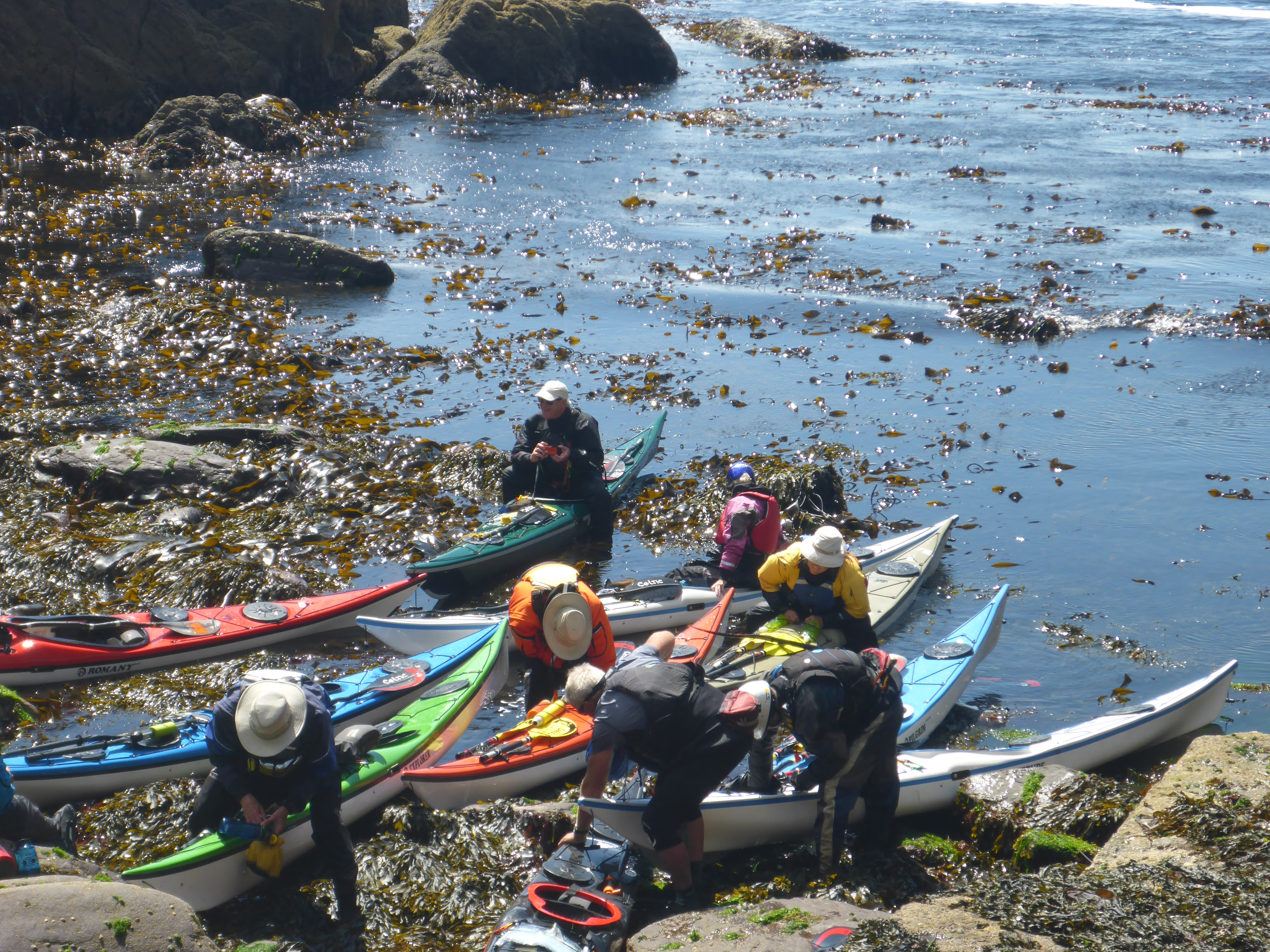
Waiting for the tide to turn
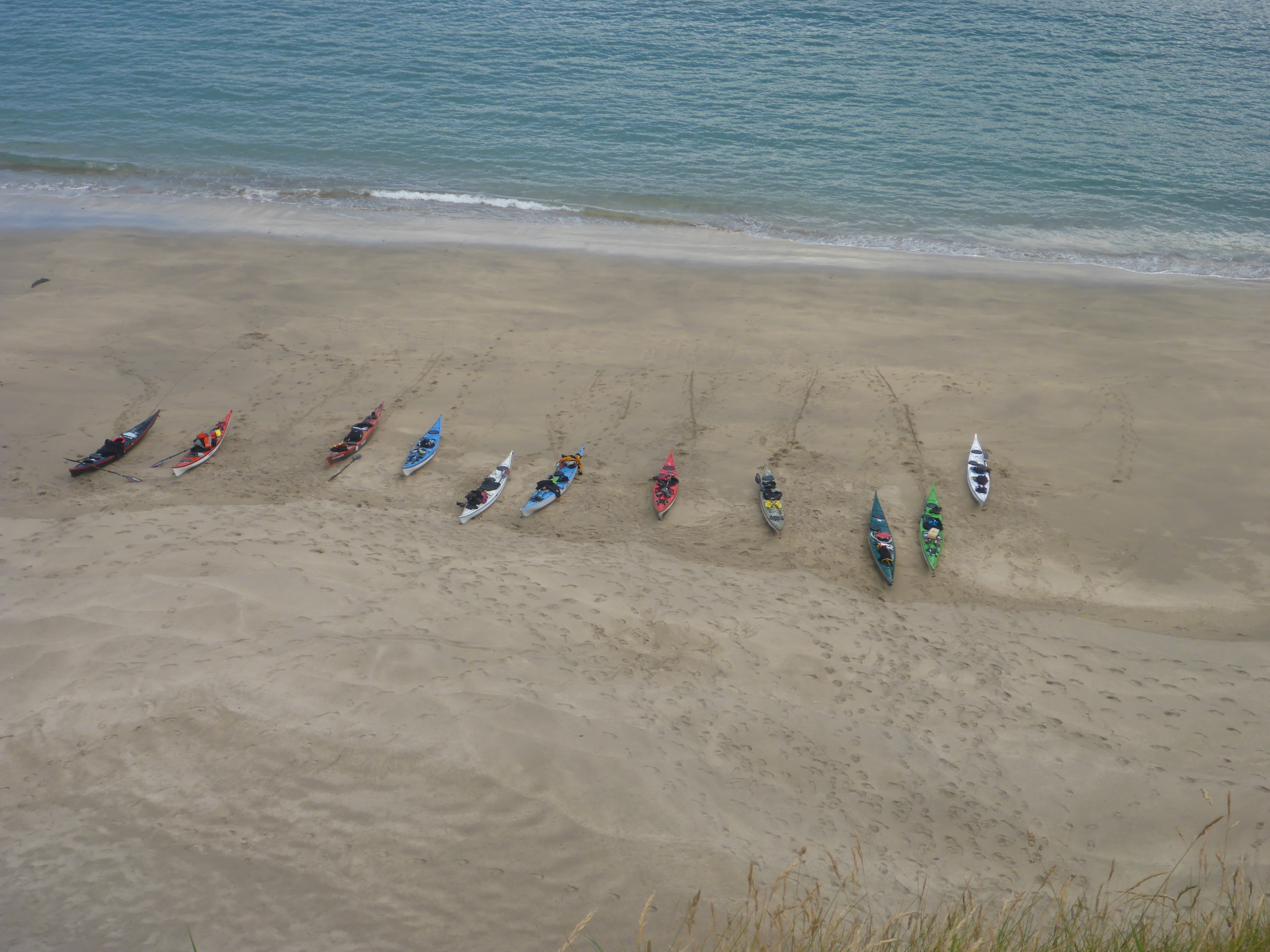
For many visitors to the Dingle Peninsula, visiting the Blasket Islands is a highlight. Arriving by kayak made it even better. The paddle across the channel was short, maybe 45 minutes. After surveying the tidal flow, we set our ferry angle and paddled first to Beginish Island, then to Great Blasket itself. Nigel promised us seals, and there they were, swimming around the rocks just offshore. They popped up around us like Whac-A-Mole, sometimes they surprised us, and sometimes we surprised them.
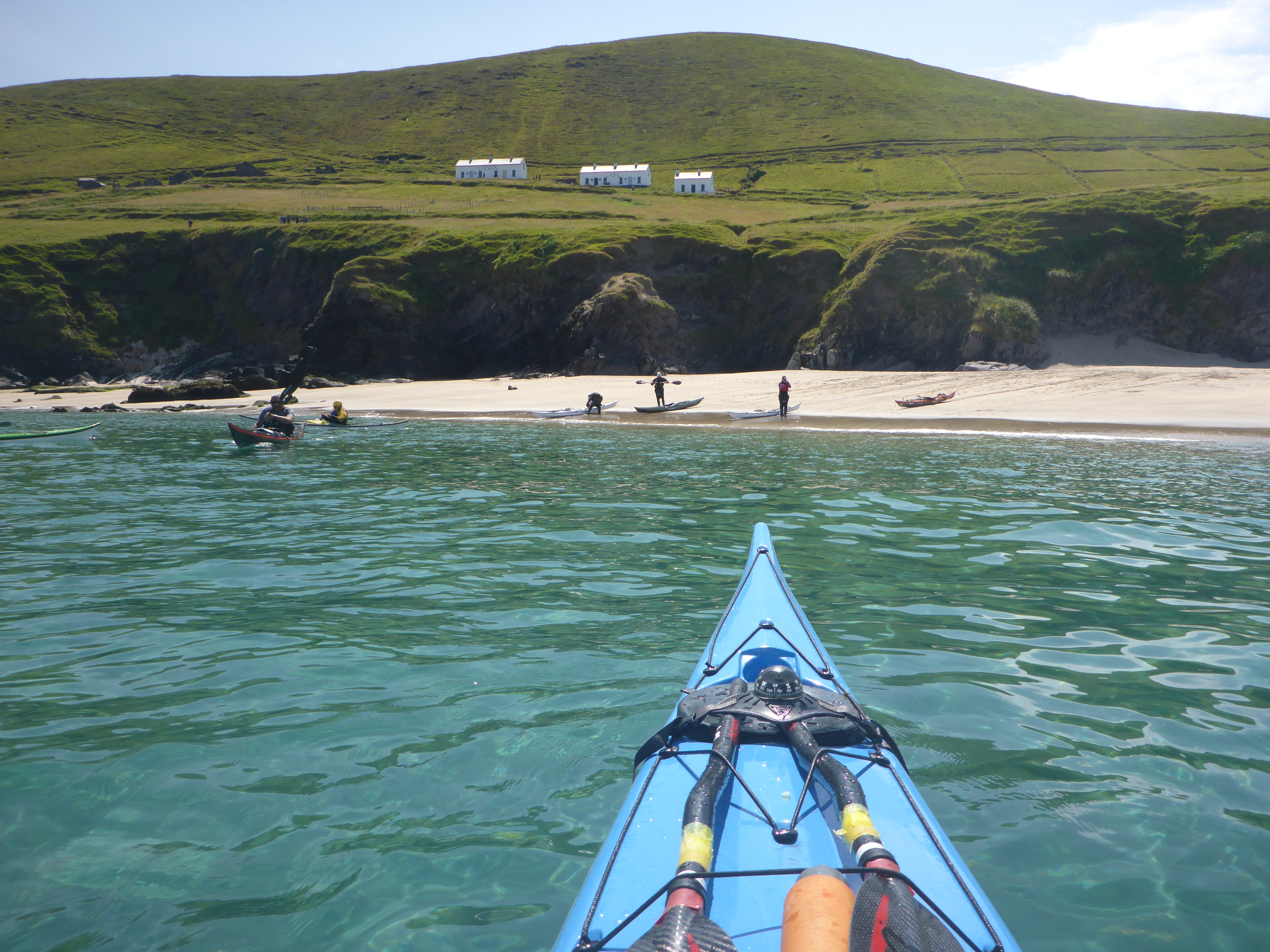
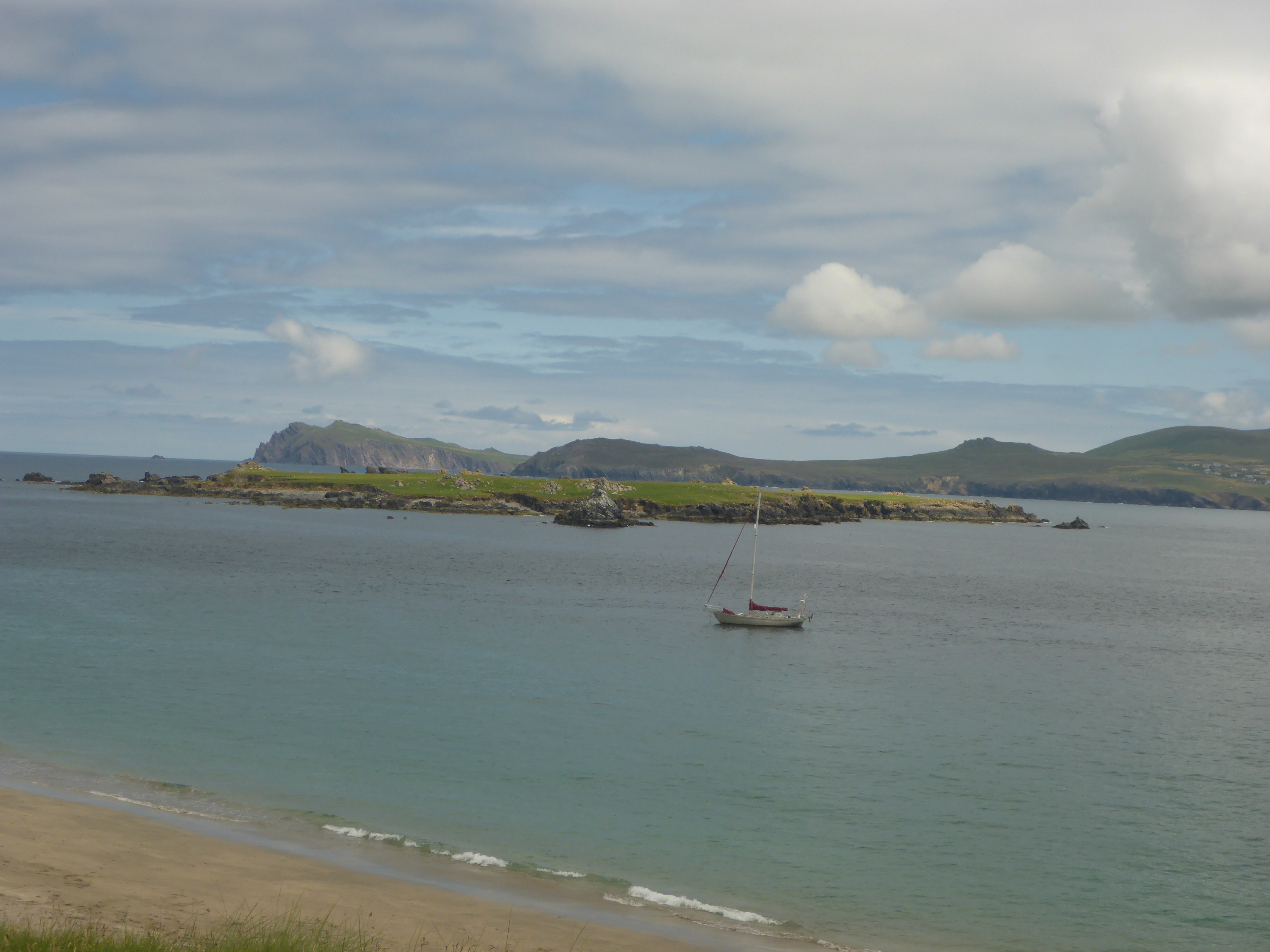
After visiting the seals, we landed on the sandy beach of Great Blasket. The blue water was so clear, so Caribbean-like that I finally gave into temptation and went for a swim—in my drysuit.
A day at the beach
All smiles
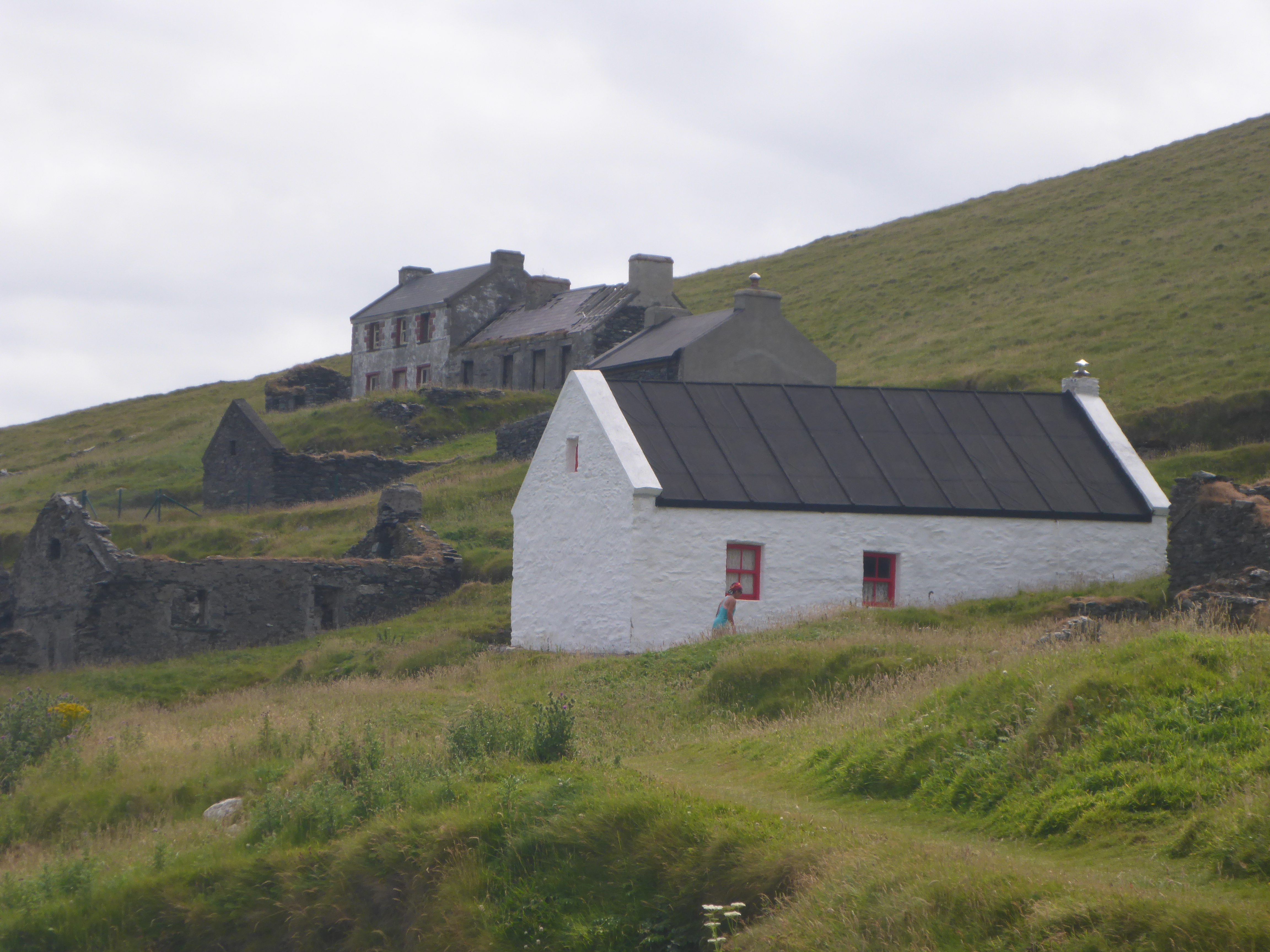
Settlement on Great Blasket
Beginish anchorage
Blasket Island cave
From the beach, we climbed up a steep path to a group of stone buildings. We heard rumors of coffee, and they were true! One building held a much welcome coffee and snack shop, which we all appreciated. A smaller unpainted building housed a weaver who spun her own wool and knitted scarves and hats. She lives on the island through the summer, until fall storms halt the ferry service. I bought a hat made from the wool of a Jacob sheep, a four-horned sheep that called Beezelbub to mind.
Great Blasket has no permanent residents now, but until 1953, islanders fished and farmed the island. Only ruins remain of their homes, but I can only imagine how difficult it was to eke out a living on that rocky soil. And to get back and forth from the mainland. In addition to fish and farms, the island also produced important Irish writers in the 1920s and 30s who chronicled the islanders’ lives.
The Blaskets consist of six islands. One of the smaller Blaskets—Tearaght—loomed in the distance, almost taunting us. When Eila planted the seed of paddling beyond Great Blasket to Tearaght, I couldn’t resist. It would be a big day, but it also a big adventure.
On the crossing Inishvickillane to Tearracht
We were on the water, crossing to Beginish by 9 am, early for us. We passed the seals and paddled along the outer coast of Great Blasket, exploring caves and arches along the way. After several hours, we crossed from Great Blasket to Inishbro, where the caves, arches, and cliffs became even more spectacular. One cave looked like a cathedral. The tall cliffs, the swell of the ocean, and the birds—the experience was overwhelming at times, it was that beautiful.
Sheer cliffs on Inishvickillane
Cathedral arches
Lunch on Inishvickillane
We crossed from Inishbro to Inishvickillane across a channel where the current, oddly, consistently runs in a westerly direction. A small landing with an iron ladder served a lunch spot while a baby seal provided our lunchtime entertainment. Fortunately, the wind and tide remained favorable for the hour-long crossing to Tearaght.
Puffins and gannets, oh my
We saw puffins near Inishbro, but nothing could have prepared us for the avian show on our crossing to Tearaght. Puffins and gannets flew overhead and dove around us. It reminded me of being in a butterfly garden—but with puffins. What could I do but laugh?
Reaching Tearaght felt like a real accomplishment, although we still had to get back though. The island rises sharply from the sea—there were no easy natural landing spots. Someone had carved steps into the rock face, but those steps ended well above the water level. The lighthouse on the island is the westernmost building in Europe and sits 84 meters high. Tearaght also boasts the steepest railway in Europe. I’m still not sure why it was built in the first place. Our return paddle was long as we passed Inishbro and Great Blasket, but we certainly earned our Guinness that day.
Europe’s steepest railway
Buildings on Tearracht
Tearracht Arch
Who cut those stairs into the wall?
The following morning, our final day in Dingle, we realized our luck had changed. Clear skies gave way to wind and clouds, more characteristic of Ireland’s weather. We had been remarkably lucky. Dale warned us that Dingle’s steep cliffs make it a committed paddle—heavy weather could have kept us off the water for several days. Our group has trained in rough water skills, navigation, and tides, so we could play in the swell, rocks, and clapotis. But we also know our limits.
So, on our last day, we played around the rocks, caves, and arches near the entrance to Dingle Harbor. We rode swells through arches and explored deep caves. Paddling back to the harbor, a fierce headwind reminded us how lucky we had been.
More caves to explore
Dingle arches
Where’s my headlamp?
I loved the paddling, but there was so much more—traditional music in pubs, Guinness, and walking along cliffs. What made the trip great, though, was the people, the smiles, and the laughter. Some old friends, some new. That’s why I’m already planning my return.
Mayday, Mayday, Mayday…These are words I hope never to say, but there I was in Charleston Harbor hailing the United States Coast Guard. I pulled my marine VHF radio from my PFD, or life jacket, and requested medical assistance for a 62-year old male with chest pains and dizziness. Fortunately, this call was only part of a training exercise. The designated victim—my husband—played the role of victim in our rescue scenario. Nevertheless, seeing my husband stretched out on the deck of a 45′ Coast Guard Response Boat Medium reminded me that someday one of us might need to make a similar call.
Medical care for “Victim” Kevin
Kevin, myself, and five others came to Charleston to participate in a kayak-Coast Guard training exercise. Every April, Scott Brown and Jeff Atkins run the Joint Incident Management Program prior to the East Coast Paddle Sports Festival. Scott is a retired army officer and helicopter pilot who conducted combat search and rescue exercises, and Jeff is a kayak instructor and park ranger in South Carolina. Scott designed this exercise to help the coast guard and paddlers partner in real rescue situations, so the training works both ways. Kayakers learn the correct language to hail the coast guard and guide the rescue boat and helicopter to their location, and the coast guard personnel learn how to locate and assist people in small boats.
Scott Brown
Jeff Atkins
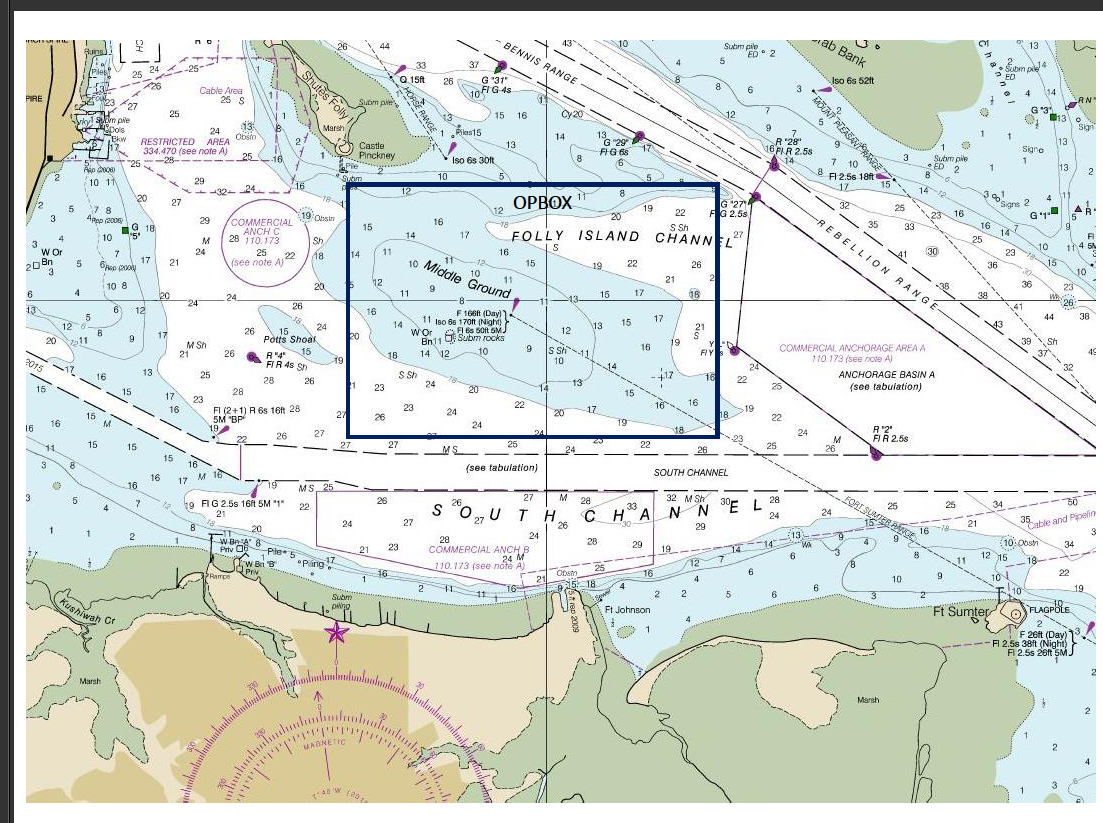
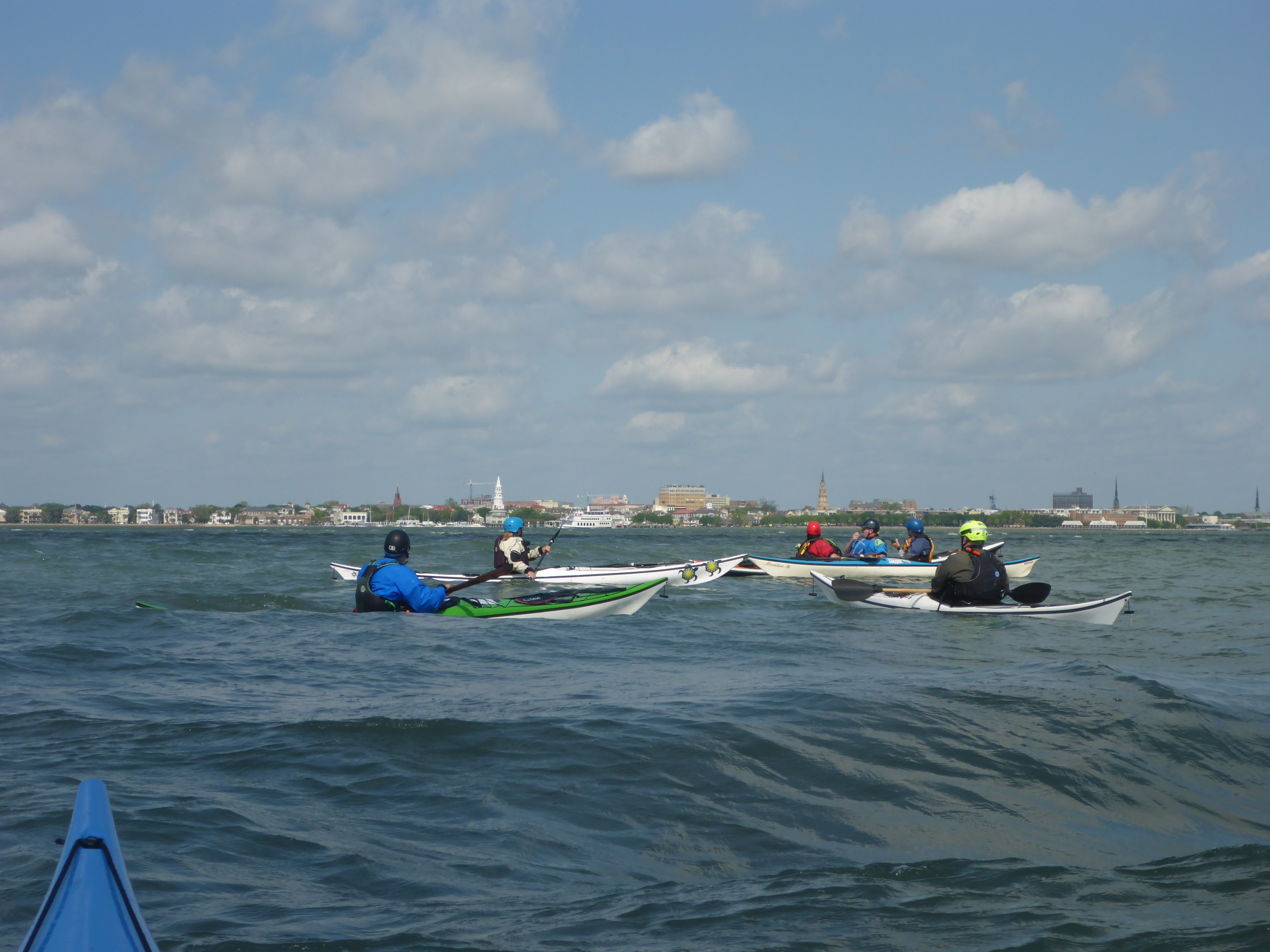
Our team of nine gathered in Demetre Park gathered at 7:30 am on a windy morning. Several days before, we ‘met’ on a conference call to go over call signals, safety protocol and the morning’s program. I had been checking wind and waves daily, hoping conditions would be small enough to conduct the exercise but big enough to be somewhat realistic. As soon as we arrived, we prepared our boats and gear to launch in case the weather deteriorated. Everyone carried VHF radios, tow belts, contact tows, and a variety of rescue and safety equipment, including extra clothes and first aid kits. We paddled out to a day mark, a navigational marker, in the area of ‘Middle Ground’ between Castle Pinkney and Fort Sumter, to prepare for exercises with the coast guard boat and helicopter.
Middle Ground in Charleston Harbor
Rafting up to create a stable platform
Holding position in waves
First we practiced ‘rafting up’, that is, holding our boats together. In case of an actual rescue, gathering the boats both makes us visible to rescuers and also provides stability to care for a victim and call for help. In rough conditions, a victim who is ill or has sustained an injury such as a shoulder dislocation will not be able to remain upright and needs the support of at least one other kayak. Another paddler might tow the entire raft to prevent drifting into a hazard. Kayakers frequently use the term ‘raft up’ when we want or group to come together, and I had never considered whether this term is useful to others. One participant associated with the Coast Guard pointed out the term ‘raft’ is meaningless to the Coast guard. Another wondered if they might not look for a large gray raft, not a group of kayaks. Scott warned us to avoid jargon—“Use plain language.” Lesson learned.
Working with big and little boats in waves
Lee stabilizing a boat
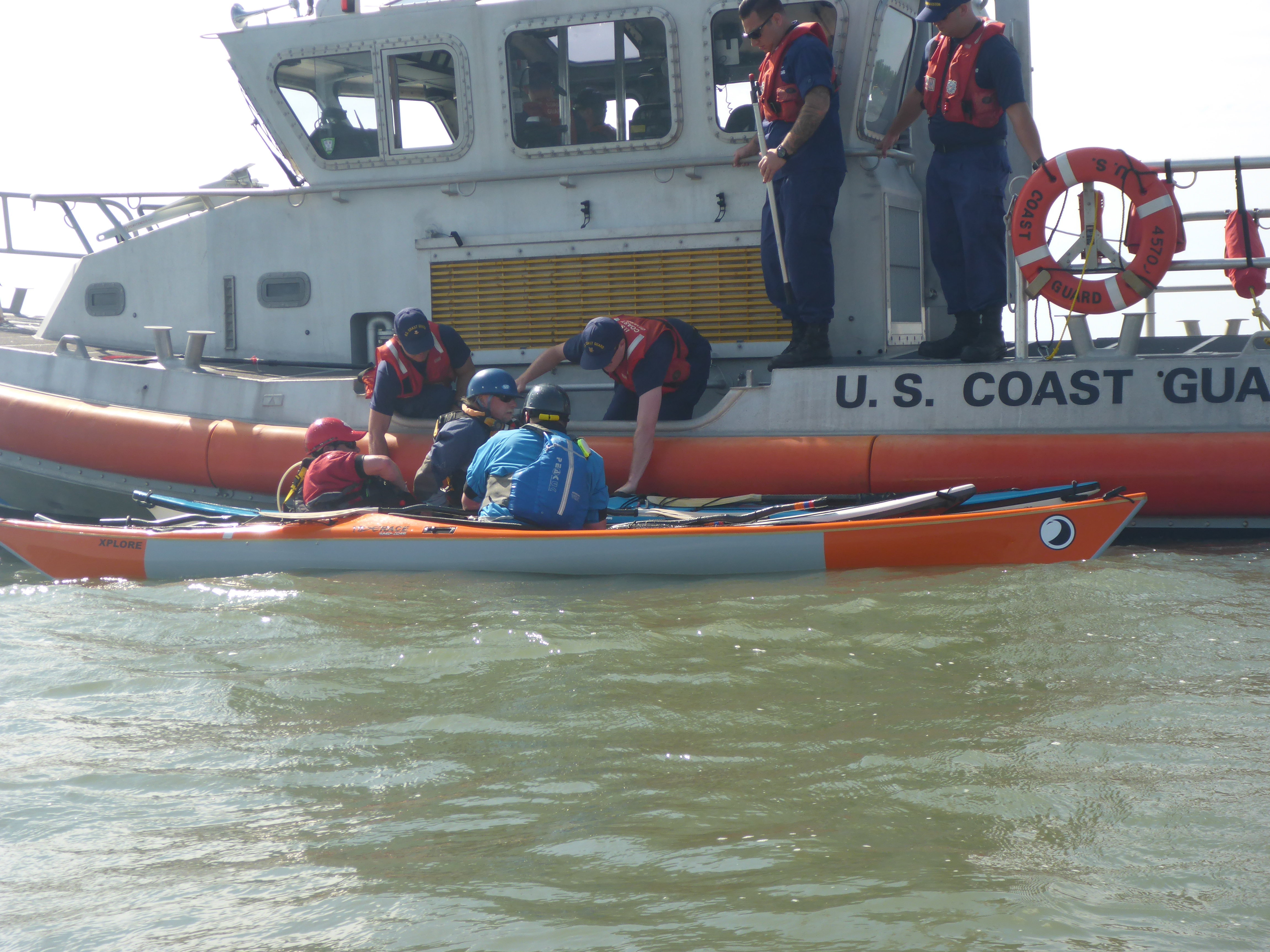
At 10 am, on military time, we began our exercises with the Coast Guard boat and helicopter. I made the first Mayday call, requesting help for Kevin’s “heart attack”. I noted our location, the number of people in our group, and our problem. And the Coast Guard always asks if everyone is wearing a PFD. After approximately ten minutes, the rescue boat arrived—this might be much longer in a real situation. Lee and Ted stabilized Kevin’s boat and brought him parallel to the rescue boat so that he could be lifted on board. Doing so gave the crew practice working with 16’ kayaks in rough seas and helped us understand how to help the coast guard help us.
Awaiting the helicopter
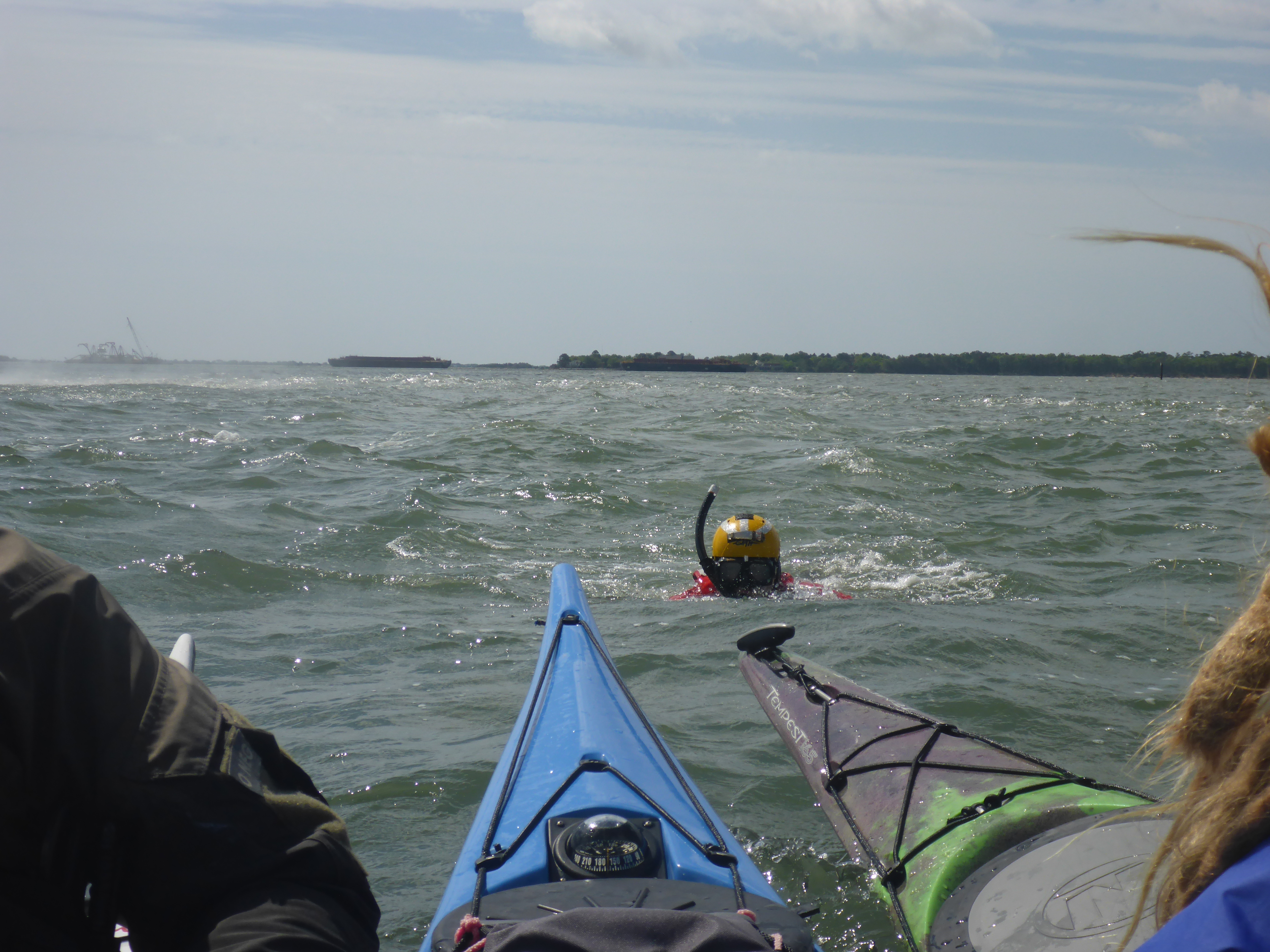
Next, the part we had all been waiting for— the helicopter ops. Imagine being injured and floating out to sea on an out-going tide. A helicopter flies overhead, but can they see you? From a distance, the bright white, yellow, and orange colors of our kayaks are specks in a vast ocean. A helicopter or boat might see the smoke from our flares, assuming we carried them, and most of us carry PLBs (Personal Locator Beacons). Search and rescue helicopters fly multiple search patterns looking for survivors, but we can increase our odds by guiding the aircraft using our VHF radios. Each of us practiced directing the USCG HH-65 Dolphin —‘right turn, stop turn, we’re on your nose,’ learning the language to best communicate with the crew. Then an Aviation Survival Technician “rescue swimmer,” with fins, snorkel, and helmet, jumped from the helicopter and swam to our boats, sharing tips on how to be spotted from the air. The helicopter crew raised and lowered him on the hoist, replicating what might happen in an actual rescue. If Kevin’s heart attack were real, the crew would have placed him in a rescue basket, raised him up, and immediately began medical treatment, probably saving his life.
Search and rescue practice
Coast Guard Rescue Swimmer
Learning from the rescue swimmer
When life, limb or vessel are at risk, that calls for a Mayday. This is nothing to take casually. Asking for help puts other lives at risk, the rescuers and other victims, for example. However, in an emergency such as a heart attack far from shore or a serious injury, calling for help saves lives. While debriefing after the exercises, we debated about what situations call for a Mayday. In our second practice round with the coast guard 45’ Response Boat Medium, I played the victim, a 57-year old woman with a dislocated shoulder. Was a Mayday call necessary, we asked? As usual, it depends. If we had been surfing 50 yards off Folly Beach, then no because my friends could help me ashore and call 911. I would get medical care within the ‘Golden Hour.’ On the other hand, if we were a mile off-shore in an out-going tide, my inability to paddle would place the entire group in danger if we drifted into bigger conditions. In that case, calling the coast guard would reduce risk for the entire group and perhaps prevent a multi-victim rescue.
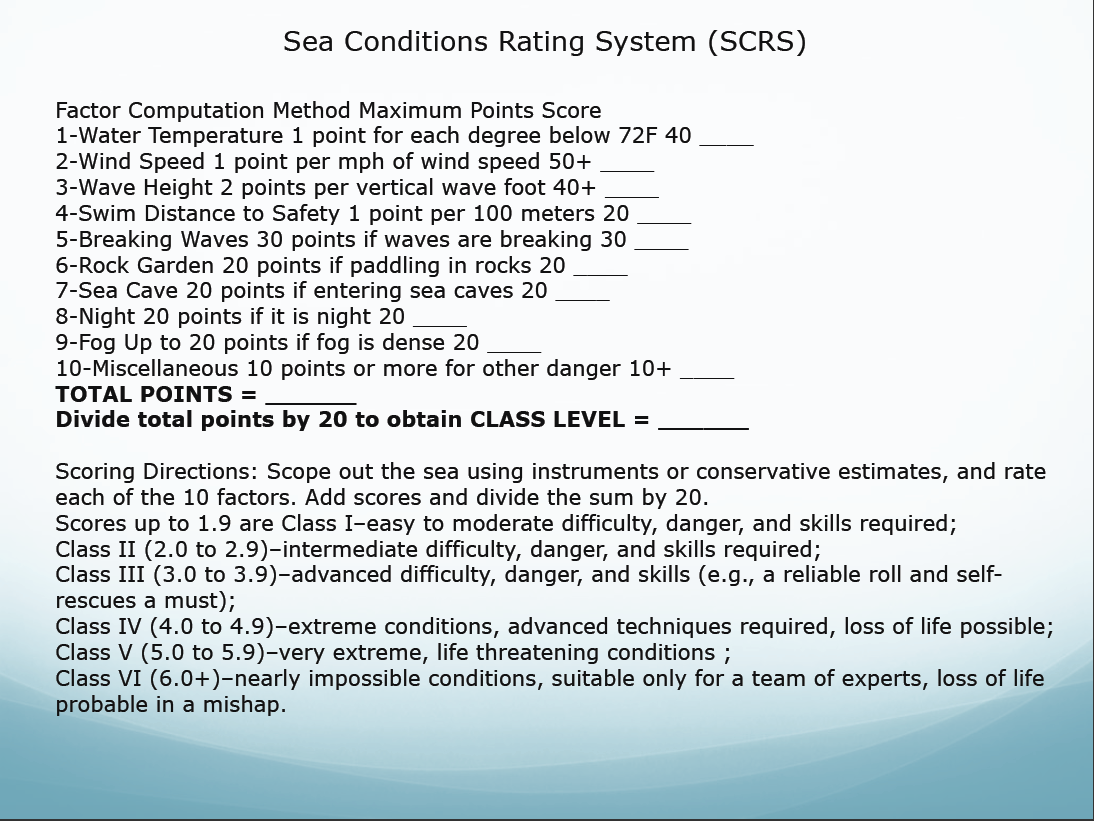
Ultimately mitigating risk is the best way we can help the coast guard and ourselves. Reducing risk begins the moment we plan the activity and does not end until everyone is home safe. This means asking questions, even ones that might seem intrusive. Is all equipment functional, and are all members of the group healthy and prepared for existing conditions? For kayakers in the coastal Southeast, understanding tides, sandbars, and currents is critical. In a incident or capsize, will we drift towards safety or out to sea? Scott adapted a set of questions from Eric Soares’ Sea Conditions Rating System. These systems quantify risk, making assessment less subjective and easier to communicate. Answering these questions helps avoid complacency, especially if we know an area well.
Soares Sea Condition Rating system
Scott Brown’s adaptation for SE coastal conditions
Practicing with the Coast Guard was fun and instructive—everyone loves helicopters, but someday the call might be real. I’ve rehearsed Mayday calls several times, learning radio protocol in low stakes situations. I hope these drills will steady my hand and voice if one of my friends is injured or ill, when we desperately need help. My friends and I carry rescue and safety gear on our PFDs and in our boats, and we practice rescues in a range of conditions. We train for the worst and hope for the best. On any given day, you just never know what might happen, and we want to be prepared. Thanks and a big shout-out to the crews of USCG HH-65 6526 from Air Station Savannah and Response Boat Medium 45709 from Station Charleston.






























































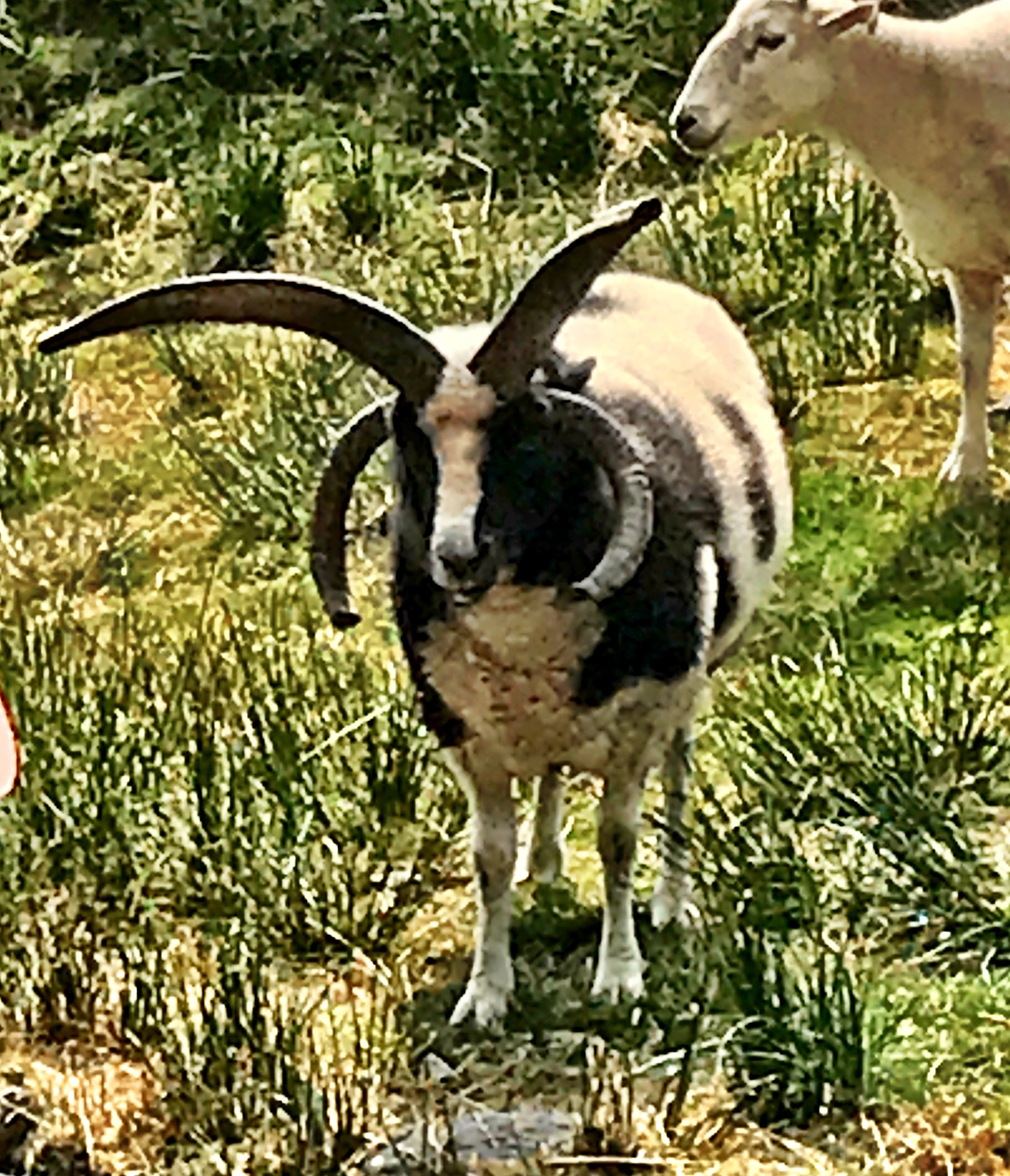 We heard rumors of coffee, and they were true! One building held a much welcome coffee and snack shop, which we all appreciated. A smaller unpainted building housed a weaver who spun her own wool and knitted scarves and hats. She lives on the island through the summer, until fall storms halt the ferry service. I bought a hat made from the wool of a












 Florida Waterscapes